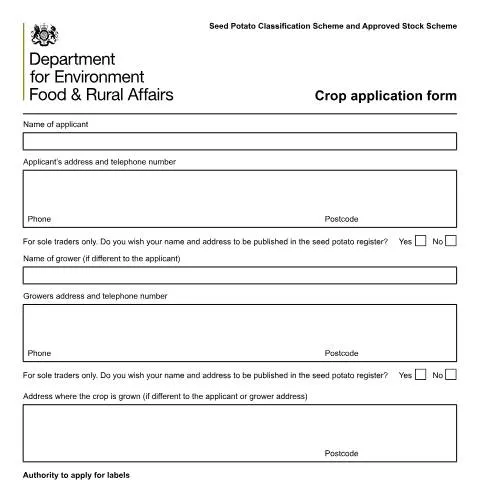
Understanding the Seed Potato Classification Scheme Crop Application Form
For growers and producers engaged in the cultivation of seed potatoes, the Seed Potato Classification Scheme (SPCS) serves as a crucial guideline ensuring the quality and health of seed stock. The process begins with the completion of a specific crop application form, which plays a vital role in the classification and inspection of seed potato crops. It is essential for applicants to grasp the importance of this document in order to navigate the application process effectively.
Who Should Fill Out the Application? A Closer Look
The application form is primarily designed for individuals and businesses involved in the production of seed potatoes. This includes:
- Sole Traders: Individuals operating their own seed potato growing businesses must complete this form to officially register their crops.
- Partnerships and Companies: These entities are also required to submit the application, providing detailed information about the crop and its management.
- Growers Managing Multiple Crops: If a grower manages various types of crops, they must apply for each type distinctly, ensuring compliance with SPCS regulations.
Importantly, there are exceptions where certain smaller-scale producers may need to provide additional documentation or may be exempt from specific requirements. It is advisable for applicants to contact the Animal and Plant Health Agency (APHA) for tailored guidance based on their unique circumstances.
The Components of the Application: What to Include
When filling out the crop application form, several key sections must be completed accurately. Each section gathers crucial information to assess the crop's eligibility and health status. The core components include:
- Applicant Information: This includes the name, email address, and contact details of the applicant, as well as additional information for the grower if different from the applicant.
- Crop Details: Essential specifics such as the variety of seed potatoes, planting date, and the area cultivated must be provided. Additionally, the applicant must specify whether the crop is irrigated and disclose any nearby ware potatoes.
- Inspection and Authorization: The form requires the applicant to confirm their authority to apply for labels associated with the crop and to attest to certain conditions regarding potato diseases.
It is vital to ensure that all information is accurate and complete, as discrepancies can lead to delays or rejections in the application process.
Submitting Your Application: Channels and Best Practices
Once the crop application form is completed, it is time to submit it. The APHA offers multiple avenues for submission:
- Online Submission: Applicants can use the online platform provided by APHA. This method is often the quickest, allowing for immediate processing once submitted.
- Postal Submission: Alternatively, completed forms can be mailed directly to the local APHA Plant Health & Seeds Inspector. This route may take longer due to postal processing times.
- In-person Submission: For those preferring face-to-face interactions, visiting an APHA office is another option, where applicants can receive immediate feedback on their submissions.
Regardless of the submission method, applicants should keep a copy of their completed form for their own records. This can be invaluable if questions or issues arise later in the process.
After Submission: Monitoring Your Application’s Progress
Following the application’s submission, it is essential to stay proactive. Applicants can monitor the status of their application by:
- Checking Email Correspondence: APHA typically sends confirmation emails once the application is received. This email may include additional information or a request for further details if necessary.
- Contacting APHA: If there has been no communication within a reasonable timeframe, applicants should reach out to their local APHA office to inquire about the status of their application.
- Reviewing Inspection Reports: Upon completion of the inspection, applicants will receive reports detailing the results and any classifications assigned to their crop.
Staying engaged throughout this phase can help ensure that any potential issues are promptly addressed.
Handling Rejections and Missing Information
In the event that an application is rejected or deemed incomplete, applicants have several options. It is crucial to understand the steps to take:
- Review the Feedback: APHA typically provides reasons for rejection, which can include missing information or failure to meet certain standards.
- Correcting the Application: Applicants should take the feedback seriously, amend the application, and resubmit it. Detailed guidance on common errors can be found in the Explanatory Guide to the SPCS.
- Requesting a Re-inspection: After making necessary changes, applicants can request a re-inspection to ensure compliance with SPCS regulations.
It is advisable to act swiftly when dealing with rejections to avoid delays in crop classification and potential impacts on business operations.
Essential Documentation and Requirements: Preparation Steps
Preparation is key when it comes to submitting a successful application. Below is a list of essential documentation and considerations to keep in mind:
| Document | Description | Importance |
|---|---|---|
| Field Map | A detailed map showing the location of the crop. | Essential for understanding crop placement regarding other fields. |
| Parent Stock Labels | Labels for each parent stock used in cultivation. | Critical for traceability and quality assurance. |
| Disease Declaration | Confirmation that the crop is free from Potato Wart Disease and Potato Cyst Nematode. | Mandatory for compliance with health regulations. |
| Organic Crop Declaration | If applicable, a notice indicating the desire for organic classification. | Important for marketing and sales to organic consumers. |
By preparing these documents in advance, applicants can streamline the submission process and minimize the risk of delays.
The Role of Data Protection in Your Application
Given the sensitive nature of the information included in the Seed Potato Classification Scheme application, understanding data protection regulations is paramount. The Data Protection Act 2018 and UK GDPR govern how personal data is handled, ensuring that:
- Confidentiality: Information provided in the application is protected and will not be disclosed to third parties without consent.
- Usage of Data: Data may be used for statistical purposes or in case of a pest outbreak but will remain confidential.
- Right to Access: Applicants have the right to request details on how their data is used and stored by APHA.
Being aware of these regulations not only protects applicants but also fosters trust in the system.
Final Thoughts on Navigating the Application Process
Successfully completing the Seed Potato Classification Scheme crop application involves careful attention to detail and an understanding of the overall process. Growers are encouraged to consult the Explanatory Guide to the SPCS for additional clarity and to utilize resources provided by APHA for assistance throughout the application journey. By following these guidelines and understanding each component of the application, producers can ensure a smoother and more efficient classification process.
Understanding the Seed Potato Classification Scheme
The Seed Potato Classification Scheme (SPCS) is a pivotal framework established under UK regulations to ensure that seed potatoes meet specific quality standards. The scheme primarily functions to certify seed potatoes for commercial production, promoting healthy and high-yielding crops. Governed by the Plant Health Agency, this classification system is crucial for maintaining the integrity of seed potato supplies across the country. This section delves into the fundamental aspects of the SPCS, including its objectives, classification categories, and the process of obtaining certification.
Objectives of the Seed Potato Classification Scheme
The primary goal of the SPCS is to provide a structured approach to seed potato certification, ensuring that farmers have access to quality planting material which is free from pests and diseases. This results in:
- Increased Yield: High-quality seed potatoes lead to better crop performance, which is essential for both economic viability and food security.
- Disease Control: The classification system helps in the early detection of potential disease threats, thereby reducing the risk of widespread crop failures.
- Market Confidence: Certification enhances marketability, as buyers are assured of the quality and pedigree of the seed potatoes they purchase.
Classification Categories
Seed potatoes are classified into several categories based on their health status and production methods. The main categories include:
- Pre-Basic Seed: This is the highest category, consisting of seed potatoes that are produced under stringent conditions and are free from known diseases.
- Basic Seed: Second in the hierarchy, basic seed potatoes are produced from pre-basic stock and have undergone rigorous inspections to ensure quality.
- Certified Seed: These potatoes are produced from basic seed and must meet the SPCS quality standards, including being free from specific pests and diseases.
- Commercial Seed: Finally, commercial seed potatoes are those that do not meet the stringent requirements of the earlier categories but are still considered viable for planting.
The Application Process for Seed Potato Certification
Applying for seed potato certification under the SPCS involves a comprehensive process that farmers must navigate to ensure compliance with regulations. This section outlines the steps involved, key documents required, and the role of inspections in the certification process.
Steps to Certification
The application process typically consists of the following stages:
- Preparation: Farmers should start by selecting the desired seed variety and ensure that their production site adheres to the necessary hygiene and cultivation standards.
- Application Submission: An application must be submitted to the relevant authority, detailing the seed variety, intended area of planting, and the production history. This can include forms such as the PP4 for seed potato production.
- Inspection: The production site will undergo an official inspection, which assesses the growing conditions, pest control measures, and overall health of the plants.
- Harvesting and Testing: Once harvested, the seed potatoes are subjected to additional tests, including laboratory assessments for diseases. Samples may be taken to ensure they meet the standards required for their classification.
- Issuance of Certification: Following successful inspections and testing, the relevant agency will issue a seed certification label, indicating the class of the potato.
Key Documentation Required
To facilitate a smooth application process, a variety of documents must be prepared, including:
- Production Records: Detailed documentation of growing practices, including seed sourcing, planting dates, and pest management.
- Inspection Reports: Previous inspection reports can provide context and history for the current application.
- Laboratory Test Results: Any test results from accredited laboratories that indicate the health status of the seed potatoes.
Challenges and Considerations for Growers
While the Seed Potato Classification Scheme is designed to uphold quality standards, growers often face various challenges when navigating the certification process. It is essential for farmers to remain aware of these potential hurdles to ensure a successful application and subsequent crop yield.
Pest and Disease Management
One of the most significant challenges faced by seed potato growers is managing pests and diseases effectively. The UK climate and varying soil conditions can contribute to the outbreak of diseases such as Late Blight or Potato Cyst Nematode, impacting crop health and certification eligibility. To mitigate these risks, growers should:
- Implement Integrated Pest Management (IPM): This strategy combines biological, cultural, and chemical control methods to maintain pest populations at manageable levels.
- Regular Monitoring: Consistent monitoring of crops for signs of disease can help in early detection and intervention.
- Maintain Records: Keeping detailed records of pest management practices can support the certification process and demonstrate compliance with SPCS regulations.
Adapting to Regulatory Changes
Another consideration for growers is the evolving nature of agricultural regulations. The SPCS may undergo revisions based on new research findings, pest threats, or changes in agricultural practices. To stay compliant, growers should:
- Stay Informed: Regularly check for updates from the Plant Health Agency and participate in relevant training sessions.
- Engage with Industry Bodies: Collaborating with agricultural organizations can provide additional insights and resources regarding compliance with the SPCS.
Financial Implications of Certification
While seed potato certification is essential for ensuring crop quality and marketability, it can also be a costly process for growers. Fees associated with inspections, testing, and registration can add up. Therefore, it is crucial to consider:
- Budgeting for Certification: Include all potential costs in your farming budget to avoid unexpected financial strain.
- Seeking Financial Assistance: Investigate available grants or funding options from the government or local agricultural organizations that can aid in covering certification costs.
Conclusion: The Importance of Compliance in Sustainable Agriculture
Participating in the Seed Potato Classification Scheme not only contributes to individual growers’ success but also supports the broader goal of sustainable agricultural practices in the UK. By adhering to the guidelines set forth by the SPCS, farmers can significantly enhance the quality of their produce, ensuring food safety and security for consumers while fostering an environment that encourages responsible farming. As such, growers are encouraged to remain proactive in their certification efforts, continuously improving their methods and staying informed about best practices.