Navigating the Seed Not Certified Export Application Process
Picture this: you are a seed producer eagerly looking to export your high-quality seeds to another country. However, your seeds, although having met field seed standards, remain unfinalized in terms of certification. This is where the application to export seeds not certified comes into play, offering a pathway to facilitate the international movement of your crops.
The Regulatory Landscape Behind Seed Exportation
The regulation of seed exportation in the UK is underpinned by both national and EU directives. The Animal and Plant Health Agency (APHA) manages the oversight of seed movements, ensuring they adhere to established standards for safety and quality. The Seed Marketing Directives, particularly Annex V, C, provide the legal framework that governs the export of seeds that are not yet certified.
This regulatory context is essential for maintaining the integrity of the seed industry and ensuring that all seeds leaving the UK meet specific safety criteria. As a prospective exporter, understanding this framework helps identify the necessary steps for compliance.
Key Regulations to Note
- Seed Marketing Directive: Ensures that seeds are produced and marketed in accordance with EU standards.
- Data Protection Act 2018: Governs the handling of personal data on the application form.
- APHA Guidelines: Provides specific instructions and standards for seed exportation.
Step-by-Step Journey: From Application to Export
The process of applying for a seed not certified export involves several critical steps, each crucial for a smooth transition from application submission to export approval.
Step 1: Application Preparation
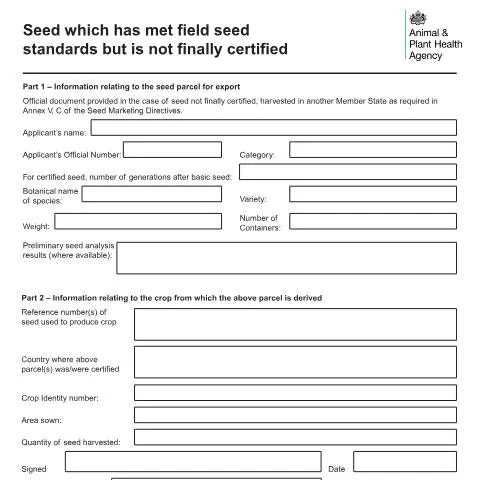
Before you can submit your application, gather the necessary documentation and information. The key details required on the application form include:
- Applicant’s Name and Official Number: Identify yourself clearly.
- Botanical Name of Species: Specify the exact species of the seed.
- Weight and Variety: Clearly indicate the total weight of seeds and their specific variety.
- Preliminary Seed Analysis Results: Provide these if available to support your application.
Step 2: Filling Out the Form
The application form is broken into two main parts. It is crucial to accurately complete each section to avoid delays or rejections.
Part 1: Seed Parcel Information
- Number of Containers: Make sure to list the exact number.
- Generations After Basic Seed: For certified seed, you must indicate how many generations of seeds have been produced.
Part 2: Crop Information
In the second part, you’ll need to provide details about the crop from which the seeds have been harvested:
- Reference Number(s): Enter the relevant numbers for seed production.
- Country of Certification: Specify where the seeds were certified.
- Area Sown: Clearly state the area that was cultivated.
- Quantity of Seed Harvested: Provide accurate figures for the harvest.
Where and How to Submit Your Application
Once you've completed the application form, the next step is submission. There are several channels available for this, each with its advantages.
Submission Channels
| Channel | Description | Benefits |
|---|---|---|
| Online Submission | Submit your application through the APHA portal. | Fast processing, immediate confirmation. |
| Paper Submission | Send your application via post to the APHA. | Preferred for those who may require physical records. |
| In-Person Submission | Deliver your application directly to an APHA office. | Opportunity for immediate feedback and clarity on any questions. |
Understanding the Review Process: What Happens Next?
After submission, your application enters a review phase conducted by APHA staff. It's important to understand how this works and what you can expect.
Assessment Criteria
The APHA will verify that all information provided is complete and accurate. They will assess:
- If the seeds meet the field seed standards.
- The validity of your provided crop data.
- Compliance with relevant EU directives.
Timeframe for Processing
While the processing time may vary, applicants should generally expect to wait several weeks for a response. During this period, maintaining communication with the APHA can help clarify any issues and expedite the process.
Handling Special Cases: Unique Circumstances in Export Applications
Certain situations may complicate the export application process, necessitating a tailored approach.
International Export Considerations
For those exporting to non-EU countries, additional documentation may be required. It is essential to check with both the destination country’s regulations and the APHA to ensure compliance.
Minors and Special Circumstances
In cases where the applicant is a minor or if the seeds originate from a unique agricultural situation (e.g., organic farming), specific considerations should be addressed. Ensure to provide adequate proof of parental or legal guardian consent and relevant agricultural documentation.
Profiles of Applicants: Who Should Apply?
The application to export seeds not certified is relevant for various stakeholders in the agricultural sector. Understanding who should submit this application can streamline the process.
Types of Applicants
- Small Scale Farmers: Often deal with niche seed varieties that may not yet be certified.
- Seed Companies: Larger operations that may require bulk export of unfinalized seeds to meet demand.
- Research Institutions: May need to export seeds for trials or studies before certification.
Exceptions and Special Considerations
Some applicants may find themselves in unique situations that warrant special consideration:
- First-time Exporters: Additional guidance may be beneficial for those new to the process.
- Unique Seed Varieties: If your seeds have particular qualities or heritage status, mentioning these can be advantageous.
Next Steps: After Receipt of Certification
Once your application has been reviewed and approved, you will receive documentation confirming that your seed parcel is permissible for export. This document is vital and must accompany the seeds during transport.
Export Logistics
At this point, logistics come into play. It's crucial to have a plan for how the seeds will be transported. This includes:
- Choosing a reliable shipping partner.
- Ensuring compliance with both UK and destination country regulations during transport.
Documentation Upon Export
Besides the export certification, prepare the following documents as part of your export package:
- Commercial Invoice: Clearly outlining the sale details.
- Packing List: Detailing contents of the shipment.
- Phytosanitary Certificate: If required by the importing country to ensure the seeds are pest-free.
Final Thoughts: The Importance of Compliance and Preparation
Successfully navigating the seed export application process requires diligent preparation and adherence to regulatory standards. By understanding the nuances of the Seed Not Certified application and remaining informed throughout the process, applicants can ensure their seeds reach international markets without unnecessary delays.
Ultimately, whether you are a small farmer or a large seed company, being proactive and informed will pave the way for successful global trade in agricultural products.
Understanding Certification Requirements for Seed Exportation
When considering seed exportation from the UK, it's vital to comprehend the certification requirements set forth by the Animal and Plant Health Agency (APHA). While most seeds intended for export typically demand certification, there are specific circumstances under which uncertified seeds may be exported, particularly for non-commercial purposes or research.
Uncertified seeds generally refer to those that do not meet the stringent standards of quality and provenance required for marketed seeds. Factors influencing whether seeds can be exported without certification include the type of seed, the destination country, and its local regulations regarding seed imports.
For instance, agricultural seeds, which usually require certification, might have exemptions for small-scale, personal use, or research trials. However, exporting uncertified seeds can entail additional risk assessments and an understanding of the phytosanitary regulations of the importing country.
Fill in your form directly online
No printing: type your details into the boxes of the official form, tick, then download the PDF ready to send.
- 1Type into the form boxes
- 2Tick in one click
- 3Save and download the PDF
Before proceeding, exporters should confirm with the APHA whether the seeds in question are subject to any specific phytosanitary requirements or if a phytosanitary certificate is necessary even for non-certified seeds. Engaging with the importing country’s regulations is equally crucial, as many will require proof of seed health and may reject shipments lacking the necessary documentation.
Navigating Phytosanitary Regulations
Phytosanitary regulations serve as a critical gateway for seed exportation, regardless of certification status. The primary aim of these regulations is to prevent the introduction and spread of pests and diseases. For UK exporters, adherence to the International Plant Protection Convention (IPPC) standards is essential as they guide the health and safety measures necessary for export.
When exporting uncertified seeds, the need for a phytosanitary certificate can become more pronounced. This certificate, issued by the APHA, confirms that the seeds have been inspected and are free from specified pests and diseases. The procedure for obtaining this certificate involves submitting an application to APHA, detailing the species and the intended destination of the seeds.
Exporters should be aware that specific countries may have unique phytosanitary requirements that could affect the export process. Countries within the European Union often have their own documentation and importation regulations that need to be satisfied, while others, particularly those outside the EU, may have stringent quarantine measures.
When navigating these regulations, consider the following:
- Always check with the destination country’s consulate or agricultural authority for specific phytosanitary requirements.
- Be prepared for the possibility of inspections or additional testing of the seeds before export.
- Maintain open communication with APHA about any changes in regulations that could impact your shipment.
Failing to comply with these regulations not only jeopardizes the shipment but could also lead to financial losses or a ban on future exports. Thus, thorough research and adherence to the relevant phytosanitary protocols cannot be overstated.
Record Keeping and Compliance for Seed Exporters
Effective record-keeping is a cornerstone of compliance for seed exporters, particularly when dealing with uncertified seeds. The UK’s regulatory framework emphasizes transparency and traceability, which are crucial for facilitating smooth export operations.
Exporters must maintain detailed records of all transactions, including:
- The origins of the seeds.
- The quantities and types of seeds being exported.
- Documentation of any communications with regulatory bodies such as the APHA or related authorities in the destination country.
This documentation serves not only to protect the exporter in case of audits or inspections but also to demonstrate compliance with the Data Protection Act 2018 and UK GDPR when handling personal or business data. Ensuring that all records are up-to-date and accurately reflect the status of the seeds is essential for avoiding delays caused by misunderstandings during the export process.
Moreover, exporters should remain vigilant about changes in legislation or shifts in trade agreements that could affect record-keeping requirements. Regularly reviewing compliance protocols and staying informed about both domestic and international trade law is crucial for uninterrupted seed exportation.
In summary, maintaining comprehensive records and ensuring compliance with both UK and international regulations enhances the credibility of seed exporters and fosters sustainable trade practices in the agricultural sector.