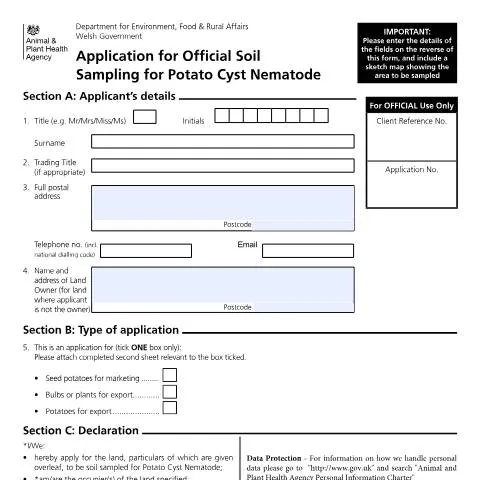
Understanding the Importance of the Potato Cyst Nematode Sampling Application
The management of agricultural health in the United Kingdom is paramount, especially concerning crop diseases that threaten food security and economic viability. Among these concerns is the Potato Cyst Nematode (PCN), a significant pest that can devastate potato yields. To combat this threat, the Animal and Plant Health Agency (APHA) provides a structured process for soil sampling through the "Potato Cyst Nematode: Application for Soil Sampling." This process is vital for detecting PCN presence and protecting both growers and the broader agricultural ecosystem.
Legislative Background and Regulatory Framework
The legislative framework underpinning the application for soil sampling is rooted in various agricultural and plant health laws. The Plant Health (England) Order 2015 and its counterparts in Scotland and Wales aim to prevent the introduction and spread of harmful pests and diseases. These regulations necessitate that growers conduct soil sampling when specific conditions arise, ensuring early detection of PCN.
Understanding the history of these regulations can provide better insight into current practices. The rise of PCN as a significant agricultural threat in the late 20th century triggered legislative responses aimed at ensuring that farmers and land managers proactively manage their fields. Moreover, EU regulations influenced UK policies that led to the current sampling requirements.
Who Needs to Apply? Profile of the Applicants
The application for soil sampling is not limited to professional farmers; it encompasses a wide range of stakeholders involved in potato production and export. This section delineates the profiles of those who must engage with this application process:
- Commercial Potato Growers: Farmers who cultivate potatoes for commercial sale and marketing must apply, especially if they intend to export their products.
- Exporters of Plant Products: Businesses involved in exporting bulbs or plants also need to engage with this application, as PCN detection is crucial for market access.
- Landowners and Occupiers: If the land is leased or rented, the occupier must ensure they have the landowner's consent and understand the implications of PCN findings.
Each of these profiles may encounter unique circumstances, such as varying soil types, crop rotation practices, or historical land use, which can influence the likelihood of PCN presence.
The Application Process: Step-by-Step Overview
Engaging with the application process involves several key steps, from initial considerations to the submission of samples:
- Initial Assessment: Determine whether a soil sample is necessary based on the crop history and any previous findings of PCN.
- Completing the Application Form: Fill out the details required in the application form, ensuring accuracy in land details, map submission, and applicant information.
- Sketch Mapping: Attach a clearly delineated sketch map indicating the area to be sampled, including the entry points to the fields.
- Submission: Forward the completed form to the appropriate APHA Plant Health and Seeds Inspector in your area.
- Awaiting Inspection: Once submitted, an inspector will review the application and arrange for sampling.
This process is designed to be straightforward, but attention to detail is crucial to avoid delays.
Consequences of Neglecting to Submit the Application
Failing to adhere to the application requirements can lead to substantial consequences for growers and land managers. Here are some of the critical repercussions:
- Legal Implications: Non-compliance with plant health regulations can result in legal actions taken by the APHA or other regulatory bodies.
- Crop Restrictions: If PCN is detected following an illegal or unreported cropping practice, growers may face restrictions on future planting or exports.
- Economic Losses: The financial impact of lost yields and potential legal fees can be significant, affecting both short-term revenue and long-term sustainability.
Understanding these consequences emphasizes the importance of proactive compliance with regulatory requirements.
What Happens After Submission? Navigating the Post-Application Phase
After you submit the application for soil sampling, several activities unfold, guiding you through the subsequent steps:
- Application Processing: The APHA will review the details provided in your application, including the map and any accompanying documents.
- Field Inspection: An APHA Plant Health and Seeds Inspector will visit the specified location to conduct the sampling. During this process, they will collect soil samples for laboratory analysis.
- Results Notification: Following analysis, results will be communicated to the applicant, highlighting whether PCN is present.
- Follow-Up Actions: If PCN is detected, the inspector will provide guidance on necessary actions, including crop management changes and potential re-sampling requirements.
Staying engaged during this process allows applicants to actively manage their fields and mitigate risks associated with PCN.
Insights from the Ground: Real-World Implications for Growers
Growers often wonder about the tangible implications of submitting their application for soil sampling. Here are insights based on experiences from those who have engaged with the system:
- Informed Decision-Making: Many growers find that the results from soil sampling enable them to make informed decisions regarding crop rotation and pest management.
- Enhanced Market Access: By maintaining compliance with soil sampling requirements, growers benefit from easier access to both domestic and international markets.
- Community Awareness: Participation in the sampling process raises awareness within the agricultural community about the importance of monitoring and managing plant health effectively.
Real-world testimonials illustrate how thorough engagement with regulatory frameworks supports better outcomes for both individuals and the agricultural sector as a whole.
Resources for Navigating the Application Process
In addition to completing the application, various resources can assist you in navigating the complexities of the Potato Cyst Nematode soil sampling process:
- APHA Official Guidance: The APHA website provides comprehensive guidelines on completing the application, including detailed information about fees and the sampling process.
- Local Agricultural Extension Services: These services can offer personalized assistance and additional insights specific to your region and agricultural practices.
- Networking with Other Growers: Engaging with local farming communities can provide practical advice and shared experiences that enhance understanding of the application process.
Utilizing these resources will help ensure a smoother application experience and better adherence to regulations.
Understanding Potato Cyst Nematodes: Life Cycle and Impact on Agriculture
Potato cyst nematodes (PCN), specifically Globodera pallida and Globodera rostochiensis, are significant pests affecting potato cultivation in the UK. These nematodes are microscopic roundworms that reside in the soil and pose a serious threat to potato yields. Their life cycle is a crucial aspect of understanding their management. Adult female nematodes produce cysts containing hundreds of eggs, which can remain dormant in the soil for many years, waiting for suitable conditions to hatch. This resilience complicates control measures and necessitates careful monitoring and soil sampling.
The impact of PCN on agriculture cannot be overstated. Infected plants often exhibit stunted growth, yellowing leaves, and reduced tuber quality. Farmers may face significant economic losses due to decreased yield and increased management costs, including the need for testing, crop rotation, and, in some cases, the application of nematicides. The presence of PCN can also affect land value and crop rotation decisions, restricting the use of infested fields for specific crops. Thus, understanding the nematode's biology is paramount for effective management and sustainable farming practices.
Soil Sampling Procedures: Best Practices and Compliance with Regulations
When applying for soil sampling to test for potato cyst nematodes, adherence to specific sampling procedures is critical to ensure compliance with agricultural regulations and to obtain accurate results. The recommended approach involves several key steps:
- Planning the Sampling Strategy: Before you begin, define the area you wish to sample. This should ideally reflect homogenous management practices and soil types. Large fields should be divided into smaller sections to allow for representative sampling.
- Timing of Sampling: The best period for soil sampling is typically during the potato growth season, especially before planting. However, if you are monitoring previously infested land, sampling can occur post-harvest to gauge nematode populations.
- Sampling Techniques: Use a soil auger or spade to collect samples from multiple locations within the defined area. It is advisable to collect at least 20 samples from different spots, mixing them to create a composite sample. The depth of sampling should be between 15-30 cm, as this is where nematodes predominantly exist.
- Labeling and Documentation: Clearly label all samples with identifiers such as location, date, and depth. This information is vital for tracking and ensuring compliance with the guidelines set forth by the Animal and Plant Health Agency (APHA).
Once the samples are collected, they should be sent promptly to a lab accredited for nematode testing. Ensuring that you comply with the Data Protection Act 2018 is also essential when handling any personal data, particularly if your samples are linked to specific fields or personal information.
Interpreting Soil Sampling Results: What to Expect and How to Respond
Upon receiving soil sampling results for potato cyst nematodes, the next step involves interpreting the findings and formulating appropriate management strategies. The laboratory results typically indicate the presence and levels of PCN in the sampled soil. Results are usually expressed in terms of nematode cysts per kilogram of soil.
1. Low Levels of PCN: If the results indicate a low population of nematodes, farmers should still consider implementing preventive measures. Crop rotation with non-host plants can help reduce nematode populations over time.
2. Moderate Levels of PCN: Moderate infestations may necessitate more immediate action. Farmers should consider implementing resistant potato varieties, applying nematicides judiciously, and practicing integrated pest management strategies. Additionally, soil health improvements, such as enhancing organic matter, can bolster plant resilience.
3. High Levels of PCN: A high count of cysts signals a serious infestation that could threaten future crops. In such cases, immediate and comprehensive management strategies should be implemented. This may include prolonged crop rotations, solarization of the soil, and consulting with agronomists for tailored solutions. It’s also crucial to report findings to APHA, especially if the levels exceed the thresholds established in the robust control measures outlined by UK regulations.
Understanding how to respond to various levels of PCN presence not only aids in maintaining healthy potato crops but is also essential for adhering to agricultural regulations and maintaining soil health for future planting seasons. It is imperative to remain informed and proactive in managing these pests to safeguard both the current and future yield of potato crops.