Navigating the Groupage Export Facilitation Scheme Application Process
When embarking on the journey of international trade, exporters often face a myriad of challenges, not the least of which is ensuring compliance with regulatory frameworks. The Groupage Export Facilitation Scheme (GEFS) application is a crucial step for businesses looking to streamline their export processes. This document serves as a gateway to access benefits aimed at facilitating the export of goods, especially for those operating in sectors that demand adherence to stringent animal and plant health regulations.
Understanding the Structure of the Application Form
The GEFS application form comprises several key components, each designed to gather specific information about your business and its exporting activities. The primary parts of the application are:
- Contact Details of Exporting Company
- Supporting Information
- Data Use Declaration
- Applicant Declaration
It's essential to approach each section diligently to avoid unnecessary delays in processing your application.
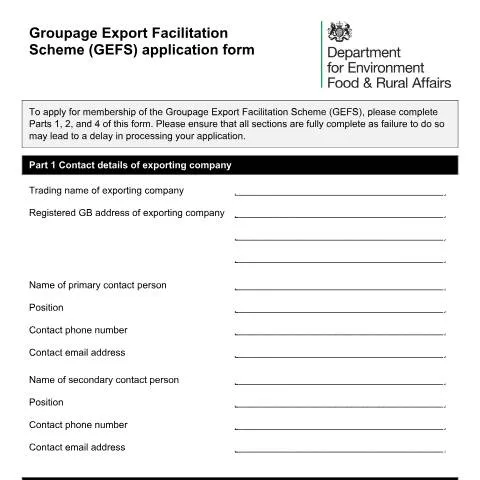
Part 1: Contact Details of Exporting Company
In this section, you are required to provide details about your company, including:
- Registered trading name
- Registered address in Great Britain
- Primary and secondary contact persons along with their positions, phone numbers, and email addresses
Ensure accuracy in the information provided, as discrepancies can lead to complications. For example, the registered address must match the one on your Companies House registration.
Part 2: Supporting Information Requirements
This part is critical for validating your organisation. You must submit at least one of the following:
- EORI number
- Companies House number
- VAT registration number
- Other evidence that verifies your organisation
When providing addresses from which products will be exported, it's crucial to include the approval or registration numbers for all premises. If exporting from multiple locations, a separate sheet detailing each location is required.
Part 3: Use of Data
The GEFS application form contains a section dedicated to the handling of your personal data. As per the Data Protection Act 2018 and UK GDPR, your personal information will be collected and stored for official purposes, such as communication regarding your application. It’s vital to understand your rights regarding data privacy. Should you wish to withdraw consent for data use at any time, you may contact the GEFS team directly.
Part 4: Applicant Declaration
The final section is where you affirm your authority to submit the application on behalf of your company. Notice the importance of this part:
- You must confirm that your company will adhere to the conditions stipulated in the GEFS guidance document.
- Non-compliance can result in immediate removal from the scheme, underscoring the importance of this declaration.
Additionally, attaching a current manufacturer list is mandatory, ensuring that all parties involved in the export process are accounted for.
Avoiding Common Pitfalls During Submission
Submitting the GEFS application is not without its challenges. Many applicants fall into common traps that can lead to delays or outright refusals. Here are some critical points to consider:
- Incomplete Information: Ensure every section is thoroughly filled out. Missing details can result in your application being sent back.
- Incorrect Contact Details: Double-check the spelling and accuracy of contact information—this is crucial for any follow-up communications.
- Failure to Provide Supporting Evidence: Always include necessary documents as outlined in the supporting information section. Without them, your application may be rejected.
What Happens After Submission?
Once you have submitted your application, it enters a processing phase. The timeline for processing can vary, but understanding the sequence of events can help manage expectations:
- Your application is received and registered by the Department for Environment, Food & Rural Affairs (Defra).
- Defra will assess the completeness and accuracy of your submission.
- Should any further information be required, you will be contacted via the provided contact details.
- Once reviewed, you will receive a decision regarding your application.
It's advisable to be proactive in following up on your application status, especially if you have not received communication within a reasonable timeframe.
Dealing with Refusals and Appeals
In the unfortunate event that your application is refused, understanding the grounds for refusal is essential. Common reasons may include:
- Insufficient supporting documentation
- Incorrect or incomplete application forms
- Non-compliance with scheme conditions
If you believe the refusal was made in error, you have the right to appeal the decision. Contact the relevant Defra team to initiate the appeals process, ensuring you provide any additional information that may support your case.
Your Place in a Broader Export Framework
The GEFS is not an isolated scheme but rather a component of a larger regulatory landscape governing exports. Understanding where it fits can assist in your strategic planning:
- This scheme works in conjunction with export documentation requirements, such as export health certificates.
- It also interfaces with other regulatory bodies ensuring compliance with both UK and international standards.
By familiarizing yourself with these interconnected processes, you can better navigate the complexities of international trade.
Final Thoughts on the GEFS Application
The Groupage Export Facilitation Scheme application is a gateway for businesses seeking to enhance their export capabilities while ensuring regulatory compliance. Diligent attention to detail throughout the application process, coupled with an understanding of the regulatory landscape, will significantly enhance your prospects for successful participation in the scheme. Remember, the key to a smooth application lies in thorough preparation, awareness of common pitfalls, and readiness to engage with the relevant authorities when necessary.
Understanding Eligibility Criteria for the Groupage Export Facilitation Scheme
The Groupage Export Facilitation Scheme (GEFS) is designed to assist UK businesses in expanding their export capacity, particularly those that may not have the volume to fill a full container. Understanding the eligibility criteria is vital for companies aiming to benefit from this initiative. Generally, businesses must demonstrate that they are registered and compliant with UK export regulations. The following points clarify eligibility:
- Business Registration: Companies must be legally registered in the UK, with proof such as a company registration number or VAT registration.
- Export Volume: Though there is no minimum export volume specified, businesses should have a reasonable expectation of regular exports to qualify. This includes having a clear export plan, with anticipated trade routes and target markets.
- Compliance with Customs Regulations: Participants must adhere to all HM Revenue and Customs (HMRC) regulations, including possessing appropriate EORI (Economic Operators Registration and Identification) numbers.
- Product Eligibility: Certain products may not qualify for the scheme due to export restrictions or licensing requirements. It’s essential to check with relevant trade bodies to confirm product eligibility.
- Financial Health: Businesses may need to provide financial statements to demonstrate their capability to sustain ongoing export activities.
By ensuring compliance with these criteria, businesses can streamline their application process and enhance their chances of securing support through the GEFS.
Key Documentation Needed for Application Submission
When applying for the Groupage Export Facilitation Scheme, certain key documents must be prepared and submitted alongside the application. This documentation helps authorities verify eligibility and ensures a smooth application process. Below is a detailed list of required documents:
- Completed Application Form: The official application form should be filled out in its entirety, ensuring that all sections are addressed accurately. Missing information can delay processing.
- Proof of Business Registration: Provide copies of your certificate of incorporation, VAT registration, or any other legal documents that confirm your business’s status.
- Export Business Plan: A comprehensive business plan outlining your export strategy, potential markets, and anticipated volumes should be included. This demonstrates your commitment to ongoing international trade.
- Financial Statements: Recent financial statements from the last two fiscal years may need to be submitted to showcase your business's financial health and sustainability.
- Customs Compliance Documents: Include evidence of compliance with customs regulations, such as an EORI number and any customs declarations made within the past year.
- Product Compliance Certificates: If applicable, certificates proving that your products meet the required safety and quality standards for export must be provided.
It is crucial to ensure all documents are current, clearly presented, and professionally formatted, as this can significantly impact the speed at which your application is processed.
Post-Application Steps and Ongoing Compliance Obligations
After submitting your application for the Groupage Export Facilitation Scheme, it is essential to understand the subsequent steps and ongoing compliance obligations to maintain eligibility throughout the scheme’s duration. Here are the key points to keep in mind:
- Application Review Process: Once submitted, HMRC will conduct a thorough review of your application. This process may take several weeks, and you may be contacted for additional information or clarification. It’s vital to respond promptly to any queries to avoid delays.
- Approval Notification: Upon approval, you will receive a notification confirming your eligibility to participate in the GEFS. This document will outline the terms of your participation and any specific conditions you need to meet.
- Monitoring and Reporting Obligations: Businesses may be required to submit periodic reports detailing their export activities and compliance with the scheme’s regulations. These reports help HMRC ensure that participants continue to meet eligibility criteria and contribute to the UK’s export objectives.
- Continual Compliance with Customs Regulations: It’s essential to maintain compliance with all customs regulations throughout your participation. This includes keeping your EORI number current and adhering to any changes in customs law or regulations that may affect your exports.
- Feedback Mechanism: Participants are encouraged to provide feedback regarding their experiences with the scheme. This information can be invaluable for improving future iterations of the GEFS and aiding other businesses in the application process.
By proactively managing your responsibilities post-application, you can maximize the benefits of the Groupage Export Facilitation Scheme and further contribute to the UK’s export growth.