Navigating the Seed Crop Entry Document: A Comprehensive Guide
In the realm of agriculture and horticulture, precise record-keeping and compliance with health standards are crucial. This is especially true when it comes to the Seed Crop Entry document, a fundamental requirement for growers involved in seed production within the UK. Understanding the nuances of this document can make the difference between a smooth process and a convoluted bureaucratic hurdle.
Who Needs to Engage with the Seed Crop Entry?
The Seed Crop Entry document is primarily aimed at commercial growers engaged in the production of seed crops. This includes various stakeholders:
- Farmers and Growers: Those cultivating land for the production of seed crops must submit this document to ensure compliance with agricultural regulations.
- Agri-businesses: Companies that supply seeds to the market and need to register their production accurately.
- Institutional Researchers: Research entities focusing on crop development also fall under this umbrella, especially when working with certified seed varieties.
Additionally, there are exceptions where specific crops may not require entry due to their classification as non-commercial or where they fall under different regulations. For example, organic farmers may have separate requirements. Understanding these categories helps in determining the necessity of the Seed Crop Entry.
Historical Context and Regulatory Framework
The Seed Crop Entry document is not merely a bureaucratic form; it is part of a broader regulatory framework established to maintain the quality and health of seed production in the UK. The need for such documentation stems from historical agricultural practices which necessitated monitoring to prevent the spread of plant diseases and ensure food safety.
The governing body, the Animal and Plant Health Agency (APHA), plays a crucial role in this regard. Their regulations stem from the need to align with both domestic and EU standards, emphasizing the importance of traceability in agricultural practices. This has become even more crucial post-Brexit, where the UK is reaffirming its independence in agricultural regulation.
The Lifecycle of the Seed Crop Entry Document
Understanding the lifecycle of the Seed Crop Entry document can be a valuable asset for growers. Here's a simple chronological breakdown:
- Preparation: Before planting, growers must assess the seed types and ensure that they are eligible for entry.
- Completion: The Seed Crop Entry form must be filled out accurately, detailing all necessary information about the crop.
- Submission: The completed form should be sent to the relevant authorities before the planting period.
- Verification: After submission, the APHA will review the information provided. This may include on-site inspections.
- Acceptance: If approved, growers will receive confirmation to proceed with the cultivation of the seed crop.
- Post-Harvest Review: Following harvest, it may be necessary to submit further documentation regarding the yield and quality of the seeds produced.
Decoding the Seed Crop Entry Form: Key Sections Explained
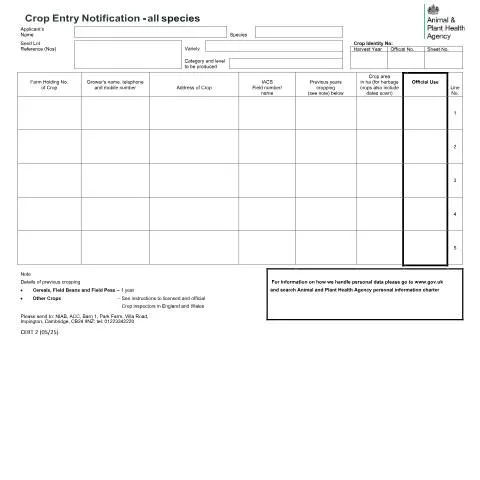
The Seed Crop Entry form consists of various sections that need careful attention. Each part serves a specific purpose in documenting and regulating seed production:
Applicant's Information
This section requires growers to provide their full name and contact details. It’s crucial as it establishes accountability and provides a point of contact for any queries or follow-ups.
Species and Seed Lot Details
Here, applicants must specify the species being cultivated, along with the seed lot reference numbers. This is vital for traceability, allowing authorities to track the source of seeds and their lineage.
Crop Identity and Category
Individuals must indicate the crop identity number along with the category and level of production. Misidentification here can lead to significant compliance issues. Growers should consult the guidelines to ensure they select the correct category.
Farm Holding Identification
It's important to detail the Farm Holding Number, as this links the crop to a specific geographic location. This distinction is critical in the event of crop inspections or disease outbreaks.
Crop Area and Historical Data
Applicants need to outline the area of the crop in hectares and provide data on previous cropping years. This information can influence the inspection process, as prior cropping practices may indicate potential risks or compliance issues.
What Happens After Submission?
Once the Seed Crop Entry document is submitted, the next steps involve a structured verification process by the APHA. This includes:
- Inspection Procedures: Depending on the crop type and previous compliance history, an on-site inspection may be conducted.
- Approval Notification: Growers will receive a formal notification regarding the acceptance of their application. If there are issues, the APHA will provide feedback on necessary actions.
- Compliance Checks: Post-harvest, growers may need to submit additional reports based on the yield and quality of the seeds produced to ensure ongoing compliance with health regulations.
Handling Refusals and Missing Information
In the unfortunate event of a refusal, it is crucial to understand the process of appeal or resubmission. Here are steps to consider:
- Review the Feedback: Carefully analyze the reasons provided for the refusal. This will often highlight missing information or errors on the form.
- Amend and Resubmit: Make the necessary changes and submit the form again, ensuring all supporting documentation is included.
- Contact the APHA: If clarification is needed, reach out to the APHA for guidance on rectifying issues.
It is advisable to keep records of all correspondence and submissions relating to the Seed Crop Entry to maintain a clear trail of compliance.
Comparative Overview: Seed Crop Entry vs. Other Documents
The Seed Crop Entry document often gets confused with other regulatory forms within the agricultural domain. Here’s a comparative look at how it differs:
| Document | Purpose | Unique Features |
|---|---|---|
| Seed Crop Entry | Registration of seed crops for health regulation | Requires detailed previous cropping data |
| Plant Health Certificate | Certification of plant health status for movement | Focuses on health inspection rather than registration |
| Field Inspection Report | Assessment of crop health during growth | Conducted on-site, typically post-registration |
Each of these documents serves a distinct purpose within the agricultural regulatory framework, and understanding their differences is key for growers.
Tips for Successful Completion of the Seed Crop Entry Document
To ensure a seamless submission process, consider the following:
- Double-Check Entries: Ensure all fields are completed accurately; errors can lead to delays or refusals.
- Consult Guidelines: Refer to APHA's official guidelines for specific requirements related to your crop type.
- Keep Records: Maintain copies of the submitted form and any communications for future reference.
In conclusion, navigating the intricacies of the Seed Crop Entry document requires diligence and attention to detail. By understanding the specific requirements, growers can ensure compliance with the relevant agricultural regulations and contribute to the overarching goal of maintaining plant health standards in the UK.
Understanding the Seed Crop Entry Process
Seed crop entry in the UK is governed by specific regulations that ensure the quality and authenticity of seeds being cultivated for commercial purposes. The process is overseen by the Animal and Plant Health Agency (APHA), which collaborates closely with the Department for Environment, Food and Rural Affairs (DEFRA). Before entering the seed crop, farmers must ensure that their seeds comply with the Seed Marketing Regulations 2011, which lays down essential requirements for the marketing of seeds within the UK as well as for seeds imported from other countries.
Farmers must apply for an entry to the seed crop register, which is a critical step in maintaining traceability and quality assurance. The application form, often referred to as the 'Seed Crop Entry Form' (SCE), requires detailed information about the seed variety, the source of the seed, and specifics about the cultivation practices that will be employed.
The timeline for submitting the SCE typically coincides with the planting season, which varies depending on the type of seed being cultivated. For instance, cereal seeds are usually sown in the autumn or spring, while some legumes may require different planting schedules. It's essential to check the appropriate guidelines for the specific crop type in the APHA website.
Requirements and Documentation for Seed Crop Entry
When preparing to submit a seed crop entry, it is crucial to gather all necessary documentation to avoid unnecessary delays. The following are key requirements:
- Seed Variety Certification: Ensure that the seed variety has been certified by an appropriate authority. This certification is critical to ensure that the seeds meet minimum quality standards.
- Plant Health Inspection: The APHA may require a plant health inspection to verify that the seeds do not harbor pests or diseases. It is advisable to familiarize yourself with the Plant Health Inspections Guidance provided by the government.
- Field Records: Maintain accurate records of your farming practices, including crop rotation, pesticide application, and irrigation practices. These records may be requested during inspections and are essential for compliance.
- Application Fees: While there may not always be a fee associated with the registration process, some applications or inspections may incur costs. Review the latest fee structure on the APHA website for specific details.
Ensuring that you have all necessary information and documentation will not only streamline the application process but also contribute to the overall quality and integrity of the seed crop being produced.
Compliance and Inspections: What to Expect
Once the seed crop has been entered into the official register, the farmer must remain compliant with various regulations throughout the growing season. Compliance includes adhering to the conditions set out in the Seed Marketing Regulations 2011 as well as any local farming codes of practice. The APHA conducts regular inspections to ensure compliance, and these inspections are an integral part of maintaining market standards.
During an inspection, APHA officials will assess the following:
- Record Keeping: Inspectors will review records of your seed sourcing, cultivation methods, and the application of any pesticides or fertilisers. Good record-keeping practices can demonstrate compliance and may expedite the inspection process.
- Field Conditions: The physical condition of the crop and the field will be assessed for compliance with health standards. This includes looking for signs of disease, pest infestations, and overall crop health.
- Traceability: The ability to trace the seeds back to their source is vital. Inspections will focus on the documentation that supports this traceability.
- Post-Harvest Handling: After the harvest, the way seeds are handled and stored can affect their quality. Inspectors may check storage conditions to ensure they conform to health regulations.
Falling short in any of these areas could result in penalties, including the potential disqualification from future seed crop entries. Therefore, maintaining diligent records and ensuring compliance with all regulations is essential for a successful agricultural operation.