The Importance of Seed Lot Entry Forms in Agricultural Practices
Understanding the complexities of seed certification in the UK is critical for any grower or supplier looking to navigate the agricultural landscape. The Seed Lot Entry Form, administered by the Animal and Plant Health Agency (APHA), plays a pivotal role in this certification process. It directly impacts how seeds are processed, traded, and ultimately cultivated on farms across the nation.
How the Seed Lot Entry Form Fits into the Certification Landscape
The Seed Lot Entry Form serves as a crucial initial step in the seed certification journey, allowing growers to register their seed lots for testing and certification. This process is governed by numerous regulations aimed at ensuring the quality and viability of seeds, thus safeguarding agricultural production and food security in the UK.
Upon submission, the form is reviewed by the National Institute of Agricultural Botany (NIAB), which works alongside APHA. This organisation is responsible for the practical aspects of seed certification, including testing for disease and genetic purity. It’s vital for applicants to prepare the form accurately, as any discrepancies can delay the certification process and even lead to rejection of the seed lot.
The Role of Seed Certification in UK Agriculture
Certification is essential for a variety of reasons:
- Quality Assurance: It guarantees that the seed is free from diseases and pests.
- Market Access: Many agricultural markets require certified seed, making it a necessity for commercial growers.
- Regulatory Compliance: Adhering to governmental regulations avoids penalties and ensures ethical trading practices.
Completing the Seed Lot Entry Form: A Step-by-Step Guide
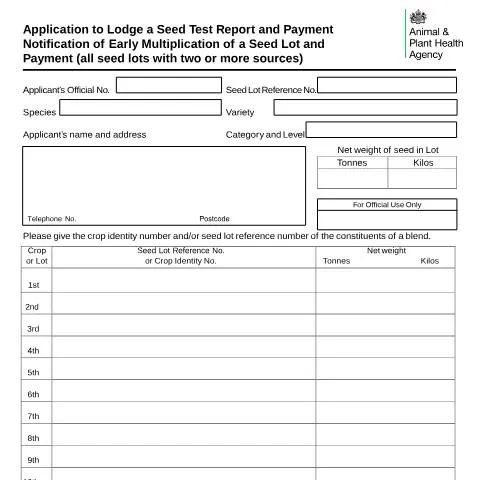
Filling out the Seed Lot Entry Form accurately is crucial. Here’s a detailed walkthrough of the key sections:
- Applicant Information:
- Provide your official name and address.
- Include your official registration number.
- Indicate your contact telephone number.
- Seed Lot Reference Number:
- Each seed lot must have a unique reference number.
- It helps in tracking and managing your application.
- Species and Variety:
- Clearly state the species and variety of the seeds.
- Be specific, as this information is vital for testing and certification.
- Weight of Seed Lot:
- Indicate the net weight of the seed in tonnes or kilos.
- This weight must correspond to the total submitted for testing.
- Payment Information:
- Specify the payment method and relevant details, like cheque number or BACS information.
- This ensures that processing of your application can proceed without financial delays.
What Happens After Submission?
Once the Seed Lot Entry Form is submitted to NIAB, the review process begins. The following stages outline what to expect:
| Stage | Duration | Description |
|---|---|---|
| Initial Review | 1-2 weeks | NIAB checks the accuracy of information and payment confirmation. |
| Seed Testing | 2-4 weeks | Seeds are tested for viability, purity, and disease presence. |
| Certification Decision | 1 week | NIAB issues a certificate if the seed lot meets the requirements. |
Potential Pitfalls: What to Avoid When Submitting Your Form
Common mistakes can lead to significant delays or even rejection of your seed lot certification. Here are some pitfalls to be aware of:
- Incomplete Information: Ensure all sections are filled out completely. Missing data can stall the review process.
- Incorrect Payment Details: Double-check your payment method to avoid delays in processing.
- Failure to Keep Copies: Always retain at least one copy of the submitted form for your records.
The Legal Framework Surrounding Seed Certification
The Seed Lot Entry Form operates under a robust legal framework that includes several key pieces of legislation:
- The Seed (National Lists of Varieties) Regulations: Establishes the requirements for variety registration.
- The Seed Marketing Regulations: Governs the marketing of seeds and ensures compliance with quality standards.
- The Plant Health (England) Order: Addresses biosecurity measures to prevent the spread of pests and diseases.
Each of these regulations is designed to protect not only the agricultural industry but also the environment and public health.
Special Conditions and Exceptions in Seed Lot Certifications
Not all seed lots are created equal, and various circumstances can alter the certification process:
- Foreign Seed Lots: If you are importing seeds from abroad, additional documentation may be required to ensure compliance with UK regulations.
- Emergency Situations: In cases of urgent agricultural needs, expedited procedures may be requested, but proper justification must be provided.
- Minor Applicants: If the applicant is a minor, parental or guardian consent is typically necessary to submit the form legally.
Keeping Track of Your Application: Communication with APHA
After submission, tracking the progress of your application is essential. Here’s how to maintain communication effectively:
- Follow Up: If you haven’t received confirmation within a reasonable timeframe, don’t hesitate to contact NIAB at 01223 342220.
- Request Updates: Inquire about any delays or issues that may have arisen during the review process.
- Document Everything: Keep notes of all communication for your records, including dates, names, and the content of conversations.
Understanding the intricacies of the Seed Lot Entry Form can significantly enhance your chances of smooth certification and successful agricultural practices. By being well-informed and diligent, you can navigate this essential process with confidence, ensuring your seeds meet the highest standards for quality and viability.