Navigating the Resignation Process as a Voluntary Liquidator
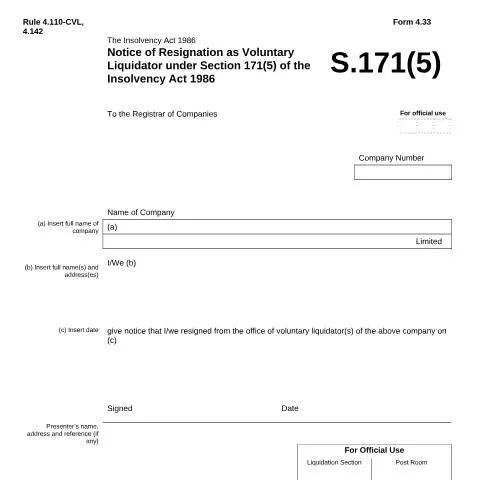
The journey of managing a company's finances can lead to the necessity of voluntary liquidation, a process often seen as a remedy when a company can no longer sustain its operations. However, the role of a liquidator is pivotal, and there may come a time when it is essential to resign from this duty. Understanding the nuances of the Notice of Resignation as Voluntary Liquidator (Form 4.33) is vital for ensuring compliance with UK regulations.
Understanding Your Responsibilities as a Liquidator
Before delving into the intricacies of the resignation notice, it's essential to grasp what being a voluntary liquidator entails. The liquidator is responsible for winding up the affairs of a company, paying off debts, and distributing any remaining assets to shareholders. This role can be demanding, and the decision to resign is often not taken lightly.
When to Consider Resigning
Many circumstances may prompt a voluntary liquidator to resign, including:
- Conflict of Interest: Situations where personal interests conflict with those of the company.
- Health Concerns: Personal health issues that impede the ability to perform duties effectively.
- External Pressures: Intimidation or undue influence from stakeholders.
- Resource Limitations: Lack of adequate resources to continue overseeing the liquidation process.
Key Components of the Notice of Resignation
The notice of resignation, captured in Form 4.33, is a crucial document to signal your departure from the role of liquidator. This form should be completed carefully, as it serves as formal communication to the Registrar of Companies. Here are the components you will need to address:
- Company Number: Essential for identifying the company in question.
- Name of Company: Clearly state the full legal name of the company.
- Your Details: Include your name(s) and address(es) as the resigning liquidator(s).
- Date of Resignation: Specify the exact date you resigned from your position.
Completing the Form: Step-by-Step
While this guide does not instruct on how to fill the form, here is a general approach to ensure you are well-prepared:
- Gather Company Information: Ensure you have all pertinent details about the company and your role as liquidator.
- Document Your Reasons: While not mandatory to include in the notice, having a documented rationale for your resignation can be beneficial should questions arise.
- Sign the Notice: Ensure you have the authority to sign and that your signature is present at the bottom of the form.
- Submit on Time: As per the guidelines, the notice should be submitted promptly to maintain compliance with the Insolvency Act 1986.
The Legal Framework Surrounding Resignation
Your resignation as a voluntary liquidator is framed within the Insolvency Act 1986. This legislation establishes the grounds upon which a liquidator can step down. Section 171(5) specifically outlines the provisions relevant to voluntary liquidators resigning from their duties. Being familiar with these legal stipulations will ensure you adhere to all requirements and thereby mitigate the risk of potential legal repercussions.
Ensuring Compliance with Data Protection Obligations
It is paramount to consider the Data Protection Act 2018 and its implications when handling sensitive company information during the resignation process. As a liquidator, you are entrusted with personal data that must be managed in compliance with GDPR regulations. Ensuring that data is protected during your resignation is not just a legal obligation; it also safeguards the interests of stakeholders involved.
Key Data Protection Considerations
- Confidentiality: Maintain confidentiality regarding any sensitive information obtained in your capacity as liquidator.
- Data Minimisation: Only collect and retain data that is necessary for the resignation process.
- Secure Transmission: Use secure methods to transmit any required documentation to the Registrar of Companies.
The Aftermath: What Happens Next?
Once the resignation notice has been submitted, several follow-up actions may be necessary to wind down your obligations effectively:
- Notify Stakeholders: Inform shareholders and creditors about your resignation and the implications for the liquidation process.
- Transfer Duties: Ensure that the subsequent liquidator (if appointed) is fully briefed on the status of the liquidation.
- Final Accounts: Prepare final accounts to facilitate a smooth transition and maintain transparency with stakeholders.
Engaging a Successor Liquidator
If you are resigning from the role of liquidator, it is often prudent to engage a successor to ensure that the liquidation process continues without interruption. When recommending a successor, consider the following:
- Experience: The individual should have a solid background in insolvency matters.
- Reputation: A good standing in the industry can instill confidence among stakeholders.
- Availability: Ensure they are able to commit the resources necessary to manage the liquidation effectively.
Related Documentation and Forms
Alongside Form 4.33, several other documents may be relevant to your resignation and the ongoing liquidation process:
| Document | Purpose |
|---|---|
| Form 4.34 | Declaration of the liquidator’s winding-up accounts. |
| Form 4.36 | Notice of appointment of a new liquidator. |
| Final Accounts | Detailed accounts of the liquidation process. |
Target Audience: Who Needs This Guide?
This guide is particularly aimed at individuals who find themselves in the role of a voluntary liquidator and are considering resignation due to various factors. Not only does it provide insights for current liquidators, but it also serves as a useful resource for:
- Company Directors: Who need to understand the process should a liquidator resign.
- Shareholders: Keen on the implications of a liquidator's resignation.
- Legal Professionals: Who may advise on insolvency matters.
Conclusion: The Importance of a Smooth Transition
Resigning from the role of a voluntary liquidator is a significant decision that requires careful consideration. Ensuring that you follow the necessary legal protocols, including submitting Form 4.33 to Companies House, is key to a smooth transition. By understanding the responsibilities involved and the implications of your resignation, you can navigate this complex process effectively.
Understanding the Role and Responsibilities of a Voluntary Liquidator
The role of a voluntary liquidator is crucial in the process of winding up a company, primarily when the decision is made voluntarily by the company's shareholders. A voluntary liquidator is responsible for ensuring that the assets of the company are properly managed and that liabilities are settled in accordance with legal requirements. Understanding the scope of this role can significantly impact the process of resignation.
A liquidator must act impartially and in the best interests of the creditors and shareholders. They must also follow legal frameworks set out in the Insolvency Act 1986. Their responsibilities include:
Fill in your form directly online
No printing: type your details into the boxes of the official form, tick, then download the PDF ready to send.
- 1Type into the form boxes
- 2Tick in one click
- 3Save and download the PDF
- Valuing and collecting all the company’s assets.
- Distributing the assets to creditors based on priority, which follows a specific order outlined in insolvency law.
- Maintaining accurate records and accounts throughout the liquidation process.
- Communicating with shareholders and creditors regularly to provide updates on the liquidation status.
- Preparing necessary documentation for Companies House to reflect the company's dissolution.
As a voluntary liquidator, one must be aware that their role is not just confined to the financial aspects of liquidation. They must also ensure compliance with the Data Protection Act 2018 and UK GDPR when handling personal data during the liquidation process, safeguarding sensitive information throughout the procedure.
Steps to Follow When Resigning as a Voluntary Liquidator
Resigning as a voluntary liquidator involves a series of prescribed steps to ensure that the resignation is executed lawfully and transparently. Here’s a detailed guide on the resignation process:
- Assess Your Position: Before proceeding with your resignation, evaluate whether any ongoing duties or responsibilities remain. Ensure that the liquidation process is at a stage where your resignation will not adversely affect the interests of creditors or shareholders.
- Obtain Consent: Depending on the circumstances, it may be wise to seek consent from the company’s shareholders or the creditors before officially resigning. This can be done by calling a meeting or circulating a written resolution.
- Prepare a Resignation Letter: Draft a formal resignation letter detailing your intention to resign, the reasons for your resignation, and the effective date. This letter should also confirm that you are resigning in compliance with the Insolvency Act 1986.
- Notify Relevant Parties: After preparing your resignation letter, notify all relevant parties, including shareholders, creditors, and Companies House. This ensures that all stakeholders are informed of your decision and can take any necessary action.
- File with Companies House: Submit a copy of your resignation letter to Companies House using the relevant forms, typically known as the AD01 form to register changes to the company’s officers. Ensure this is done promptly to avoid any potential complications.
- Assist in Transition: If possible, offer assistance to the remaining directors or incoming liquidator during the transition period, helping them to understand the current status of the liquidation and any ongoing issues that might need addressing.
By following these steps, you can ensure that your resignation as a voluntary liquidator is handled professionally and in accordance with the legal requirements, minimizing the risk of complications during the liquidation process.
Common Challenges Faced During the Resignation Process
Resigning as a voluntary liquidator is not without its challenges. Understanding these potential hurdles can help you prepare better for a smoother resignation process.
- Complexity of Ongoing Cases: If the liquidation process involves complex assets or disputes among creditors, your resignation may lead to complications. A clear communication strategy is essential to keep all parties informed and manage expectations during your departure.
- Impact on Creditor Confidence: Creditors rely on liquidators to manage their interests diligently. If they perceive your resignation as a negative sign, it could lead to unrest. Open dialogue and transparency can help mitigate nervousness among creditors.
- Adequate Record-Keeping: Ensuring that all documentation relating to the liquidation is up to date and clearly recorded is vital. Inadequate record-keeping can result in disputes post-resignation, complicating the process for the incoming liquidator.
- Legal Compliance: Failing to adhere to the legal frameworks, such as the insolvency laws or data protection regulations, can lead to legal repercussions. Ensuring that you are fully compliant during your resignation is crucial to avoid facing allegations of misconduct.
By being aware of these challenges, you can take proactive measures to address them and ensure a more seamless transition when resigning as a voluntary liquidator.