Understanding the Notice of Ceasing to Act as Voluntary Liquidator (Form 4.40) in the UK
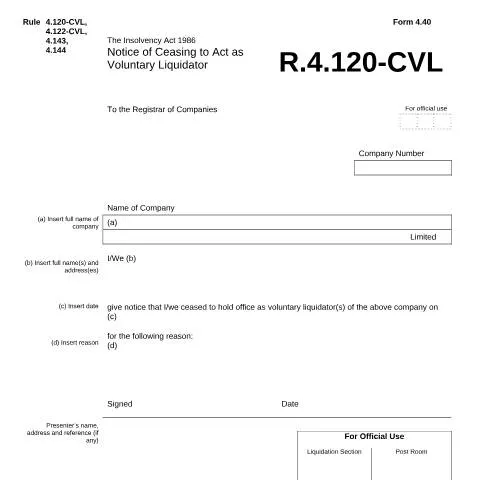
When a voluntary liquidator decides to step down from their role in winding up a company, it is essential to follow the proper legal procedures to ensure compliance with UK insolvency laws. The official document used for this purpose is known as the Notice of Ceasing to Act as Voluntary Liquidator, which is submitted to Companies House using Form 4.40. This guide provides a comprehensive overview of the purpose, scope, and procedural requirements associated with this notice, ensuring liquidators and relevant stakeholders understand their obligations under UK law.
Purpose and Legal Framework
The primary purpose of the Notice of Ceasing to Act as Voluntary Liquidator is to formally inform the Registrar of Companies (Companies House) that the appointed voluntary liquidator has concluded their role in the company's liquidation process. This step is crucial for maintaining accurate public records and ensuring transparency in the insolvency proceedings.
This process is governed by the Insolvency Act 1986 and the relevant statutory rules, including Rule 4.120-CVL, Rule 4.122-CVL, and Rule 4.143. These legal provisions stipulate the procedures and documentation required when a liquidator ceases to act, whether due to completion of the liquidation, resignation, or other reasons.
Scope and Application
This notice applies specifically to voluntary liquidators involved in the winding-up of companies under the provisions of the Insolvency Act 1986. It is relevant for liquidators appointed either through a creditors' voluntary liquidation (CVL) or a members' voluntary liquidation (MVL). The document ensures that the transition of responsibilities from the liquidator to the company's stakeholders and authorities is properly recorded.
Key Components of the Notice
The Form 4.40 requires several essential details to be completed accurately:
- Company Details: The company's registered number and full legal name, including the limited designation.
- Liquidator Information: Full name(s) and address(es) of the liquidator(s) ceasing their role.
- Date of Ceasing: The specific date when the liquidator(s) ceased to hold office.
- Reason for Ceasing: The legal or procedural reason for the termination of the liquidator's appointment, such as completion of liquidation or resignation.
- Signature and Date: The signed declaration by the liquidator confirming the notice, along with the date of signing.
Procedural Steps for Submission
Once the liquidator has completed the form with all required details, it must be submitted to the Post Room of the Liquidation Section at Companies House. The submission can be made physically or electronically, depending on the arrangements and the company's circumstances. It is vital to ensure that the form is signed and dated correctly to avoid delays or processing issues.
After submission, the Registrar updates the public record to reflect that the liquidator has ceased to act. This update is essential for legal clarity and for any future inquiries related to the company's insolvency proceedings.
Implications for the Liquidator and Stakeholders
Filing this notice signifies the formal conclusion of the liquidator's responsibilities in the company's winding-up process. It also marks the transition of authority and responsibility to the company's directors or other relevant parties, depending on the stage of the liquidation.
Fill in your form directly online
No printing: type your details into the boxes of the official form, tick, then download the PDF ready to send.
- 1Type into the form boxes
- 2Tick in one click
- 3Save and download the PDF
For stakeholders, including creditors, shareholders, and regulatory authorities, the notice provides assurance that the insolvency process has been properly concluded and that the company's affairs are now under the appropriate legal closure.
Summary
In summary, the Notice of Ceasing to Act as Voluntary Liquidator (Form 4.40) is a vital document within the UK insolvency framework. It ensures transparency, accountability, and proper record-keeping when a liquidator concludes their role. Accurate completion and timely submission of this notice are essential for compliance with statutory requirements and for safeguarding the integrity of the insolvency process.