Understanding the Context of Liquidation in the UK
When a company in the UK faces insolvency, it may enter a voluntary liquidation process, allowing for an orderly winding up of its affairs. This procedure is typically initiated by the company’s directors and requires the appointment of a liquidator to manage the company’s assets, settle debts, and ensure compliance with legal obligations. However, circumstances can change, leading to the need for the removal of a voluntary liquidator. That’s where the Notice of Removal of Voluntary Liquidator (Form 4.38) comes into play.
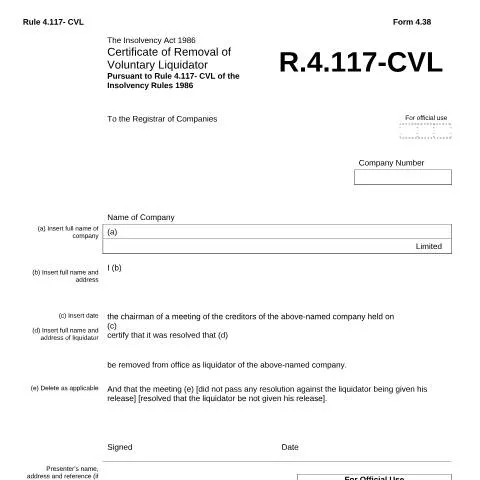
Key Elements of Form 4.38
This document is a formal notice given to Companies House regarding the removal of a voluntary liquidator. It must be completed accurately to reflect the decisions made in the relevant creditors' meeting. Let’s break down what you will find within this document:
- Company Details: The notice requires the full legal name of the company and its registration number.
- Liquidator Information: Essential details about the liquidator being removed, including their name and address.
- Meeting Resolution: A certification that outlines the resolution passed during the creditors’ meeting regarding the liquidator’s removal.
- Conditions of Release: A section to clarify whether the liquidator is to be granted their release or not.
When is the Notice of Removal Indispensable?
It's crucial for companies undergoing liquidation to notify Companies House about any changes in the liquidator’s status. Situations that may prompt this notice include:
- Performance Issues: If the liquidator is not fulfilling their duties effectively, stakeholders can seek their removal.
- Conflict of Interest: If there arises a conflict between the company and the liquidator, removal may be essential to protect the company’s interests.
- Change in Strategy: A shift in the liquidation strategy necessitating a different liquidator’s expertise may require the current liquidator's removal.
Detailed Breakdown of the Removal Process
To successfully remove a voluntary liquidator, adherence to a specific process is required. Here’s how to navigate this procedure step by step:
- Hold a Creditors’ Meeting: A meeting must be convened with all creditors to discuss the liquidator’s performance and the proposed removal.
- Pass a Resolution: The creditors must pass a resolution agreeing to the liquidator's removal. This is typically done via a simple majority vote.
- Complete Form 4.38: Fill out the document accurately, ensuring all details reflect the meeting's resolution.
- Submit to Companies House: After completion, the notice needs to be submitted to Companies House to officially record the removal.
Potential Pitfalls in the Process
There are several common misinterpretations and mistakes that can occur when dealing with Form 4.38:
- Incomplete Information: Failing to provide all necessary information, such as the correct company name or liquidator details, could lead to rejection of the notice.
- Incorrect Resolution Clauses: Misstating the nature of the resolution passed at the creditors’ meeting can create confusion and legal complications.
- Timing Issues: Not adhering to the timeline for submitting the notice post-meeting may result in delays in processing.
Articulating the Notice with Other Documentation
The Notice of Removal of Voluntary Liquidator does not stand in isolation. It is part of a broader legal framework encompassing several documents and requirements. Here’s how it interconnects:
| Document | Purpose |
|---|---|
| Form 4.38 | Notifies Companies House of the liquidator's removal. |
| Liquidation Reports | Provide an overview of the liquidation process and the liquidator's actions. |
| Creditors' Meeting Minutes | Document the decisions made by creditors regarding the liquidator’s performance and removal. |
| Letter of Appointment of New Liquidator (if applicable) | Confirms the appointment of a new liquidator, if one is being appointed. |
Understanding the Implications of Liquidator Removal
Removing a liquidator is not a trivial matter. It comes with several implications and considerations:
- Continuity of the Process: The removal can disrupt the liquidation process, leading to potential delays in asset distribution.
- Stakeholder Confidence: Frequent changes in liquidators may raise concerns among creditors about the stability and management of the liquidation.
- Legal Liabilities: If the previous liquidator was not performing adequately, there may be legal repercussions for the company’s stakeholders.
Best Practices for Utilizing Form 4.38 Effectively
To ensure the successful removal of a voluntary liquidator, consider the following best practices:
- Documentation: Keep meticulous records of the creditors’ meeting and the resolutions passed.
- Consultation: Engage legal or financial advisers experienced in insolvency matters to guide you in the process.
- Timeliness: Submit the notice and any related documentation promptly to avoid unnecessary delays.
- Communication: Maintain open lines of communication with stakeholders regarding the changes in the liquidation process.
Conclusion: Navigating the Removal of a Voluntary Liquidator
The Notice of Removal of Voluntary Liquidator (Form 4.38) is a critical part of the voluntary liquidation process, enabling companies to adapt to changing circumstances and maintain legal compliance. Understanding the document’s implications, required steps, and common pitfalls can significantly enhance the effectiveness of this procedure. Stakeholders should approach this process with thorough preparation, ensuring that all legal obligations are met while maintaining the trust of creditors during what can be a tumultuous time.
Understanding the Role and Responsibilities of a Voluntary Liquidator
A voluntary liquidator plays a crucial role when a company is unable to meet its financial obligations and seeks to wind up its affairs in an orderly manner. Appointed by the company's directors or shareholders, the voluntary liquidator is responsible for managing the liquidation process. This includes gathering and valuing the company’s assets, settling debts with creditors, and distributing any remaining funds to shareholders. Understanding these responsibilities is vital for both the liquidator and those involved in the process, including creditors and employees.
The voluntary liquidator operates under the frameworks provided by the Insolvency Act 1986 and must adhere to the principles and guidelines laid out by the Insolvency Service. They must ensure that all actions taken are in the best interests of the creditors and compliant with the legal obligations. This means maintaining communication with stakeholders, ensuring transparency throughout the process, and conducting a thorough investigation into the financial affairs of the company.
When it comes to removal of a voluntary liquidator, it's essential to highlight that such removals can occur for various reasons. A common scenario might involve a liquidator failing to act in accordance with their statutory duties or not performing their role effectively. In such cases, stakeholders may seek to replace the liquidator to ensure a smooth transition and the fair treatment of all involved parties.
Stakeholders, including company directors and creditors, may also have the power to influence the appointment or removal of the voluntary liquidator through meetings and resolutions. It's important to consider that the removal process is subject to strict legal procedures, ensuring that any changes made are justified and ethically sound. This includes submitting the appropriate notices, such as a notice of removal, to the relevant authorities.
Procedure to Notify Stakeholders of Liquidator Removal
Notifying stakeholders about the removal of a voluntary liquidator is a vital step in the liquidation process. The removal notification must be executed in a manner that upholds transparency and maintains trust among all parties involved. The process can be divided into several key stages:
- Preparation of Documentation: This involves preparing a formal notice of removal, which should include essential details such as the reason for the removal, the effective date, and any relevant information about the new liquidator, if applicable. It's crucial to ensure that this documentation complies with the requirements set forth by the Insolvency Act 1986.
- Informing the Liquidator: The voluntary liquidator who is being removed must receive formal notification, ideally in writing. This notice should provide a clear rationale for the removal and any pertinent timelines.
- Communicating with Creditors and Shareholders: Once the formal notice is prepared, it should be distributed to all creditors and shareholders. This communication should clearly explain the situation, the reasoning behind the decision, and any next steps that will follow. Maintaining open lines of communication is vital to prevent unrest or confusion among creditors, as they have a vested interest in the proceedings.
- Filing with Regulatory Bodies: Following the notification to stakeholders, it's necessary to file relevant paperwork with regulatory bodies such as Companies House. This filing is required to ensure that the removal is officially recorded and that the company’s records reflect the current status accurately.
- Appointment of a New Liquidator: If a new voluntary liquidator is appointed, details of their appointment should also be conveyed to all stakeholders promptly. This helps to preserve confidence in the process and ensures that all parties are aware of who is now handling the liquidation.
The above steps play an integral role in ensuring that the removal process of a voluntary liquidator is conducted in a lawful, ethical, and efficient manner. By adhering to these practices, the company can maintain credibility and transparency throughout its winding-up process.
Fill in your form directly online
No printing: type your details into the boxes of the official form, tick, then download the PDF ready to send.
- 1Type into the form boxes
- 2Tick in one click
- 3Save and download the PDF
Legal Implications of Liquidator Removal for the Company and Stakeholders
The decision to remove a voluntary liquidator can have significant legal implications, not just for the liquidator being removed, but also for the company itself and its stakeholders. Understanding these ramifications is essential for making informed decisions during the winding-up process.
First and foremost, the company must ensure that the removal process adheres to the statutory requirements laid out in the Insolvency Act. If the removal does not align with these regulations, it could lead to legal challenges or disputes. For instance, if stakeholders feel that the removal was unjust or not conducted properly, they may potentially contest the decision, resulting in delays or additional costs.
Moreover, when a liquidator is removed, any ongoing investigations into the company’s financial affairs may be impacted. A new liquidator may need to re-evaluate the company’s finances and take a fresh look at any claims made by creditors or other interested parties. This could lead to new findings or alter the course of the liquidation process.
For creditors, the removal of a liquidator could create uncertainties regarding their claims and the settlement of debts. If the process is mismanaged, it could result in losses or delays in receiving payments. Stakeholders must remain vigilant and actively engaged, ensuring their rights are protected throughout the transition.
Lastly, the removal of a voluntary liquidator can have reputational repercussions for the company. If the reasons for the removal become public knowledge, it could lead to a loss of confidence among clients, suppliers, and other business partners. This is why it’s imperative for the company to manage communications carefully and ensure that all parties are kept informed of developments throughout the liquidation process.
In summary, the legal implications of removing a voluntary liquidator are multifaceted and can affect various aspects of the liquidation process. Stakeholders should remain aware of their rights and the potential impacts of such a decision, ensuring that any actions taken are in their best interests while adhering to legal requirements.