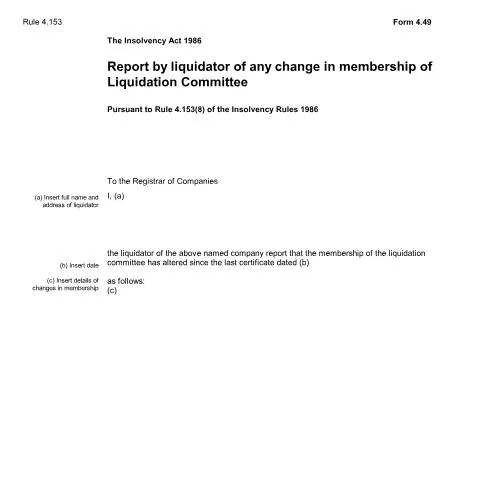
Navigating the Liquidation Committee Membership Changes: Understanding Form 4.49
When a company enters liquidation, the management of its affairs transfers to a liquidator, who is responsible for overseeing the process. One crucial aspect of this process is the liquidation committee, which serves to protect the interests of creditors. Changes in this committee must be formally reported to ensure transparency and compliance with legal requirements. This is where Form 4.49 comes into play. Understanding the intricacies of this document is essential for anyone involved in the liquidation process. This article will explore the critical aspects of Form 4.49 and what it means for stakeholders.
The Role and Importance of the Liquidation Committee
The liquidation committee is integral to overseeing the conduct of the liquidator. It is composed of creditors who have a vested interest in the liquidation process. The committee's primary responsibilities include:
- Approving the liquidator's actions and decisions
- Reviewing the progress of the liquidation
- Ensuring fair treatment of all creditors
Changes in the membership of this committee could impact the direction of the liquidation process and the interests of creditors. Therefore, it is mandatory for the liquidator to report any alterations in committee membership using Form 4.49, as stipulated under the Insolvency Act 1986 and detailed in Rule 4.153 of the Insolvency Rules 1986.
Who is Responsible for Submitting Form 4.49?
The responsibility for completing and submitting Form 4.49 falls squarely on the liquidator. As the appointed individual to manage the liquidation process, the liquidator must keep accurate records and ensure that any changes in the committee's membership are documented and reported promptly. This is essential not only for legal compliance but also for maintaining the trust of creditors.
When Should Form 4.49 Be Submitted?
Form 4.49 should be submitted whenever there is a change in the membership of the liquidation committee. This could occur due to:
- Resignation of a committee member
- Addition of new members
- Changes in the status of a member (e.g., insolvency or disqualification)
Timely submission of the form is critical, as delays could lead to complications in the liquidation process or even legal repercussions for the liquidator.
Completing Form 4.49: A Step-by-Step Guide
Completing Form 4.49 is straightforward but requires careful attention to detail. Here is a structured approach to filling out the form:
1. Liquidator's Details
The first step involves entering your full name and address as the liquidator. This information is vital for record-keeping and should match the official records held by Companies House.
2. Reporting Date
Next, include the date on which you are submitting the form. This date serves as a reference for when the changes took effect.
3. Details of Changes
In this section, clearly outline the specific changes in membership of the liquidation committee. Be precise, as vague descriptions can lead to misunderstandings or delays. Use bullet points if necessary to ensure clarity. For example:
- John Smith resigned from the committee on [date]
- Jane Doe appointed as a new member on [date]
4. Sign and Date the Form
Finally, sign and date the form to confirm its accuracy and completeness. This step is essential, as a lack of signature may result in the form being rejected.
Submitting Form 4.49: Channels and Compliance
Once completed, Form 4.49 must be submitted to the Registrar of Companies at Companies House. This can typically be done via post or, in some cases, electronically. It is vital to ensure that the submission channel you choose complies with the latest guidelines set by Companies House.
What Happens After Submission?
After you submit Form 4.49, the Registrar will process the changes. Once approved, the alterations will be officially recorded, and you will receive confirmation of the update. This confirmation is critical for your records, as it serves as proof that the changes have been documented.
Confronting Challenges: What If There Are Issues with Your Submission?
Even with careful preparation, issues may arise during the submission process. Here are common challenges and how to address them:
1. Missing Information
If the Registrar identifies that your submission is incomplete, they will typically return the form, highlighting the missing information. It is crucial to address these omissions promptly to avoid further delays.
2. Refusal of Submission
In some cases, Form 4.49 may be refused due to incorrect formatting or non-compliance with legal requirements. If your submission is refused, carefully review the feedback provided and rectify any discrepancies before resubmitting.
The Consequences of Not Reporting Changes
Neglecting to report changes in the liquidation committee can have serious implications. Firstly, it can lead to legal challenges and penalties against the liquidator. Furthermore, it undermines the integrity of the liquidation process, potentially jeopardizing the interests of creditors.
Failure to adhere to these requirements could result in regulatory scrutiny and may compromise the liquidator’s position. Therefore, ensuring accurate and timely reporting through Form 4.49 cannot be overstated.
Final Considerations: Maintaining Transparency Throughout the Liquidation Process
The liquidation process is fraught with complexities, and maintaining transparency is essential. By diligently reporting changes in the liquidation committee through Form 4.49, liquidators help foster trust among creditors and safeguard their interests. Aside from fulfilling legal obligations, this practice contributes to a smoother liquidation process, ultimately benefiting all parties involved.
A Note on Data Protection
It is also imperative to consider the Data Protection Act 2018 and the UK GDPR when handling personal data during this process. Ensure that any personal information included in Form 4.49 is processed in compliance with data protection regulations.
Engagement and Further Resources
For further assistance, liquidators may benefit from professional training on the specifics of handling liquidation processes. Additionally, consulting with legal advisors familiar with insolvency law can provide invaluable guidance as these situations often require nuanced understanding.
In summary, Form 4.49 is a vital document in the landscape of company liquidation in the UK. Understanding its functions, requirements, and implications helps ensure that all parties navigate this complex process with greater ease and confidence.
Understanding the Liquidation Committee and Its Role
The liquidation committee plays a crucial role in the process of winding up a company in the UK. Comprised of members who are creditors or representatives of creditors, the committee’s primary task is to oversee the actions of the liquidator, ensuring fair treatment and protection of their interests. It allows stakeholders to maintain a level of control over the liquidation process and is particularly essential in complex cases involving significant assets or debts.
The committee typically consists of individuals who have a vested interest in the liquidation proceedings, often including representatives from major creditors. Their influence can significantly affect how the liquidation progresses, including decisions related to the sale of assets and the distribution of funds. Membership in this committee can change for several reasons, such as the addition of new creditors or changes in the status of existing members. It's vital for a liquidator to keep the committee informed and updated about these changes, as it can impact the strategic decisions during the liquidation process.
Understanding the dynamics and responsibilities of the liquidation committee can empower creditors and stakeholders to participate effectively in the process. This knowledge can lead to better outcomes for creditors, ensuring their views are considered and that the liquidation proceeds are maximally beneficial for all parties involved.
Steps to Notify Changes in Membership
When there is a change in the membership of the liquidation committee, it is essential to notify the appropriate authorities formally. The process should be handled meticulously to ensure compliance with legal requirements and to maintain transparency within the proceedings.
Fill in your form directly online
No printing: type your details into the boxes of the official form, tick, then download the PDF ready to send.
- 1Type into the form boxes
- 2Tick in one click
- 3Save and download the PDF
1. Document the Change: As soon as a change in the committee is identified—whether through the resignation of a member, the addition of a new member, or any reorganization—it is critical to document the change thoroughly. This documentation should include the reasons for the change and any relevant details about the new or departing members.
2. Prepare the Notification: The liquidator must prepare a formal notification detailing the changes. This document should include the names of the new and outgoing committee members, their capacities, and a brief explanation regarding the nature of the changes. It’s also important to highlight how these changes may influence the liquidation process.
3. Submit to the Relevant Authorities: Once the notification is prepared, it must be submitted to the relevant authorities, such as Companies House, if required. This ensures that the official records are updated accordingly. Additionally, keeping the creditors informed about the changes through newsletters or meetings can foster transparency and trust.
4. Update Internal Records: Internally, the liquidator should ensure that all internal records are adjusted to reflect the new composition of the committee. This includes updating contact lists, operational protocols, and any relevant decision-making guidelines that depend on committee membership.
5. Follow Up: After the notification has been submitted, it is advisable to follow up with the authorities to confirm that the changes have been officially recognized. This step ensures that there are no administrative oversights that could affect the liquidation process.
Implications of Changes in Membership for Creditors
Changes in the membership of the liquidation committee can have significant implications for creditors involved in the proceeding. Understanding these impacts can help creditors navigate their positions more effectively during the liquidation process.
1. Representation and Influence: The makeup of the liquidation committee directly affects how decisions are made during the process. For instance, if a new member with considerable influence or a strong track record is added, this could shift the focus of the committee’s priorities, potentially benefiting certain creditors over others. Creditors should be aware of who represents them and how their interests can be advanced or hindered by these changes.
2. Communication and Collaboration: Changes in committee membership may influence the dynamics of communication among creditors. New members might have different communication styles or preferences, which could affect how information is disseminated. Establishing open lines of communication can help mitigate any misunderstandings and ensure that all creditors are on the same page regarding decisions that impact their claims.
3. Trust and Confidence: With any change in the committee, trust can be a significant concern. If creditors feel that a member has been replaced for less than transparent reasons, it may lead to doubts about the integrity of the process. Liquidators should prioritize transparency when handling these changes, proactively addressing any potential concerns raised by creditors.
4. Legal Considerations: Creditor rights may also be influenced by changes in the liquidation committee. If the new member brings forward differing perspectives on creditor rights or recovery strategies, it could change the overall strategy of the liquidation process. Creditors should remain vigilant and perhaps consider seeking independent legal advice to ensure their rights are fully protected amid such changes.
5. Participation in Future Meetings: Finally, creditors must be aware that changes in the committee may alter their participation in future meetings or decision-making processes. It's essential for creditors to stay engaged regardless of committee changes, as their input remains vital to the success of the liquidation and their recovery chances.