Navigating the Intricacies of Creditors' Committees
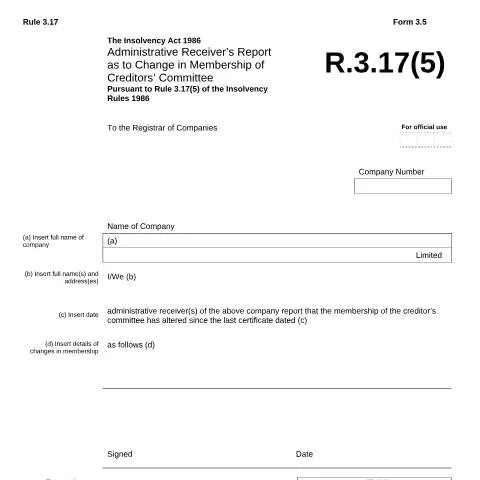
When a company enters a state of insolvency, the management of its creditors becomes crucial. Understanding the nuances of the creditors' committee is essential for companies, insolvency practitioners, and creditors alike. The document titled “Give notice of change in membership of creditors' committee (3.5)”, governed by the Insolvency Act 1986, plays a pivotal role in this process. This guide delves into the significance of this notice, its procedural aspects, and how to effectively utilise it.
Essential Background on Creditors' Committees
A creditors' committee is formed during insolvency proceedings, with the primary aim of representing the interests of all creditors. This committee often plays a crucial role in decision-making regarding the administration of the insolvent company. Changes in its membership can occur for various reasons, including the resignation of existing members or the appointment of new ones. The notice issued under Rule 3.17(5) of the Insolvency Rules 1986 serves to formally document these changes.
Who Needs to Pay Attention?
The notice impacts multiple stakeholders, including:
- Insolvency Practitioners: Individuals responsible for managing the insolvency process must keep track of committee changes to ensure effective representation of creditors.
- Creditors: Those owed money by the insolvent company should be aware of who represents their interests, as it may affect decisions regarding their claims.
- Company Directors: Understanding how the creditors’ committee operates and its changes can help directors navigate the insolvency landscape more effectively.
Understanding the Notice’s Structure
The notice itself consists of several key components that need to be clearly understood:
- Company Details: It includes the Company Number and the full name of the company involved, which are essential for identification.
- Report Date: The date on which the administrative receiver reports the changes must be clearly stated to maintain an accurate timeline of the insolvency process.
- Changes in Membership: This section details the specific changes in the creditors' committee, including the names and addresses of new members.
Step-by-Step Approach to Using the Notice
- Gather Necessary Information: Collect all relevant details about the creditors' committee, including member names, addresses, and the nature of the changes.
- Complete the Notice: Fill out the notice carefully, ensuring that all fields are accurately completed. Pay close attention to the details regarding the changes.
- Submit to Companies House: The completed notice must be sent to Companies House, ensuring that all stakeholders are kept informed about the committee's composition.
- Maintain Records: Keep a copy of the submitted notice for your records, as it may be needed for future reference or in case of disputes.
Articulating Changes: Key Information Required
When reporting changes in the creditors' committee, certain details are imperative:
- Previous Members: Documenting who was on the committee before the changes can clarify the context for new additions or removals.
- New Members: Clearly stating the details of new members ensures that all parties are aware of who represents their interests.
- Reasons for Changes: While not always mandatory, explaining why members have changed can provide transparency and foster trust among stakeholders.
Common Misinterpretations and Missteps
Understanding how to effectively use the notice is vital, yet certain common misunderstandings can lead to errors:
- Ignoring Timeliness: Failing to submit the notice promptly can lead to complications in the insolvency process and potential legal repercussions.
- Incomplete Information: Omitting critical details can result in confusion or delays in the administration process.
- Assuming Automatic Updates: Many believe that changes in the committee will be automatically recognised; however, formal notification is necessary.
Interconnections with Other Documents
The notice of change in membership of the creditors' committee must be considered in the context of other insolvency documentation:
| Document | Purpose | Relation to Notice |
|---|---|---|
| Insolvency Practitioner’s Report | Details the situation and plan for the company's finances. | Sets the context for why changes in the committee may be necessary. |
| CREDITORS’ MEETING MINUTES | Documents discussions and decisions made by creditors. | May reference changes in the committee during discussions. |
| Notice of Creditors’ Meeting | Notifies creditors about upcoming meetings. | Could mention changes in committee to inform participants. |
Limitations of the Notice
While the notice serves a critical function, it does have its limitations:
- Does Not Authorise Actions: The notice itself does not grant any additional powers to the committee; those powers are derived from the insolvency process.
- Formal Requirements: Failing to adhere to formal submission processes can lead to challenges or disputes over the legitimacy of the changes.
- Not a Substitute for Communication: While the notice informs Companies House, direct communication with creditors is still essential.
Enhancing Transparency in Insolvency Processes
Transparency in the insolvency process is paramount for maintaining trust among all parties involved. By accurately documenting changes in the creditors' committee through the notice, companies and insolvency practitioners can foster a more transparent relationship with creditors. This not only aids in the fair representation of interests but also enhances the overall integrity of the insolvency process.
Final Thoughts on Best Practices
Utilising the notice of change in membership of creditors' committee effectively can significantly impact the insolvency process. Here are some suggestions for best practices:
- Double-Check Details: Always review the notice for accuracy before submission to avoid unnecessary complications.
- Engage with Stakeholders: Keeping open lines of communication with creditors and other stakeholders helps clarify any misunderstandings regarding committee changes.
- Stay Updated: Keep abreast of any changes in insolvency law or practices that may affect the creditors' committee and related documentation.
Understanding the Role of the Creditors' Committee
The creditors' committee plays a crucial role in insolvency proceedings. This group is composed of creditors who have a vested interest in the outcome of a company's financial situation. The committee is typically established to represent the interests of all unsecured creditors during the insolvency process, ensuring that their concerns and opinions are considered in decision-making.
Members of the creditors' committee are usually selected based on the size of their claims and the potential impact of the insolvency on their financial recovery. The committee works closely with the administrator or liquidator, examining key decisions such as the sale of assets, the restructuring of debts, and the distribution of any proceeds. Understanding the composition and changing dynamics of this committee is essential for creditors who wish to stay informed and engaged throughout the insolvency process.
Fill in your form directly online
No printing: type your details into the boxes of the official form, tick, then download the PDF ready to send.
- 1Type into the form boxes
- 2Tick in one click
- 3Save and download the PDF
Legal Requirements for Notice of Change in Membership
When a change occurs in the membership of the creditors' committee, certain legal requirements must be adhered to, in line with the Insolvency Act 1986 and subsequent regulations. The administrator or liquidator is responsible for notifying all relevant parties, including existing committee members and those creditors who may wish to participate in the committee.
This notification process involves the issuance of a formal notice that details the reasons for the change, including any departures or new appointments. The notice must also specify the implications of the change, particularly how it may affect the voting dynamics and the committee's overall decision-making capabilities. It is advisable that the notice is sent promptly to avoid any disruptions in the committee's functions.
Documentation related to the change must also be updated and maintained. This includes ensuring that the list of committee members is accurate and that the records reflect any new appointments or resignations. Maintaining clear and up-to-date records is vital for compliance with the Data Protection Act 2018 and UK GDPR, as it pertains to the processing of personal data of the committee members.
Best Practices for Engaging with the Creditors' Committee
For creditors involved in a creditors' committee, it is essential to engage actively and informatively. Here are some best practices to consider:
- Stay Informed: Regularly review updates from the administrator or liquidator, as well as any correspondence related to the creditors' committee. This ensures you are up to date with developments that may impact your interests.
- Participate in Meetings: Attend all meetings of the creditors' committee to voice your opinions, ask questions, and contribute to discussions. Your input is vital for the effective representation of all creditors.
- Collaborate with Other Creditors: Building relationships with fellow creditors can enhance your understanding of collective interests and strengthen your negotiating position within the committee.
- Document Everything: Keep thorough records of communications, documents received, and decisions made during committee meetings. This will help you track the progression of the insolvency process and any changes in committee membership.
By following these best practices, creditors can ensure they play an active role in the creditors' committee, thereby advocating effectively for their interests and contributing to a more equitable resolution of the insolvency process.