Understanding the Importance of Voter Registration for Crown Servants and British Council Employees
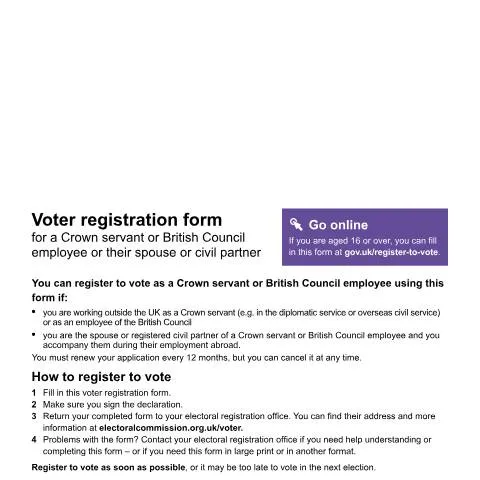
The process of registering to vote is a fundamental element of democratic participation, especially for individuals working abroad in the service of the Crown or the British Council. This voter registration form is specifically designed for Crown servants, British Council employees, and their spouses or civil partners, enabling them to maintain their voting rights while residing outside the United Kingdom. By ensuring that these individuals are able to participate in the electoral process from abroad, the UK government affirms its commitment to inclusivity.
Who Should Consider This Registration Form?
This registration form is tailored for a specific profile of voters. It is essential for those who fit the following categories:
- Crown Servants: Individuals employed by the UK government who are stationed abroad, such as those in diplomatic roles or other civil service positions.
- British Council Employees: Those working for the British Council in various capacities outside the UK, promoting the UK’s cultural and educational interests.
- Spouses and Civil Partners: Individuals accompanying Crown servants or British Council employees during their overseas employment.
Importantly, this form also provides a pathway for those who may have previously encountered barriers in the electoral system, allowing them to register and vote even while living outside their home country.
A Deep Dive into the Application Process
Completing this form correctly is crucial for ensuring your eligibility to vote from overseas. The application process consists of several steps:
Step-by-Step Registration Instructions
- Fill Out the Form: Provide personal details including your name, address, nationality, and immigration status, if applicable.
- Sign the Declaration: Ensure you sign the form as an affirmation of the information provided.
- Submission: Return the completed form to the appropriate electoral registration office. You can find the address for your local registration office online at the Electoral Commission's website.
- Seek Help if Needed: If you have questions or encounter difficulties while filling out the form, contact your electoral registration office for assistance.
Prompt registration is advised, as delays could lead to missing out on future elections. It’s essential to keep track of deadlines, especially since this registration must be renewed annually.
Key Distinctions: This Form Versus Other Registration Forms
While there are various voter registration forms available, this one specifically targets Crown servants and British Council employees, distinguishing it from others. Here’s how it varies from standard voter registration forms:
| Aspect | Standard Voter Registration Form | Crown Servant/British Council Employee Registration Form |
|---|---|---|
| Eligible Applicants | Residents aged 16 or over in the UK | Crown servants and British Council employees and their partners overseas |
| Submission Frequency | As needed, no renewal | Must be renewed annually |
| Residency Requirement | Must reside in the UK | Can be living abroad |
Understanding these distinctions is vital for anyone falling within these categories to ensure they are utilizing the correct form and following appropriate procedures.
Navigating Complex Situations: Special Considerations
Certain scenarios may complicate the registration process. Here are some examples:
Registration for Spouses and Civil Partners
If you are the spouse or civil partner of a Crown servant or British Council employee, it’s essential to note that you must register separately. This registration acknowledges not just your eligibility as a voter but also recognizes your unique status abroad.
Dealing with Immigration Status
For individuals who hold EU citizenship, the form requires you to specify your immigration status, particularly in relation to the EU Settlement Scheme. Understanding whether you hold settled or pre-settled status is crucial for successful registration. This may include conditions such as having continuous permission to remain in the UK or residing there before the end of the transition period.
Address Changes and Previous Residences
If you’ve moved in the past year, it’s vital to include all previous addresses. Failure to disclose this information can lead to delays in processing your application. Moreover, if you have lived in the UK as an overseas voter, that history needs to be incorporated into your registration to prevent complications down the line.
Regulatory Framework: Understanding the Legal Context
The voter registration process for Crown servants and British Council employees is governed by UK electoral law, particularly under the framework established by the Ministry of Housing, Communities and Local Government. In conjunction with the Electoral Commission, these regulations ensure that all citizens, regardless of their place of residence, maintain their right to vote.
Data Protection Considerations
The Data Protection Act 2018 and UK GDPR play a crucial role in the handling of personal data collected through this registration form. Applicants should be aware that their information is safeguarded and processed according to these regulations, which promotes transparency and accountability in the electoral process.
Final Steps: After Submission and Monitoring Your Registration
Once you’ve submitted your registration form, it’s essential to stay proactive in monitoring its status. Here’s what to do next:
Follow-Up Procedures
- Verification: You should receive a confirmation from your electoral registration office once your application is processed.
- Check Registration Status: If you haven’t received any communication, consider contacting the electoral registration office to verify your application’s status.
- Updates on Elections: Stay informed about upcoming elections and any additional information you may need to participate, as this may vary based on your location and registration.
The Role of the Electoral Commission and Local Authorities
The Electoral Commission oversees the voter registration process, ensuring compliance with laws and regulations while providing guidance to applicants. Local authorities manage the practical aspects of registration and are the first point of contact for those seeking assistance with their application.
In conclusion, the process of registering to vote as a Crown servant or British Council employee is uniquely tailored to accommodate the circumstances of those serving the UK abroad. By understanding the intricacies of the registration process, individuals can ensure their voices are heard in the democratic process, no matter where they reside. Taking the necessary steps to register and maintain your status is essential for meaningful participation in future elections.
Eligibility Criteria for Crown Servants and British Council Employees
Before you begin the registration process to vote as a Crown Servant or a British Council employee, it's essential to understand the specific eligibility criteria set forth by the UK government. Crown Servants are individuals employed by the UK government who work abroad, which can include staff in embassies, military personnel, and those who work in international development. Similarly, employees of the British Council, which promotes cultural relations and educational opportunities, must also meet certain requirements. To be eligible to register to vote from abroad, you need to be:
- A British citizen.
- 18 years of age or over on election day.
- Currently living or stationed outside the UK due to your employment.
If you are unsure about your eligibility, you can consult the GOV.UK website for detailed guidance, which outlines the criteria based on your specific circumstances. It's also recommended to consider whether your status as a Crown Servant or British Council employee is temporary or permanent, as this may affect your voting registration and participation.
Understanding the Process of Completing the Paper Registration Form
Completing the paper registration form to vote as a Crown Servant or British Council employee involves several vital steps. The official registration form is known as the Voter Registration Form for Crown Servants and British Council Employees. You can obtain this form through your workplace or by contacting your local electoral registration office in the UK. Here’s a step-by-step guide on how to fill it out properly:
- Gather your personal information: You will need your National Insurance number, date of birth, and your current address abroad. If you have recently moved, ensure you use your latest residential address.
- Provide your employment details: Clearly indicate your position, employer (Crown Service or British Council), and your work location. This is crucial as it verifies your eligibility to vote as a registered voter living overseas.
- Indicate your voting preference: You will need to specify whether you wish to vote in local, general, or European elections, depending on your eligibility and the elections occurring during your registration period.
- Signature and date: Ensure you sign and date the form before submission. Your signature confirms that all the information you have provided is accurate and up-to-date.
After completing the form, ensure it is sent to your appropriate electoral registration office in the UK. Remember to allow sufficient time for your application to be processed ahead of any elections.
Updating Your Registration: Moving or Changing Employment
If you experience a change in your employment status or move to a different country while registered as a Crown Servant or British Council employee, it is necessary to update your voter registration. Staying registered with accurate information ensures you can vote without issues. Here’s how to navigate these changes:
1. Change of Address: If you move to a new country or city due to your work, you need to inform your local electoral registration office. Use the same paper form to update your address, making sure to indicate your new place of residence abroad.
2. Change of Employment: If you switch from one Crown Service position to another or leave the British Council, you should also update your registration. A new form will need to reflect your current employer and any changes to your work location. This is particularly important if your new role involves working in a different country.
3. Deadline Awareness: Be mindful of registration deadlines, especially around election periods. For example, if you plan to vote in an upcoming election, you must submit your updated registration by the relevant cut-off date, which can vary depending on the type of election.
In any instance of change, you can refer to the GOV.UK registration page for additional support, which offers detailed instructions on how to manage your voter registration effectively.