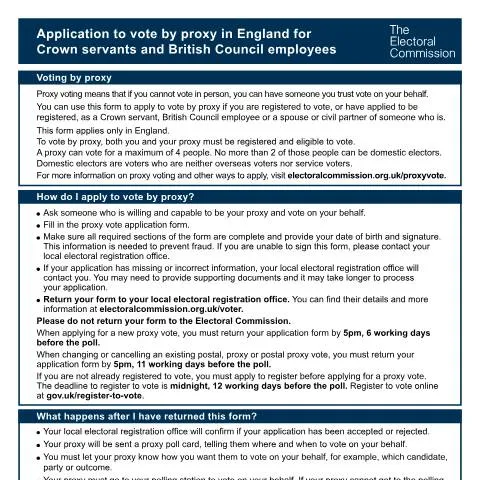
Understanding the Proxy Voting Application for Crown Servants and British Council Employees
The application to vote by proxy is a crucial document for Crown servants and British Council employees who may be stationed away from their usual polling place on election day. An effective approach to understanding this form, its implications, and its processes can enhance civic engagement among those who serve the United Kingdom in various capacities abroad. This guide provides a detailed examination of every aspect related to the application process, ensuring clarity and understanding for all applicants.
The Journey from Application to Voting: A Step-by-Step Process
Applying to vote by proxy involves several steps that must be completed correctly to ensure that the application is successful. Here’s a detailed breakdown of the process:
- Identifying the Need: Determining the necessity for a proxy vote is the first step. If you are a Crown servant or a British Council employee, your work commitments might prevent you from voting in person.
- Choosing a Proxy: You must select a reliable individual who is eligible to vote and willing to cast their vote on your behalf. This could be a colleague, family member, or friend.
- Filling Out the Application Form: This requires providing personal information, including your name, registration address, and National Insurance number.
- Submitting the Form: Once the form is filled out, it must be returned to your local electoral registration office.
- Awaiting Confirmation: After submission, you’ll receive confirmation from the local electoral registration office regarding the acceptance or rejection of your application.
- Proxy Communication: Once approved, the proxy will receive a proxy poll card detailing where and when to vote on your behalf.
A Deep Dive into the Application Form Sections
Understanding each section of the Application to vote by proxy form is essential to avoid pitfalls during completion. Let's examine each part:
1. Personal Information
In this section, you will need to provide your full name, UK registration address, and National Insurance number. It’s imperative to ensure the information matches what is held on the electoral register. Take special care with:
- Surname and First Names: Ensure correct spellings and order.
- UK Registration Address: This is your main address where you're registered to vote. Incorrect details can lead to disqualification.
2. Selecting Your Proxy
Choosing a proxy is a significant decision. The form requires their full name and address. Keep in mind:
- Your chosen proxy must also be registered to vote.
- They must not act as a proxy for more than four people, with only two being domestic electors.
3. Duration of Proxy Vote
You can specify whether you wish to vote by proxy for all elections or for a limited period. Be cautious in selecting the duration as this will affect future elections:
- Until Further Notice: Ideal for those who anticipate being away for an extended period.
- Specific Election Dates: If you know you'll only be unavailable for certain elections, this option may suit you better.
4. Declaration and Signature
Providing a declaration that your proxy agrees to act on your behalf is vital. You’ll need to sign the form, confirming that all details are accurate. Remember:
- Submitting false information can lead to legal consequences.
- If you cannot sign, reach out to your local electoral registration office for assistance.
Timelines and Deadlines: Navigating Important Dates
Being aware of the critical deadlines surrounding the application process is essential:
| Action | Deadline |
|---|---|
| Return application form for new proxy vote | 5pm, 6 working days before the poll |
| Change or cancel existing proxy vote | 5pm, 11 working days before the poll |
| Register to vote | Midnight, 12 working days before the poll |
What to Expect After Form Submission
Once you have submitted your application, the process moves forward as follows:
- Application Processing: Your local electoral registration office will review your submission.
- Confirmation: You will receive a notification regarding the acceptance or rejection of your application.
- Proxy Poll Card: Upon acceptance, your proxy will receive a poll card with details on voting on your behalf.
- Communication with Your Proxy: It’s essential to inform your proxy about your voting preferences.
Handling Rejections or Incomplete Applications
If your application is rejected or if you are contacted for additional information, it's important to take the following steps:
- Contact Local Office: Reach out to your local electoral registration office promptly for clarification.
- Correcting Errors: Be prepared to provide missing documentation or correct any inaccuracies in your form.
- Reapply if Necessary: If time allows, consider reapplying to ensure you can vote by proxy.
The Legal Framework Behind Proxy Voting
The need for this application form is governed by various regulations designed to facilitate fair voting practices. Key legislation includes:
- Representation of the People Act 1983: Establishes the framework for voting processes across the UK.
- Data Protection Act 2018: Ensures all personal information is handled securely.
Understanding this legal backdrop highlights the importance of adhering to the requirements set forth in the application process.
Key Points on Data Protection and Privacy
As you fill out the proxy voting application, be mindful of the privacy implications:
- The Electoral Registration Officer acts as the Data Controller for your personal information.
- Your data is collected to perform a task in the public interest, pertaining to electoral processes.
- For additional peace of mind, refer to the privacy notice provided by your local electoral registration office.
Final Tips for Applicants
To ensure a smooth application process, consider the following tips:
- Review Your Information: Double-check all the details before submission.
- Keep Copies: Maintain a copy of your application for your records.
- Communicate with Your Proxy: Discuss voting preferences clearly with your appointed proxy.
By following these guidelines, you can navigate the proxy voting application process with confidence and clarity, ensuring your voice is heard even when you cannot vote in person.
Understanding Proxy Voting for Crown Servants and British Council Employees
Proxy voting allows individuals who are unable to attend polling stations to participate in elections by appointing another person to vote on their behalf. This is especially relevant for Crown servants and employees of the British Council, who may be stationed overseas or engaged in duties that complicate their ability to vote in person. The eligibility criteria, application process, and specifics of proxy voting can differ from standard practices, ensuring that those serving the nation can exercise their democratic rights from wherever they are.
Eligibility Criteria for Proxy Voting Applications
To apply for proxy voting as a Crown servant or a British Council employee, you must meet specific criteria outlined by the Electoral Commission. Generally, you must:
- Be a registered voter in the UK.
- Be a Crown servant, which includes members of the armed forces, civil servants, or employees of the UK diplomatic service.
- Provide proof of your status, which may include documentation such as your employment contract or a service record.
It’s essential to understand that the definitions of a Crown servant are precise; thus, if you fall under other employment categories, you may not be eligible for this specific proxy voting provision. Depending on your position, additional forms or confirmations may be necessary to validate your application.
Completing the Paper Form for Proxy Voting
The form to apply for proxy voting can be obtained from your local Electoral Registration Office or downloaded from the official government website. When completing the paper form, ensure that the following sections are filled in accurately:
- Your Personal Details: Include your full name, address, and National Insurance number.
- Proxy Appointee Details: Clearly state the name and address of the person you wish to appoint as your proxy. This person must be registered to vote in the same electoral area as you.
- Declaration of Eligibility: Sign and date the declaration to confirm that you meet the eligibility criteria and that you authorize your proxy to vote on your behalf.
Once completed, the form should be sent to your local Electoral Registration Office. It’s advisable to check the deadlines for submission to ensure your application is processed in time for the upcoming election. Remember, any changes to your proxy appointment should also be reported promptly to the local office.