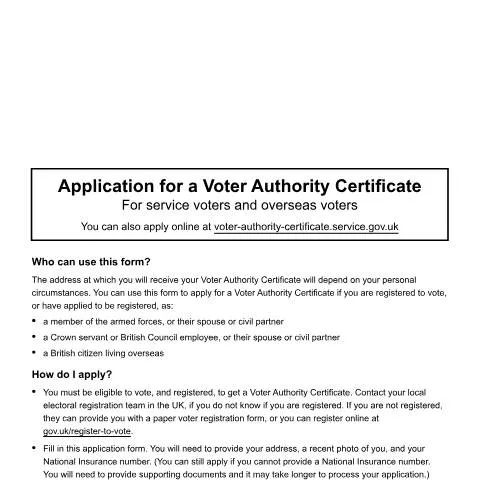
Navigating the Voter Authority Certificate: Empowering Overseas Voters
The Voter Authority Certificate (VAC) emerges as a crucial document for British citizens residing abroad, members of the armed forces, and Crown servants. Beyond a mere piece of paper, it serves as a formal acknowledgment of one’s right to vote while navigating the complexities of international residence. This certificate not only facilitates participation in democratic processes but also safeguards the fundamental rights of those in unique circumstances, ensuring their voices are heard in elections back home.
A Legal Standing: What the Voter Authority Certificate Represents
The Voter Authority Certificate holds significant legal weight in the UK electoral framework. It affirms that the holder is registered to vote and is entitled to cast their ballot in an election. This document is particularly indispensable for individuals living abroad or engaged in public service duties, as they may face challenges in proving their voting rights.
Key Legal Framework
- Eligibility: To obtain a VAC, applicants must be registered voters. This requirement underscores the document’s legal foundation, ensuring that only those with a legitimate claim to vote can receive it.
- Validity: The Voter Authority Certificate is generally valid for a single electoral cycle, necessitating renewal for subsequent elections. This short lifespan reflects the dynamic nature of electoral registration, especially for those who frequently change addresses or circumstances.
- Legal Recognition: The VAC is recognized by electoral authorities across the UK, thereby granting its holders the ability to participate in elections irrespective of their geographical location.
Who is Eligible? Understanding the Scope of Applicants
While the Voter Authority Certificate serves a specific purpose, the eligibility criteria are broadly defined, catering to diverse groups of applicants. Understanding who can apply is fundamental in ensuring that eligible voters take advantage of this service.
Categories of Eligible Applicants
| Applicant Type | Description |
|---|---|
| Members of the Armed Forces | Active personnel serving in the military, as well as their spouses or civil partners. |
| Crown Servants | British civil servants and employees of the British Council, along with their spouses or civil partners. |
| British Citizens Living Overseas | Citizens residing outside the UK who have registered or applied to register to vote. |
Each category of applicant must meet specific criteria, including active voter registration, which forms the cornerstone of eligibility for receiving a Voter Authority Certificate.
The Application Process: Steps to Secure Your Certificate
Obtaining a Voter Authority Certificate may seem daunting, but understanding the application process can simplify the journey. This section delineates the necessary steps, highlighting what applicants need to do to secure their certificate.
Step-by-Step Guide
- Verify Registration: Before applying, confirm your voter registration status through your local electoral registration team in the UK. If you are not registered, complete the voter registration process.
- Complete the Application Form: Fill out the VAC application form, available for download or online submission. Ensure you include your delivery address, recent photograph, and your National Insurance number.
- Prepare Supporting Documents: Depending on your circumstances, you may need to submit additional verification documents. Refer to the lists provided in the application guidance for acceptable documents.
- Submit Your Application: Send your completed application to the relevant electoral registration team in the UK. Ensure it is submitted by the deadline—5 PM, six working days prior to the election you wish to participate in.
Being proactive and meticulously following each step can mitigate potential delays in receiving your Voter Authority Certificate.
Real-World Applications: Where the Voter Authority Certificate is Required
The utility of the Voter Authority Certificate extends across various electoral scenarios. Understanding when and where this document is required can enhance its value for eligible voters.
Common Use Cases
- General Elections: Citizens using the VAC can participate in national elections, ensuring their opinions influence government formation.
- Local Elections: The VAC allows for participation in local council elections, giving voters a say in community governance.
- Referenda: In cases of national referenda, the VAC is necessary for voters to cast their votes on significant constitutional or national matters.
The importance of the Voter Authority Certificate cannot be overstated; it acts as a bridge that connects eligible voters to their political rights, regardless of their location.
Addressing Issues: What to Do If Problems Arise
While the process of obtaining a Voter Authority Certificate is generally straightforward, complications may occasionally arise. It’s essential to understand how to navigate these challenges effectively.
Handling Mistakes and Delays
- Loss of Certificate: If your Voter Authority Certificate is lost, contact your local electoral registration team immediately for guidance on reapplication.
- Incorrect Information: In cases where the information on the certificate is inaccurate, reach out to the issuing authority to rectify the mistake.
- Application Delays: If the processing of your application is taking longer than expected, it’s advisable to follow up with the electoral registration office to ensure your application is under review.
By proactively addressing these issues, applicants can safeguard their voting rights and ensure that their eligibility is not compromised.
Renewing Your Voter Authority Certificate: Keeping Your Registration Up to Date
The Voter Authority Certificate is not a permanent document; it requires renewal to maintain its validity. Understanding the renewal process is crucial for continuous engagement in the electoral process.
Important Renewal Guidelines
- Renewal Timeline: Begin the renewal process well in advance of any upcoming elections to avoid last-minute complications.
- Reapplication Process: Similar to the original application, complete the necessary forms and provide any requisite supporting documentation.
- Stay Informed: Keep abreast of electoral registration updates or changes in requirements by regularly checking the official resources.
Staying vigilant about the renewal process is key in ensuring that your right to vote remains intact and accessible.
Special Considerations: Unique Cases and Exceptions
The framework surrounding the Voter Authority Certificate does have nuances that may apply in specific situations. Recognizing these variations can empower applicants to navigate their own unique circumstances effectively.
Common Exceptions and Variations
- No National Insurance Number: Applicants without a National Insurance number can still apply but should prepare for longer processing times. It's essential to provide additional documentation to verify identity.
- Changing Circumstances: If your living situation changes, such as a move to a different country or a change in marital status, notify the relevant electoral registration office to update your records.
- Accessible Formats: If you require information in an accessible format when receiving your VAC, you can request this when your application is approved.
Understanding these exceptions helps ensure that all eligible voters can participate fully, recognizing the diverse needs of the British electorate.
Final Thoughts: The Importance of Voting from Abroad
In an increasingly globalized world, the ability to vote from abroad is a vital component of democracy. The Voter Authority Certificate serves as a lifeline, empowering those who serve the nation or reside outside its borders to remain engaged in its democratic processes. By understanding the significance, application process, and responsibilities associated with this document, eligible voters can confidently assert their rights and influence the future of their nation.
As you navigate this process, stay informed and proactive, and remember that your voice matters, regardless of where you are in the world.
The Application Process for a Voter Authority Certificate by Post
Applying for a Voter Authority Certificate (VAC) by post involves several crucial steps to ensure your application is processed smoothly, especially when you are living abroad or serving in the armed forces. Here’s a detailed breakdown of the process:
1. Eligibility Check: Before beginning your application, confirm your eligibility. You must be a registered voter in the UK and currently residing overseas, a member of the armed forces, a Crown Servant, or a British Council employee. It’s essential to ensure that your voter registration is up to date.
2. Gather Necessary Information: Prepare the required information, which includes your name, address in the UK, a British passport number or National Insurance number, and details about your current overseas address or the location of your deployment. Additionally, you will need to provide your signature as part of the application form.
3. Complete the Application Form: You will need to download and print the Voter Authority Certificate application form, known as the VAC application form. Ensure that you fill it out accurately and completely to avoid any delays in processing.
4. Submit Your Application: After completing the form, send it to your local Electoral Registration Office in the UK. The postal address can usually be found on the form or your local council's website. Ensure that you check the postage rates and allow sufficient time for your application to reach the office, considering international delivery times.
5. Await Confirmation: Once your application is received, the Electoral Registration Office will process it, typically sending a confirmation back to you via email or by post. If there are any issues, they will contact you for clarification. Keep an eye on your correspondence to ensure you do not miss any important communications.
Frequently Asked Questions About Voter Authority Certificates
When applying for a Voter Authority Certificate, it's common to have questions regarding the process, eligibility, and other related concerns. Here are some frequently asked questions that might assist you:
1. Can I apply for a Voter Authority Certificate if I left the UK several years ago?
Yes, you can apply as long as you are still registered to vote. Ensure that your registration details are updated to reflect your current situation. If you are unsure of your registration status, contact your local council.
2. How long does it take to receive my Voter Authority Certificate?
The processing time may vary depending on the local council's workload and the completeness of your application. Typically, allow at least 4 to 6 weeks for processing. If you require your certificate sooner, consider reaching out to your local council to inquire if expedited processing is possible.
3. Is there a fee for applying for a Voter Authority Certificate?
No, applying for a Voter Authority Certificate is free of charge. It’s a service provided to ensure that eligible voters can participate in elections, regardless of their location.
4. What if I need to update my address on the Voter Authority Certificate?
If your address changes after you have submitted your application, notify your local council immediately to make the necessary updates. It is crucial to ensure that all information is accurate to avoid complications when voting.
Important Tips for Ensuring a Smooth Application Process
To maximise your chances of a successful application for a Voter Authority Certificate, consider the following tips:
1. Double-Check Your Information: Accuracy is paramount in your application. Review all details, including your name, address, and identification numbers, to minimise the risk of processing delays.
2. Maintain Records: Keep a copy of your completed application form and any correspondence with the Electoral Registration Office. This documentation may be useful if there are follow-up questions or if you need to check the status of your application.
3. Plan Ahead: Given potential postal delays, especially when living abroad, ensure that you apply as early as possible—ideally well in advance of any upcoming elections. This approach will provide ample time for processing and allow you to address any unforeseen issues.
4. Utilize Online Resources: Regularly check the official government website for updates on voting and electoral services. Changes in policies or processes can occur, and staying informed will ensure you have the latest information.
5. Engage with Local Communities: If you are part of a community of British citizens living abroad, engage with your local groups or forums. Sharing experiences and tips with fellow expatriates can provide valuable insights and support during your application process.