Understanding the Importance of Ovine PrP Scrapie Genotyping
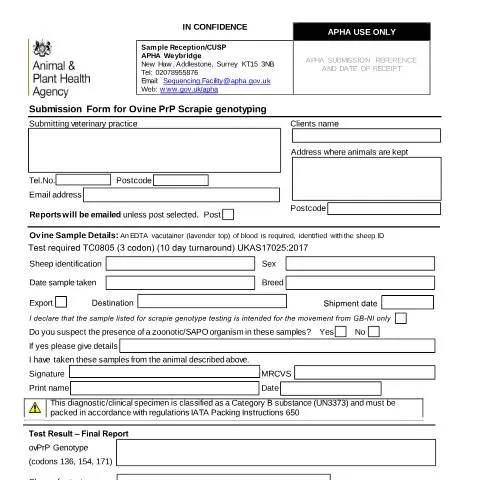
In the realm of animal health and agricultural biosecurity, the Ovine PrP Scrapie Genotyping Submission Form serves a critical role in managing the health of sheep. This process is vital for the identification of genetic predispositions to scrapie, a transmissible spongiform encephalopathy that affects sheep and can have significant economic implications. By understanding the nuances of this form and the associated procedures, stakeholders can contribute effectively to safeguarding livestock health.
Legislative Background and Regulatory Framework
The significance of the Ovine PrP Scrapie Genotyping Form is underpinned by a robust legislative framework designed to protect animal health. The Animal Health Act 1981 and subsequent amendments aim to control diseases that can have severe effects on animal welfare and public health. Within this context, the Animal and Plant Health Agency (APHA), operating under the Department for Environment, Food & Rural Affairs (DEFRA), mandates the use of this form to ensure compliance with national and European regulations regarding animal disease control.
This form not only serves as a tool for genetic testing but also facilitates the movement of animals across borders when necessary, emphasizing the interconnected nature of animal health regulations in the UK and Northern Ireland.
Who Should Submit the Form and When?
The submission of the Ovine PrP Scrapie Genotyping Form is primarily the responsibility of veterinary professionals engaged with sheep farmers. Understanding the circumstances under which this form is submitted is crucial. Common scenarios include:
- Routine testing as part of a flock health management plan.
- Pre-export health certification for animals moving from Great Britain to Northern Ireland, where specific regulations apply.
- Testing of animals showing clinical signs suggestive of scrapie.
Each of these scenarios has distinct implications for animal health, farmer economic stability, and compliance with regulatory requirements. Submissions must occur promptly following the collection of blood samples, typically within a set timeframe, ensuring timely testing and results.
Step-by-Step Guide to Completing the Submission Form
Completing the Ovine PrP Scrapie Genotyping Submission Form accurately is essential for a smooth testing process. Below are the critical sections of the form that require careful attention:
- Submitting Veterinary Practice: Clearly state the name and contact details of the veterinary practice responsible for the submission.
- Client Information: Fill in the client’s name and the address where the animals are kept. Accurate details are crucial for follow-up and report delivery.
- Sample Details: Indicate the sheep's identification number and the sample collection date. Ensure the sample is collected in an EDTA vacutainer, as specified.
- Test Required: Specify the type of test (in this case, TC0805), noting any specific arrangements required for the testing process.
Carefulness in these sections not only facilitates efficient processing but also mitigates the risk of errors that could delay results or necessitate resubmission.
Submission Channels: Online, Paper, or In-Person?
The method of submission for the Ovine PrP Scrapie Genotyping Form can significantly influence processing times and efficiency. There are three primary channels available:
| Submission Method | Advantages | Disadvantages |
|---|---|---|
| Online Submission | Speed: Generally faster processing; Convenience: Can be completed anytime. | Technical Issues: Requires internet access and familiarity with online systems. |
| Paper Submission | Accessibility: Traditional method; Less Error-Prone: Physical forms can be reviewed before mailing. | Time-Consuming: Slower processing times can lead to delays. |
| In-Person Submission | Immediate Feedback: Direct interaction with APHA staff; Clarification Available: Can ask questions on the spot. | Travel Required: May not be feasible for all submitters due to location. |
Choosing the right submission channel can affect turnaround times and overall satisfaction with the process. For urgent cases, online or in-person submissions may be preferable.
Addressing Unique Situations and Complex Cases
There are circumstances in which individuals may face challenges while submitting the Ovine PrP Scrapie Genotyping Form. Here are a few scenarios to consider:
- International Submissions: If submitting samples from outside the UK, ensure compliance with both UK regulations and the regulations of the originating country.
- Minors: Individuals under 18 cannot legally submit the form; hence, a responsible adult must handle the submission.
- Urgent Cases: If testing is time-sensitive, contact APHA directly for guidance on expedited processing options.
These unique cases require thorough understanding and proactive communication to navigate potential roadblocks effectively.
What Happens After Submission? Understanding the Testing Duration and Reporting
Once the Ovine PrP Scrapie Genotyping Form is submitted, the testing process begins. The typical turnaround time for results, as indicated on the form, is 10 days. During this period, the samples undergo rigorous testing to determine the scrapie genotype.
The results are communicated via email, unless the submitter opts for postal delivery. This decision should be made when filling out the form, as it influences the speed of result dissemination. In case of a positive scrapie genotype result, additional measures may need to be taken by the farm due to health and safety protocols.
Handling Errors and Missing Information
In administrative processes, errors can occur. If there are mistakes on the submitted form or if additional information is required, the APHA will contact the submitting veterinary practice for clarification. Common issues include:
- Missing Samples: If samples are not received, the submission is rendered incomplete, and retesting may be necessary.
- Incorrect Details: Errors in sheep identification or client information can lead to miscommunication and delays.
To mitigate these risks, it's advisable to conduct a thorough review of all submitted documentation before finalizing the submission.
Ongoing Support and Resources for Stakeholders
For those engaging with the Ovine PrP Scrapie Genotyping Submission Form and the broader context of animal health management, numerous resources are available. The APHA offers guidance and support through various channels:
- APHA Website: Comprehensive information is available to assist with understanding the genotyping process.
- Professional Bodies: Organizations such as the British Veterinary Association can provide further insights and support for veterinary practices.
- Direct Contact: For specific queries, contacting APHA directly can yield targeted assistance and expertise.
Engaging with these support systems enhances the effectiveness of the submission process and contributes positively to animal health management practices.
Understanding Ovine PrP Scrapie Genotyping: The Importance of Your Submission
Submitting your samples for Ovine PrP scrapie genotyping is not just a regulatory requirement; it is a crucial step in maintaining the health of sheep populations across the UK. Scrapie is a transmissible spongiform encephalopathy that affects sheep and goats, leading to severe neurological symptoms and eventual death. Understanding the genotyping process and the specifics of the submission form can empower you as a sheep farmer to make informed breeding decisions.
The genotyping process involves analyzing the prion protein (PrP) gene of your sheep to determine its susceptibility to scrapie. The primary goal is to identify the genetic variants that confer resistance or susceptibility to the disease, thus allowing farmers to select breeding stock that minimizes the risk of scrapie outbreaks. The submission form you will fill out is a vital part of this process, collecting essential data not only about the individual sheep but also about the herd and farm management practices.
Completing the Submission Form: Key Elements to Consider
When preparing to complete the submission form for Ovine PrP scrapie genotyping, attention to detail is critical. Each section of the form plays a pivotal role in ensuring accurate results and facilitating communication with the relevant authorities, such as DEFRA (Department for Environment, Food & Rural Affairs) and APHA (Animal and Plant Health Agency).
One of the key elements that you must include is the National Sheep Identification Scheme (NSIS) number for each sheep. This helps trace the animal's pedigree and assess any potential risk factors related to its lineage. Furthermore, ensure that you provide accurate contact information and preferred communication methods. Any discrepancies in these details could lead to delays in processing your samples or receiving results.
Moreover, you should be prepared to address specific health declarations regarding your flock. This includes information about any previous cases of scrapie on your farm, the health status of your animals, and measures you have implemented to mitigate disease risks. Transparency in this section not only demonstrates responsible farming practices but also aids in the effective management of scrapie risks at a national level.
After Submission: Interpreting Results and Implementing Changes on Your Farm
Once you have submitted your samples, the waiting period for results can be a time of anticipation. Understanding the potential outcomes and how to interpret them is essential for effective flock management. The genotyping results will categorize your sheep into different risk levels for scrapie, ranging from resistant to susceptible.
If your results indicate that a significant percentage of your flock possesses the susceptible genotype, it is crucial to consider strategic changes in your breeding program. This may involve selecting mates with known resistance genes to enhance the overall genetic health of your herd. Additionally, you may want to implement more rigorous biosecurity measures to reduce the likelihood of scrapie transmission.
Continually assess your flock's health and genetic traits following the results. Regularly updating your breeding strategy based on ongoing genotyping can significantly improve the genetic resistance of your sheep over time, thereby contributing to the overall sustainability of the UK sheep industry. Engaging with veterinary services or sheep health improvement programs can also provide additional support and guidance tailored to your specific circumstances.