Navigating the Rabies Screening Submission for Bats: An Essential Guide
If you find yourself in a situation where you need to submit a dead bat for rabies screening, understanding the procedural intricacies of the Bats: submission for rabies screening form becomes critical. This form, managed by the Animal and Plant Health Agency (APHA), is a vital part of the UK's public health and wildlife management strategy.
Understanding the Stakes: Why Submit a Bat for Rabies Screening?
Rabies is a serious viral disease that poses significant risks to both animals and humans. The APHA plays a crucial role in monitoring wildlife diseases, and bat populations are particularly important in this context due to their potential as vectors for rabies. By submitting dead bats for rabies screening, you are not just adhering to legal requirements; you are contributing to public health safety and wildlife conservation.
Who Is Required to Submit?
Individuals or organizations that may need to complete this form include:
- Veterinary professionals who encounter dead bats
- Wildlife rehabilitation centers
- Local authorities engaged in wildlife management
- Members of the public who come across dead bats and suspect rabies
Each of these groups plays a role in the passive surveillance system designed to monitor and control the spread of rabies.
Breaking Down the Submission Process: Step by Step
The submission process can feel overwhelming, but understanding each step can simplify it considerably.
1. Initial Considerations Before Submission
Before filling out the form, ensure that you are submitting a bat that is truly dead and not a suspect case of rabies. If rabies is suspected, immediate contact with the APHA is imperative.
2. Completing the Submission Form
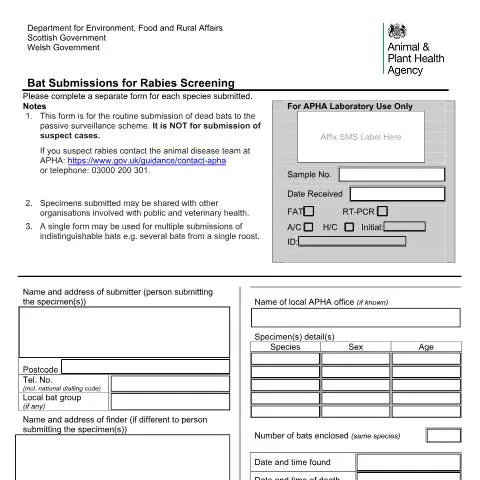
The form consists of several sections, and each must be filled out accurately. Let’s delve into the main components:
| Section | Description | Common Pitfalls |
|---|---|---|
| Name and Address | Details of the submitter and possibly the finder | Omitting a contact number can delay processing |
| Specimen Details | Species, sex, and age of the bat | Incorrect species identification can lead to misdiagnosis |
| Cause of Death | Tick appropriate boxes, e.g., found dead | Failure to provide details can invoke further inquiries |
| Biting or Scratching Incidents | Describe any incidents involving humans or animals | Not documenting incidents could lead to health risks |
3. Packaging and Sending the Specimen
After completing the form, proper packaging is essential. The bat should be placed inside a tube, sealed, and wrapped in absorbent material before sending it through the post to ensure safe delivery.
Submission Channels: Choosing Your Route
Deciding how to submit your form and specimen is an important consideration. The APHA offers multiple channels, each with its own benefits:
- Online Submission: For those familiar with digital processes, the online submission can be quick and efficient.
- Mail Submission: If you prefer physical documentation, sending your materials through the post is an option.
- In-Person Submission: Some may choose to visit local APHA offices for direct handover and immediate queries.
Where to Send Your Submission
Regardless of the method you choose, all completed forms and specimens should be directed to:
Rabies Diagnostic Group Rabies and Viral Zoonoses Virology Department Animal and Plant Health Agency Woodham Lane, Addlestone, Surrey KT15 3NB
Monitoring Your Submission: Keeping Track
Once submitted, tracking your application may be necessary, especially if there are public health implications. While the APHA does not provide a report to the sender unless there’s a positive rabies result, following up can be crucial.
Responding to Results
Should results indicate a positive rabies case, the APHA will directly contact the submitter. This is critical for mitigating any health risks. Being prepared for potential follow-up actions, like notifying affected parties, is also important.
Understanding the Implications of Submitting
Submitting a bat for rabies screening isn’t just a procedural formality; it has broader implications for wildlife management and public health policy.
Public Health Impact
By participating in this screening process, you contribute to the larger public health framework. The data gathered helps the APHA and other agencies develop strategies for wildlife disease management and control.
Wildlife Conservation Considerations
Understanding the health of bat populations can inform conservation efforts. Rabies screening helps to monitor the health of ecosystems, which in turn supports biodiversity.
Assistance and Resources: Where to Turn
If at any point you feel lost in this process, various resources can provide guidance:
- APHA Website: Comprehensive resources and contacts for further assistance.
- Local Wildlife Groups: They often have experience with the submission process and can provide practical advice.
- Veterinary Professionals: They can assist in identifying and handling the bat specimens properly.
Completing the Bats: submission for rabies screening form and following its protocols is an essential responsibility. It ensures the health and safety of both human populations and wildlife, contributing to a balanced ecosystem.
Understanding the Rabies Screening Process for Bats in the UK
The submission of bats for rabies screening in the UK is a vital part of wildlife management and public health protection. As rabies is a serious viral disease that can affect both animals and humans, the UK government has established specific protocols to test bats suspected of carrying the virus. This process not only ensures the safety of humans and pets but also aids in the proper management of bat populations.
When a bat is found exhibiting unusual behaviour or is in close contact with humans (for instance, in residential areas), it is crucial to have it tested for rabies. The screening process is managed primarily by the Animal and Plant Health Agency (APHA), which has established guidelines for the handling, submission, and testing of mammals, particularly bats. The submission can include both live and deceased bats, although strict protocols must be followed to ensure safety and compliance with legal requirements.
To submit a bat for rabies screening, individuals must clear any contact with the animal and follow the correct reporting channels. The first point of contact should be local wildlife rehabilitators or relevant authorities, who can then evaluate the situation and advise on how to proceed. If a bat is confirmed to be rabies-positive, the APHA will take the lead on any necessary actions, including public health notifications and potential control measures.
Legal Framework and Responsibilities for Individuals and Organisations
Under the Wildlife and Countryside Act 1981, bats are protected species in the UK, making the handling and submission of bats for rabies screening a matter of legal importance. Anyone who comes across a bat is encouraged to report it but must do so while adhering to the law, which prohibits harmful interference with these protected animals.
Individuals or organisations looking to submit a bat for rabies screening must be fully aware of their legal responsibilities. For instance, it's illegal to capture or kill bats without special permission, and any sampling for rabies must be performed in a manner that is compliant with the Animal Welfare Act 2006. This includes ensuring that any handling minimizes stress for the animal and is conducted by trained personnel. Therefore, engaging with licensed bat workers or organisations like the Bat Conservation Trust is essential for ensuring compliance with legal frameworks.
Additionally, the Data Protection Act 2018 and UK GDPR regulations also come into play when submitting information related to bats. If a bat is submitted in relation to an incident involving a human or a pet, any personal data shared during the process must be processed fairly and lawfully, respecting the privacy of individuals involved.
Public Awareness and Community Engagement in Bat Rabies Management
Community involvement is crucial in managing rabies risks associated with bats. Public awareness campaigns serve to educate people about the importance of bats in the ecosystem, their role in pest control, and the necessary steps to take if they encounter a bat. These campaigns often highlight the signs of rabies in bats, which can include unusual behaviour such as paralysis, excessive salivation, or aggressive tendencies.
Moreover, engaging local communities in bat watching and conservation initiatives can foster a greater understanding of these animals and their significance. Schools, local councils, and wildlife organisations can collaborate on educational programmes that promote the safe observation of bats and appropriate protocols if one is found in distress or exhibiting unusual behaviours.
Workshops and informational sessions can be beneficial in informing the public about the protocols for reporting and submitting bats for rabies screening, thus ensuring a prepared and informed populace. This proactive approach enhances public safety and contributes to the effective management of wildlife health issues.