When Cattle Health Concerns Require Laboratory Investigation
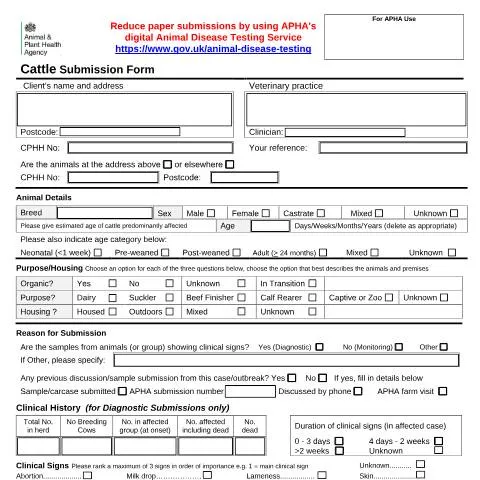
The Animal and Plant Health Agency's cattle diagnostic test submission form serves as the critical gateway between field observations and laboratory confirmation when bovine health issues arise. Whether dealing with a suspected outbreak of bovine viral diarrhoea, investigating unexplained abortion clusters, or monitoring respiratory disease patterns across a herd, this standardised submission process ensures that samples reach APHA laboratories with all the contextual information needed for accurate diagnosis and appropriate follow-up action.
Veterinary practitioners encounter this form whenever clinical signs suggest notifiable diseases, when post-mortem investigations are warranted, or during routine surveillance programmes. The form's design reflects the complex interplay between animal identification systems, disease reporting requirements, and laboratory testing protocols that underpin the UK's animal health surveillance network.
The APHA3_Cattle form represents more than administrative procedure—it functions as a diagnostic tool in its own right, capturing clinical observations that may prove decisive in interpreting laboratory results. The relationship between field signs, sample quality, and testing outcomes often hinges on the completeness and accuracy of information provided at submission.
Digital Transformation of Veterinary Sample Submission
APHA's digital Animal Disease Testing Service, accessible through the GOV.UK portal, has fundamentally altered how veterinary practices manage diagnostic submissions. The online platform allows practitioners to submit requests electronically, reducing processing times and minimising transcription errors that historically plagued paper-based systems.
However, the paper submission form remains essential in specific circumstances. Remote locations with unreliable internet connectivity, emergency out-of-hours submissions, and complex multi-animal cases often necessitate traditional paper submissions. The form's design accommodates both pathways, with identical information capture requirements ensuring consistency regardless of submission method.
Veterinary practices operating hybrid systems typically maintain paper forms for field use, transcribing information digitally upon return to the practice. This approach proves particularly valuable during large-scale investigations where multiple samples from different animals require simultaneous submission with varying test requirements.
Integration with Practice Management Systems
Modern veterinary practices increasingly integrate APHA submissions with their practice management software. Client details, animal identification numbers, and case histories can be automatically populated, reducing administrative burden while improving accuracy. The standardised format of the cattle submission form facilitates this integration, with consistent field layouts enabling reliable data extraction and pre-population.
Decoding Animal Identification and Location Requirements
The County Parish Holding (CPH) number system forms the backbone of cattle location tracking on the submission form. This nine-digit identifier links directly to the Department for Environment, Food and Rural Affairs' livestock registration database, enabling APHA to verify animal movements, assess disease risk factors, and coordinate follow-up investigations.
When animals are located elsewhere than the client's registered address, the form requires additional CPH details and postcode information. This distinction proves crucial during disease investigations, as transmission patterns often depend on understanding recent animal movements between holdings. Failure to accurately complete location details can delay laboratory processing and compromise epidemiological investigations.
| Animal Location Scenario | Required Information | Common Applications |
|---|---|---|
| Animals at client's address | Client CPH number only | Routine diagnostic work, local outbreaks |
| Animals elsewhere | Both client CPH and location CPH with postcode | Contract farming, shared grazing, market sampling |
| Multiple locations | Separate forms per location | Multi-site operations, disease surveillance programmes |
Official animal identification numbers must correspond to current ear tag or passport records. Discrepancies between submitted ID numbers and APHA database records can trigger compliance investigations, particularly for notifiable disease submissions. Veterinary practices should verify animal identification immediately before sampling to avoid administrative complications.
Age Classification Complexities
The form's dual age recording system—estimated age plus category selection—reflects different regulatory and diagnostic requirements. Neonatal classifications (under one week) trigger specific testing protocols for diseases like bovine viral diarrhoea, while adult classifications (over 24 months) may influence serology interpretation and vaccination history considerations.
Age estimates should reflect the animal's condition at the time of sampling, not birth records. Nutritional status, breed characteristics, and environmental factors can significantly affect apparent age, making veterinary assessment crucial for accurate classification.
Clinical History Documentation for Diagnostic Success
The clinical history section transforms raw laboratory data into actionable diagnostic information. APHA laboratory specialists rely heavily on field observations to interpret borderline results, identify appropriate additional testing, and provide meaningful prognostic guidance.
For diagnostic submissions, the clinical signs ranking system requires practitioners to prioritise up to three observations by importance. This ranking influences laboratory workflow, with primary signs often determining initial testing priorities and secondary signs informing supplementary investigations.
Duration of clinical signs proves particularly critical for interpreting serology results, as antibody levels fluctuate predictably following exposure to many bovine pathogens. Acute presentations may yield negative serology despite active infection, while chronic cases may show elevated titres from historical exposure rather than current disease.
The herd information section—total numbers, breeding cows, affected animals, and mortality figures—provides essential context for assessing disease significance and transmission potential. A single affected animal in a naive herd carries different implications than multiple cases in a previously exposed population.
Outbreak Investigation Protocols
Previous discussion or sample submission history directly influences laboratory approach and turnaround times. Ongoing investigations may qualify for expedited processing, while novel presentations might require extended testing panels. APHA submission numbers from previous cases enable laboratory staff to access historical results and coordinate comprehensive investigations.
The distinction between diagnostic and monitoring submissions affects both testing approaches and reporting requirements. Monitoring submissions typically focus on surveillance objectives rather than immediate clinical management, often involving different sample types and testing frequencies.
Comprehensive Testing Menu and Sample Requirements
The extensive testing options reflect the diverse diagnostic challenges encountered in cattle medicine. Serology testing dominates the menu, with options ranging from basic bovine viral diarrhoea screening to comprehensive respiratory disease panels encompassing multiple viral and bacterial pathogens.
Abortion investigation packages represent some of the most complex diagnostic challenges, requiring coordinated testing of maternal serum, foetal tissues, and environmental samples. The form's abortion-specific sections ensure appropriate sample selection and clinical context capture for these multi-faceted investigations.
Parasitology and Microbiology Coordination
Parasitology submissions require specific sample types and preservation methods that differ significantly from serology requirements. Faecal samples for worm egg counts, coccidial oocyst identification, and fluke examination each demand distinct collection and storage protocols to maintain diagnostic accuracy.
Microbiology submissions, particularly for mastitis diagnosis and antimicrobial sensitivity testing, operate under strict time constraints. Culture and sensitivity testing loses reliability rapidly following sample collection, making coordination between field sampling and laboratory processing essential for meaningful results.
| Test Category | Sample Type | Preservation Requirements | Processing Priority |
|---|---|---|---|
| Serology | Clotted blood/serum | Refrigerated, stable 48-72 hours | Standard processing |
| Parasitology | Fresh faeces | Cool, process within 24 hours | Rapid processing essential |
| Microbiology | Various tissues/fluids | Sterile collection, immediate dispatch | Urgent processing required |
| Histopathology | Fixed tissues | Formalin fixation, stable transport | Standard processing |
Sample Identification and Chain of Custody
The animal and sample identification section establishes the critical link between individual animals and their corresponding samples. Official animal ID numbers must match current registration records, while sample ID codes enable tracking throughout the laboratory process.
Multiple samples from single animals require distinct identification codes to prevent cross-contamination and ensure accurate result reporting. The type and number of samples field guides laboratory staff in prioritising processing workflows and selecting appropriate testing approaches.
Date recording proves essential for interpreting time-sensitive tests and coordinating with vaccination or treatment histories. Sample degradation rates vary significantly between test types, with some serology tests remaining valid for extended periods while microbiology samples lose viability within hours of collection.
Anonymous Surveillance Considerations
The optional anonymisation checkbox reflects APHA's dual role in individual animal diagnosis and population-level surveillance. Anonymous samples contribute to national disease monitoring programmes while protecting client confidentiality, but cannot be used for individual animal certification or disease control programme participation.
Practitioners should carefully consider anonymisation implications before submission, as anonymous samples cannot be recalled for additional testing or linked to subsequent investigations. Disease control programmes typically require full traceability, making anonymous submission incompatible with certification schemes or export requirements.
Data Protection and Information Governance
APHA operates under strict data protection requirements governed by the Data Protection Act 2018 and UK GDPR provisions. Personal information provided on cattle submission forms is processed lawfully under public task provisions, supporting statutory animal health surveillance and disease control functions.
Client details are retained according to APHA's published retention schedule, with diagnostic records maintained for periods determined by disease significance and regulatory requirements. Notifiable disease submissions may be retained indefinitely to support epidemiological research and policy development.
Veterinary practices should ensure clients understand how their information will be used, particularly when samples may contribute to national surveillance programmes or research initiatives. The form's reference to APHA's Personal Information Charter provides clients with comprehensive information about data processing activities.
Information Sharing Protocols
APHA's role as an executive agency of the Department for Environment, Food and Rural Affairs, combined with its work on behalf of devolved administrations, necessitates information sharing across multiple government bodies. Diagnostic results may be shared with the Food Standards Agency, local authorities, or international organisations depending on disease significance and public health implications.
Cross-border information sharing becomes particularly relevant for notifiable diseases or trade-related investigations, where results may influence movement restrictions or export certification. Practitioners should be aware that certain submissions may trigger automatic reporting to regulatory authorities beyond APHA itself.
Post-Submission Processing and Result Management
Following submission, cattle diagnostic samples enter APHA's laboratory workflow system, with processing priorities determined by clinical urgency, disease significance, and resource availability. Routine submissions typically receive results within established turnaround times, while urgent cases may qualify for expedited processing.
Results are communicated through multiple channels depending on submission method and urgency. Digital submissions often receive electronic results notifications, while paper submissions may require telephone communication for urgent findings. Notifiable disease results trigger immediate contact with submitting veterinarians regardless of submission method.
Incomplete or inadequate samples may result in requests for resubmission or additional information. APHA laboratory staff may contact submitting practices to clarify clinical details, request additional samples, or discuss alternative testing approaches based on initial findings.
Follow-Up Investigation Coordination
Significant findings may trigger follow-up investigations involving APHA field veterinarians, particularly for notifiable diseases or novel pathogen detections. The submission form's clinical details prove essential for planning these investigations and determining appropriate sampling strategies for herd-level assessments.
Positive results for certain diseases initiate automatic reporting to relevant authorities and may influence movement restrictions or control measures. Veterinary practices should prepare for potential follow-up contact and additional sampling requirements when submitting samples for high-consequence diseases.
Understanding Test Result Classifications and Their Implications
When your cattle diagnostic test results are returned, understanding the classification system is crucial for making informed decisions about your herd management. APHA laboratories use standardised reporting categories that directly impact your legal obligations and practical next steps.
For bovine tuberculosis testing, results are classified as 'reactor', 'inconclusive reactor' (IR), or 'negative'. A reactor result means the animal has tested positive and must be slaughtered under statutory powers within specified timeframes - typically within ten working days of notification. You cannot move, sell, or use these animals for breeding, and compensation arrangements through RPA will apply based on current market valuations.
Inconclusive reactor classifications require careful handling. These animals must undergo retesting within 60 days, during which movement restrictions apply to your entire herd. The retest protocol depends on whether the animal was an interferon-gamma test IR or skin test IR, with different timeframes and testing methods specified by your veterinary officer.
For reproductive disease testing such as brucellosis or infectious bovine rhinotracheitis (IBR), positive results trigger immediate movement restrictions and may affect your herd's health status for export purposes. Your holding will be placed under movement restrictions until follow-up testing confirms the extent of infection within the herd.
Johne's disease test results use a different classification system, with numerical scores indicating antibody levels. High-positive results (typically scores above 100) suggest active infection, whilst low-positive results may indicate early-stage disease or environmental exposure. These classifications influence culling decisions and management strategies rather than triggering automatic statutory action.
When infectious disease results are positive, APHA will typically require whole-herd testing to determine the extent of infection. This process can extend over several months, with quarterly or six-monthly retesting schedules depending on the specific disease and your herd's risk profile. Understanding these timelines helps you plan breeding programmes and marketing strategies accordingly.
Laboratory reports also include quality indicators such as sample condition scores. Samples marked as 'haemolysed' or 'insufficient volume' may require retesting, potentially delaying critical management decisions. Maintaining proper sample handling procedures reduces the likelihood of inconclusive results due to technical factors.
Managing Movement Restrictions and Trading Implications
Movement restrictions following positive diagnostic test results create significant challenges for cattle enterprises, requiring careful navigation of legal requirements whilst minimising economic impact. Understanding the different types of restrictions and their specific conditions helps you maintain compliance whilst exploring available options.
TB breakdown restrictions are among the most complex, with different rules applying depending on your location within England, Wales, or Scotland. In High Risk Areas of England and Wales, standard restrictions typically last a minimum of 60 days after the last reactor removal, provided two clear consecutive tests are achieved. However, in Edge Areas, restrictions may be lifted after a single clear test if specific conditions are met.
During TB restrictions, you cannot move cattle off your holding except directly to slaughter at approved abattoirs, and only with specific APHA-issued movement licences. These licences specify collection dates, transport routes, and destination facilities. Pre-movement testing may be required for slaughter animals, adding logistical complexity and costs to your marketing plans.
Bringing cattle onto restricted holdings requires APHA permission through formal licence applications. Emergency movements for welfare reasons may be permitted, but require detailed justification and veterinary certification. Planning ahead for feed shortages or housing constraints becomes critical during extended restriction periods.
For other diseases, movement restrictions vary considerably. Brucellosis restrictions typically prevent all movements until the infection source is identified and eliminated, which may require extensive testing of breeding females and environmental sampling. Enzootic bovine leukosis (EBL) restrictions focus on preventing breeding from positive animals whilst allowing finishing cattle to move to slaughter under licence.
Trading implications extend beyond immediate movement restrictions. Herds with recent disease history may face market discrimination, with some purchasers avoiding animals from previously restricted holdings. This reputation effect can persist for years after restrictions are lifted, particularly in breeding cattle markets where genetic security is paramount.
Export certification becomes complicated following disease outbreaks. Many international markets require extended clear testing periods before accepting animals from previously affected holdings. EU export health certificates may be refused for up to two years following certain disease incidents, severely impacting breeding stock sales to European markets.
Insurance implications also require consideration. Some livestock insurance policies exclude coverage for animals under movement restrictions or may increase premiums following disease incidents. Reviewing your policy terms with insurers before submitting diagnostic test samples helps avoid unexpected coverage gaps during challenging periods.
Record Keeping Requirements and Data Management Obligations
Comprehensive record keeping surrounding diagnostic test submissions forms part of your legal obligations as a cattle keeper, with specific requirements varying depending on the disease being tested and your holding's status within government schemes. Understanding these obligations prevents compliance issues and supports effective herd health management.
The Animal and Plant Health Agency requires you to maintain detailed records of all diagnostic test submissions for a minimum of three years. These records must include sample identification numbers, animal identifiers, test types requested, sampling dates, and results received. During official inspections, failure to produce complete records can result in penalties or restrictions on future testing arrangements.
For TB testing programmes, additional record keeping requirements apply through the Sam system (Strategic Animal Health Monitoring). You must record all test dates, individual animal results, and any follow-up actions taken. This information links directly to your CPH number and supports national surveillance programmes tracking disease trends across different regions and farming systems.
Cattle Tracing System (CTS) entries must be updated following diagnostic test results that affect animal movements or status. Positive results for notifiable diseases require immediate reporting through CTS, with specific disease codes assigned to affected animals. These entries remain permanently attached to individual animal records, following them through subsequent ownership changes.
Medicine book records become particularly important when diagnostic results indicate treatment requirements. Antibiotic sensitivity testing results must be recorded alongside treatment decisions, supporting responsible antimicrobial use policies. Withdrawal periods following treatment must be calculated and recorded, ensuring meat and milk safety standards are maintained.
Quality assurance scheme requirements often exceed statutory minimums. Red Tractor standards require comprehensive health recording systems that include diagnostic test results, treatment records, and outcome monitoring. These records form part of annual assessments and may be reviewed during unannounced inspections by certification bodies.
Data protection considerations apply to all health records containing individual animal identifiers. Under UK GDPR, this information constitutes personal data when it can be linked to identifiable holdings or individuals. Sharing diagnostic test results with third parties, including veterinary consultants or nutritionists, requires appropriate data sharing agreements and consent procedures.
Electronic record keeping systems must comply with data retention and backup requirements. Cloud-based storage solutions must demonstrate appropriate security measures and UK data residency. Regular backup procedures should be documented and tested, ensuring critical health records remain accessible during system failures or cyber security incidents.
Integration with farm management software requires careful consideration of data flows and access controls. Different software platforms may use varying formats for diagnostic test results, requiring standardisation procedures to maintain data integrity across systems. Regular reconciliation between different record keeping systems helps identify and correct data discrepancies before they affect management decisions.