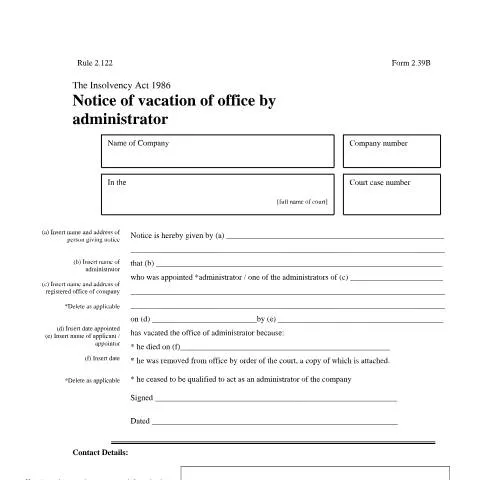
Navigating the Notice of Vacation of Office by Administrator (Form 2.39B)
The process of administration is crucial for companies experiencing financial difficulties in the UK. One component of this process involves notifying Companies House when an administrator vacates their office. The Notice of Vacation of Office by Administrator (Form 2.39B) serves as this formal notification. Understanding how to effectively use this document can help streamline the administration process and prevent potential complications for all parties involved.
Understanding the Context: The Role of an Administrator
An administrator plays a pivotal role in the insolvency process, tasked with managing the affairs of a company facing financial distress. Their responsibilities include:
- Assessing the company's financial situation
- Protecting the assets of the company
- Formulating a plan to repay creditors or restructure the company
However, there are circumstances that may lead to the administrator vacating their role, such as death, removal by court order, or disqualification. In each of these cases, Form 2.39B is required to officially notify Companies House of the administrator’s departure.
Key Components of Form 2.39B
This form consists of several important sections that must be addressed clearly and correctly to ensure the notice is valid. Here’s a breakdown of its fundamental components:
- Name of the company: The legal name of the company as per Companies House records.
- Company number: The unique identifier assigned to the company by Companies House.
- Full name of the court: The court where the administration was filed, providing jurisdictional context.
- Name and address of the person giving notice: This can be the individual who appointed the administrator.
- Name of the administrator: The individual vacating their office.
- Registered office address: The official address of the company.
- Date appointed: The date on which the administrator was originally appointed.
- Name of applicant/appointor: The person or entity who appointed the administrator.
- Date of notice: The date when the notice is being issued.
When is Form 2.39B Required?
Form 2.39B must be submitted in specific scenarios where the administrator can no longer fulfill their duties:
- Death: If the administrator passes away, the administrator’s position must be vacated promptly.
- Removal by court order: A court may decide to remove an administrator; in this case, a copy of the order should accompany the notice.
- Disqualification: If an administrator is disqualified from acting, this too necessitates vacating their position.
Articulating the Procedure: Step-by-Step Guidance
To ensure compliance and accuracy, it's essential to follow a systematic approach when submitting Form 2.39B:
- Gather necessary information: Collect all relevant details about the company, the administrator, and the circumstances of the vacancy.
- Complete the form: Fill in all required fields accurately to reflect the situation.
- Attach supporting documents: If the administrator was removed by court order, ensure you include a copy of that order.
- Sign and date the form: The person giving notice must sign and date the document.
- Submit to Companies House: Send the completed form to the address provided on the form: Companies House, Crown Way, Cardiff, CF14 3UZ.
Common Misinterpretations and Pitfalls
Given the formal nature of Company Law, misinterpretations can lead to unnecessary delays or complications. Here are some common pitfalls to avoid:
- Incomplete information: Leaving out details such as the company number or the court case number can result in rejection of the notice.
- Failure to attach necessary documents: Not including the court order in cases of removal can invalidate the notice.
- Poorly specified circumstances: Ambiguities in stating why the administrator has vacated can lead to confusion.
Interconnections with Related Documents
Understanding how Form 2.39B interacts with other documents in the insolvency process is key for administrators and stakeholders. Notably:
- Form 2.39: The notice to be provided when the administrator is actually appointed.
- Reports to creditors: Administrators must keep creditors informed—vacating the position must be communicated clearly.
These documents form a cohesive link in the administration process, ensuring proper transparency and adherence to legal requirements.
Why Precision Matters in the Notice Process
In the realm of corporate insolvency, precision can significantly impact the outcome for both the company and its creditors. Being vigilant with the details in Form 2.39B not only aligns with the legal framework established by the Insolvency Act 1986 but also facilitates smoother transitions and continuity in the administration process.
Furthermore, understanding the implications of a correctly submitted notice can prevent potential legal ramifications for incorrect filings, which may include challenges from creditors or regulatory scrutiny.
Conclusion: Ensuring Compliance and Efficiency
In conclusion, the Notice of Vacation of Office by Administrator (Form 2.39B) is a pivotal element in the insolvency landscape within the UK. By adhering to the outlined procedures and understanding its components, stakeholders can navigate the complexities of administration more effectively.
Ultimately, being equipped with the right knowledge about this notice can not only ensure compliance with legal requirements but also uphold the integrity of the administration process, benefiting all parties involved.
Understanding the Role of Administrators in the UK Insolvency Process
In the UK, the role of administrators is crucial in guiding companies through financial difficulties, ensuring the interests of creditors are considered while aiming for the best possible outcome for the insolvent entity. An administrator is typically appointed under the Insolvency Act 1986 and must adhere to specific statutory duties and responsibilities. Understanding these duties is essential when giving notice of vacation of office.
Administrators have the power to manage the company's affairs, business, and property. Their main objective is to rescue the company as a going concern or, if that is not possible, to achieve a better result for the company's creditors than would be likely if the company was wound up. This includes creating and managing an administration plan, making decisions regarding the sale of assets, and negotiating with creditors on behalf of the company.
When an administrator vacates their office, whether voluntarily or due to other circumstances such as a conflict of interest or incapacity, it is vital for them to follow the legal protocols laid out in the Insolvency Act. This includes notifying relevant stakeholders, including creditors, the Companies House, and any interested parties contributing to the administration process.
Fill in your form directly online
No printing: type your details into the boxes of the official form, tick, then download the PDF ready to send.
- 1Type into the form boxes
- 2Tick in one click
- 3Save and download the PDF
Legal Requirements for Notice of Vacation of Office
The legal requirements for giving notice of vacation of office by an administrator are explicitly laid out in the Insolvency Act 1986 and associated regulations. According to Section 2.39B, the administrator must provide written notice of their decision to vacate the office to several parties, including the creditors and the court. The notice must contain the administrator's information, a statement regarding the reasons for vacating, and details of any arrangements made regarding the company’s affairs.
Additionally, administrators must ensure that the notice is filed with Companies House, which provides a public record of the administrator's status. This filing is critical as it informs all parties interested in the company’s affairs about the change in management. Failure to comply with these legal requirements can result in complications concerning the administration process and potential liabilities for the outgoing administrator.
As part of the vacation process, administrators are also required to prepare a final report and deliver it to the creditors. This report should outline the administrator’s actions during their tenure, financial information regarding the company, and any outcomes achieved. This transparency is essential in maintaining trust within the creditor community and ensuring that all parties are informed regarding the status of the administration.
Implications of Vacation of Office on Company Administration
The vacation of office by an administrator can have significant implications for the ongoing administration of a company. The departure of an administrator may create a vacuum in leadership, which can impact decision-making processes and the progress of the administration itself. A new administrator, if appointed, must quickly familiarise themselves with the company's affairs, existing plans, and the expectations of creditors to ensure continuity in the administration process.
Moreover, the transition period may cause uncertainty among creditors, employees, and other stakeholders, which can affect their confidence in the company's recovery. It's essential for the outgoing administrator to manage this transition carefully by providing ample communication regarding the circumstances of their departure and what stakeholders can expect moving forward.
In situations where a new administrator is appointed, they must also assess the current state of the administration and may need to revise the existing administration plan to align with their strategies and objectives. This assessment can lead to changes in how creditors' claims are managed, assets are disposed of, and overall recovery efforts are directed.
Ultimately, the successful management of the vacation process requires thorough understanding of the legal frameworks, careful planning, and effective communication with all stakeholders involved in the administration of the company. Maintaining clarity throughout this process is essential to avoid disputes and ensure that the company's assets are managed and preserved for the benefit of all parties.