Understanding the Role of Form 2.30B in Administration Resignation
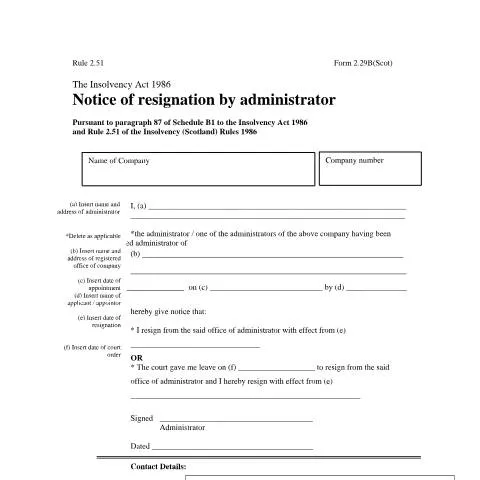
The Notice of vacation of office by administrator: form 2.30B (Scotland) is an essential document within the context of insolvency procedures in Scotland. This form is specifically designed for administrators who are resigning from their role, either voluntarily or upon court approval. Understanding how and when to use this form is imperative for ensuring compliance with the Insolvency Act 1986 and the Insolvency (Scotland) Rules 1986.
When Is Form 2.30B Required?
The necessity of completing this form arises during key moments of an administration process. An administrator may need to resign for various reasons, such as personal circumstances, conflicts of interest, or other professional commitments. The form caters to two specific scenarios:
- Voluntary Resignation: The administrator decides to step down from their role.
- Court-Approved Resignation: The administrator obtains permission from the court to resign.
In both cases, filing this notice with Companies House is crucial, as it officially documents the change in administration and ensures that all stakeholders are informed.
Key Components of the Notice of Vacation
The form comprises several critical sections, each requiring specific information:
- Details of the Administrator: The administrator's name and contact details should be provided. While contact information is not mandatory, it can facilitate communication with Companies House if any queries arise.
- Company Information: The registered name and address of the company under administration.
- Date of Appointment: The date when the administrator was appointed, which is vital for maintaining an accurate timeline of the administration process.
- Resignation Details: The form allows the administrator to state the effective date of resignation. In cases where court approval is required, the relevant date and details must be included.
The Procedural Steps Following Submission
Once the form is completed, it must be submitted to Companies House at their Edinburgh office. The procedural steps involved include:
- Review the Form: Ensure all information is accurate and complete.
- Sign the Document: The administrator must sign and date the form to authenticate it.
- Submit to Companies House: Send the signed form to Companies House, 4th Floor, Edinburgh Quay 2, 139 Fountainbridge, Edinburgh, EH3 9FF.
It is advisable to maintain a copy of the submitted notice for personal records.
Interrelation with Other Documents in the Insolvency Process
Form 2.30B intersects with several other key documents in the insolvency framework. Understanding these connections is essential for a comprehensive approach:
| Document | Purpose |
|---|---|
| Administrator's Report | Provides an overview of the company's financial status and the progress of administration. |
| Notice of Appointment of Administrator | Formalizes the appointment of the administrator, which must precede the resignation. |
| Court Order for Resignation | Required for administrators resigning by order of the court. |
| Final Accounts | Summarizes the financial transactions and distributions made during the administration. |
This table illustrates how Form 2.30B relates to key documents within the administration process, emphasizing its importance in maintaining a clear and accurate record.
Understanding the Implications of Resignation
The resignation of an administrator can have significant implications for the company, its creditors, and other stakeholders. Key considerations include:
- Impact on Stakeholders: Creditors may need to be informed promptly, as changes in administration can affect their recovery prospects.
- Potential for New Appointments: The resignation opens the door for new administrators, who may bring different expertise or strategies to the case.
- Legal Liability: Resigning administrators must ensure that their duties are fulfilled until the effective resignation date to avoid potential legal repercussions.
These considerations highlight the gravity of resigning from an administrative position and the need for careful planning and execution of the process.
Frequently Overlooked Nuances in the Resignation Process
While the resignation process appears straightforward, several nuances can complicate matters:
- Timing of Resignation: The effective date of resignation must be clearly stated, as it can affect the continuity of administrative duties and the handling of ongoing actions.
- Notification Requirements: Different stakeholders may have specific requirements for notification regarding the administrator's resignation.
- Documentation Retention: Administrators should retain all related documentation for a period defined by the Insolvency Act, ensuring that they can respond to inquiries from regulatory bodies or creditors.
Grasping these subtleties is crucial for administrators who wish to avoid pitfalls during their transition out of the role.
Potential Challenges and Considerations
As with any administrative role, challenges abound. Common issues faced by resigning administrators might include:
- Disputes Among Stakeholders: Conflicts can arise, particularly among creditors, concerning the handling of the company's assets.
- Securing Court Approval: If the resignation requires court intervention, navigating the legal requirements can be complex and time-consuming.
- Public Perception: A resignation can impact the reputation of the administrator and the company, necessitating careful management of public relations.
Addressing these challenges head-on can mitigate potential fallout and ensure a smoother transition for all parties involved.
Conclusion: The Importance of Adhering to Legal Frameworks
The completion and submission of the Notice of vacation of office by administrator: form 2.30B is more than a procedural requirement; it is a vital step in the administration process that impacts multiple stakeholders. Administrators must take the process seriously, ensuring that they adhere to the stipulations set forth in the Insolvency Act 1986 and the related rules.
By understanding the complexities and implications of this resignation notice, administrators can navigate their exit from the role responsibly, preserving their professional integrity and ensuring the best possible outcomes for the companies and creditors involved.
Fill in your form directly online
No printing: type your details into the boxes of the official form, tick, then download the PDF ready to send.
- 1Type into the form boxes
- 2Tick in one click
- 3Save and download the PDF
Understanding the Role of an Administrator in Scottish Insolvency
In the context of Scottish insolvency law, the administrator serves a critical role in managing the affairs of a company undergoing financial difficulties. When a company is placed into administration, the administrator is appointed to take control of the company's assets, which may include liquidating them to pay creditors or attempting to rescue the business as a going concern. The administrator acts in the best interests of the creditors and must adhere to strict legal obligations defined under the Insolvency Act 1986, adhering to principles such as transparency and fairness.
A key responsibility of the administrator is to provide regular updates to both the creditors and the court. This includes the filing of necessary documentation, such as the Notice of Vacation of Office by Administrator on Form 2.30B. This form serves to formally release the administrator from their duties upon the conclusion of the administration process, signaling either that they have successfully fulfilled their mandate or that the company’s situation has deteriorated to the point where they must step aside.
Details Required for Completing Form 2.30B
Completing Form 2.30B is not merely a matter of filling in boxes; it requires careful attention to detail. Administrators must ensure that all information is accurate and comprehensive. Below are key components that must be included in the form:
- Company Name: This must match exactly with the name registered with Companies House to avoid any legal discrepancies.
- Company Number: The unique identification number assigned to the company, also from Companies House. This is crucial for ensuring the correct entity is being referenced.
- Details of the Administrator: The administrator's full name and professional qualifications should be provided. This adds credibility and confirms the administrator's right to act on behalf of the company.
- Date of Appointment: The specific date when the administrator took control must be documented to provide a clear timeline of events.
- Reasons for Vacation: Administrators must articulate why they are vacating their office. Common reasons might include the completion of their duties, resignation, or expiration of their term.
It's essential for administrators to maintain a meticulous approach when gathering this information. Any inaccuracies or omissions could lead to delays in the process or, worse, legal challenges from creditors dissatisfied with the administration outcome.
Post-Vacation Duties and Responsibilities
Once an administrator has submitted Form 2.30B and officially vacated their office, there are still lingering responsibilities they must address. Even though their active role has concluded, the administrator has a duty to ensure a smooth transition of the company’s affairs:
- Final Reporting: Administrators are required to submit a final report detailing the administration's outcomes. This includes information on the recovery made for creditors and any remaining debts.
- Notification to Creditors: After vacating their office, administrators must notify all creditors of the change in the administration status and provide them with the final report. Transparent communication is vital to maintain trust and mitigate potential disputes.
- Retention of Documents: It is imperative for administrators to retain all documents related to the administration for a legally mandated period. This is usually a minimum of six years, in line with the Data Protection Act 2018 and UK GDPR regulations, ensuring they can respond to any future queries or audits.
In essence, while Form 2.30B signifies the end of the administrator's active involvement, it opens a new chapter requiring diligent follow-up and adherence to post-administration protocols. This is crucial for upholding the integrity of the insolvency process and protecting the rights of all involved parties.