Navigating the Resignation Process with Form 2.38B(CH)
When an administrator of a company decides to resign, it is essential to follow a specific legal process outlined by the Insolvency Act 1986. The Notice of Resignation by Administrator, identified as Form 2.38B(CH), serves as a formal declaration to inform Companies House and relevant stakeholders about this significant change in the company's administrative structure. Understanding how to navigate this process is crucial for anyone involved in company administration.
Understanding the Role of the Administrator
Before diving into the specifics of Form 2.38B(CH), it is essential to grasp the role of an administrator within the context of insolvency. An administrator is appointed to manage a company during its financial distress, aiming to rescue the company or achieve better returns for creditors.
Key Responsibilities of Administrators
- Assessing the company’s financial status
- Formulating a strategy for potential rescue or liquidation
- Dealing with creditors and stakeholders
Given these responsibilities, a resignation can significantly impact the company's trajectory, making it vital to adhere to legal protocols when resigning.
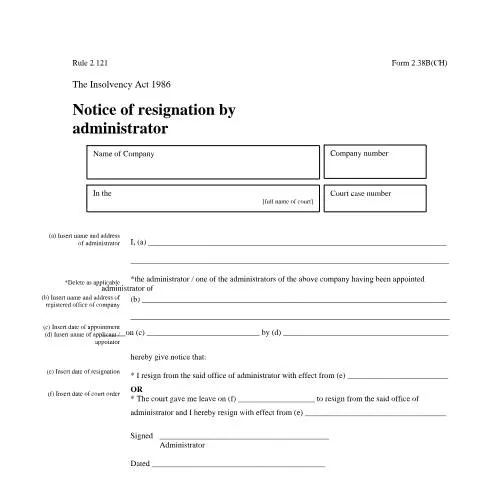
Key Components of Form 2.38B(CH)
This document comprises several vital fields that must be completed accurately to ensure the resignation is processed without delay. Below is an overview of the core elements included in Form 2.38B(CH):
- Company Number: This is the unique identifier assigned to the company by Companies House.
- Name of Company: It should reflect the full registered name of the company.
- Court Details: This includes the name of the court where the administration order was obtained and the relevant case number.
- Administrator's Information: The form must detail the administrator's name, their role, and the date they were appointed.
- Date of Resignation: This crucial date indicates when the resignation takes effect.
- Court Order Date: If applicable, this is the date when the court granted permission for the administrator to resign.
When the Form Becomes Indispensable
Certain situations make the submission of Form 2.38B(CH) unavoidable. Understanding these scenarios can help administrators, company directors, and stakeholders navigate the resignation process efficiently.
Common Scenarios Requiring Submission
- Voluntary Resignation: When an administrator chooses to step down from their role, they must file this form.
- Court-Ordered Resignation: If a court grants permission for resignation, the form must be submitted to formalize this decision.
- Change of Circumstances: Any significant change in the administrator's ability to perform their duties may necessitate their resignation and the subsequent notification.
Understanding these contexts helps ensure that the resignation is processed correctly and promptly.
The Process of Submitting Form 2.38B(CH)
Filing the Notice of Resignation by Administrator is not merely a formality; it requires careful attention to detail to ensure compliance with legal standards outlined in the Insolvency Act 1986. Below is a step-by-step breakdown of how to effectively manage this process.
Step-by-Step Submission Guide
- Complete the Form: Fill in all required fields accurately, ensuring that the information aligns with official records.
- Obtain Necessary Signatures: The administrator must sign the form, which legally validates the resignation.
- Prepare for Submission: Include any additional documentation required for clarity, especially if the resignation is court-ordered.
- Submit to Companies House: Send the completed form and any attachments to Companies House at the designated address: Companies House, Crown Way, Cardiff, CF14 3UZ.
- Keep Records: Maintain copies of the submitted form and any correspondence for future reference.
This structured approach ensures that the resignation is handled with the necessary formality and adherence to legal expectations.
Articulating Form 2.38B(CH) with Other Documents
Form 2.38B(CH) does not operate in isolation; it is interlinked with other documentation associated with the administration process. Understanding these connections can enhance the clarity and efficiency of the overall process.
Related Documentation
- Insolvency Administration Order: This document initiates the administration process and is critical for context when resigning.
- Notice of Appointment (Form 2.10B): This form details the appointment of the administrator and provides background information relevant to the resignation.
- Creditors' Reports: These reports, submitted periodically during administration, may provide insights into the financial state of the company at the time of resignation.
- Court Orders: Any court orders relevant to the administrator's role or resignation should be referenced in the notice.
By cross-referencing these documents, the resignation process can be managed more effectively, preserving the integrity of the administrative workflow.
Recognising the Limits of Form 2.38B(CH)
While Form 2.38B(CH) is a crucial document in the resignation process, it is essential to acknowledge its limitations. These limitations can influence how administrators and other stakeholders approach the resignation and subsequent administration tasks.
Key Limitations to Consider
- Not a Comprehensive Termination: Filing this form does not absolve the administrator of all responsibilities accrued during their tenure.
- Legal Obligations Remain: The administrator may still be subject to legal scrutiny regarding actions taken during their administration.
- Exclusions of Liability: This document does not protect the administrator from potential liabilities incurred before resignation.
Being aware of these limitations can prepare stakeholders for potential issues that may arise even after the resignation is processed.
Avoiding Common Misinterpretations
Misinterpretations of Form 2.38B(CH) can lead to procedural errors, potentially complicating an already sensitive situation. Here are some common misunderstandings to avoid:
Typical Misunderstandings
- Confusing Resignation with Termination: Resigning as an administrator does not terminate the administration process; it merely changes who is responsible for overseeing it.
- Assuming No Further Action is Required: Even after resignation, there may be follow-up actions, such as appointing a new administrator or providing reports to Companies House.
- Underestimating Communication Needs: It is vital to communicate with involved parties, including creditors and company directors, after submitting the resignation.
By recognising and addressing these potential misinterpretations, administrators can navigate their resignation with more confidence and clarity.
Final Considerations for a Smooth Transition
The resignation of an administrator can signify a critical turning point for a company in distress. As such, the completion and submission of Form 2.38B(CH) should be conducted with careful consideration of all associated factors. Here are some final points to consider:
- Ensure Clear Communication: Notify relevant stakeholders promptly about the resignation and the next steps in the administration process.
- Maintain Accurate Records: Keep thorough documentation of all communications and filings related to the resignation.
- Seek Legal Guidance if Needed: If there are uncertainties or complexities surrounding the resignation, consulting with a legal expert in insolvency can be beneficial.
By adhering to these practices, administrators can facilitate a smoother transition and uphold the integrity of the administrative process.
Understanding the Resignation Process for Administrators
When an administrator decides to resign from their position, it's not merely a matter of handing in a letter. The process outlined in the Insolvency Act 1986 and related regulations necessitates a structured approach to ensure compliance with legal obligations and the protection of all involved parties. Administrators play a crucial role in managing the affairs of a distressed company, and their resignation can have significant implications.
An administrator must provide notice of their resignation, which should be done in writing, to the relevant parties. These typically include the creditors of the company, the company itself, and, crucially, the creditors' committee if one has been formed. It's also essential to notify the court and the Registrar of Companies via the appropriate forms, ensuring that the company's records reflect the change in administration. The specific form used for this purpose is the Form 2.38B(CH), which is crucial for documenting the resignation in the official records of the Insolvency Service.
Common Challenges and How to Overcome Them
The resignation of an administrator isn't always a straightforward process. Various challenges may arise during this transition that require careful navigation. For instance, if the company has ongoing disputes or legal proceedings, the administrator's resignation might complicate the situation. Creditors may have varying opinions on the resignation, especially if they believe it could affect the recovery of debts owed to them.
One common challenge is ensuring that all parties are adequately informed about the resignation and the reasons behind it. Poor communication can lead to confusion, mistrust, and potentially legal disputes. To mitigate these issues, administrators should prepare a clear communication strategy that outlines the timeline for the resignation and any impacts it may have on the company's creditors and employees.
Another aspect to consider is the financial implications of resigning. If the administrator believes that they cannot fulfil their duties effectively due to personal or professional reasons, they must assess whether this will affect the financial standing of the company. In such cases, it may be necessary to consider appointing a successor who can ensure continuity in the administration process. The process for appointing a new administrator should be transparent and adhere to the guidelines set forth by the Insolvency Act.
Legal Obligations and Consequences of Improper Resignation
Failure to comply with the legal requirements surrounding resignation can lead to severe consequences for an administrator. Under the Insolvency Act, administrators owe certain fiduciary duties to the creditors and have to act in the best interests of those parties. If an administrator resigns without adhering to the proper procedures, they may be held accountable for any losses that ensue as a direct result of their actions.
It's important for administrators to understand that they have an obligation to submit a resignation statement, which should include the reasons for their resignation and a detailed account of their actions while in office. This statement can be scrutinised by the court and can play a crucial role in determining whether the resignation was warranted and what impact it has had on the creditors and the company itself.
To avoid potential legal repercussions, administrators are encouraged to seek legal advice prior to submitting their resignation. Understanding the implications of their resignation and the subsequent responsibilities can prevent misunderstandings and conflicts. It is prudent to document all communications and decisions made during this process to safeguard against potential claims of negligence or misconduct in the future.