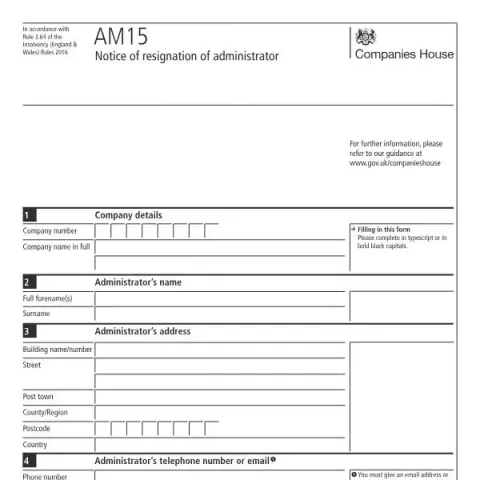
Navigating the AM15: A Critical Document for Corporate Administrators
In the complex world of corporate governance, the transition of an administrator often requires careful consideration and adherence to legal protocols. One crucial document in this realm is the AM15, also known as the "Notice of Resignation of Administrator." Understanding this document is fundamental for administrators who are stepping down from their roles, as it serves both compliance and transparency purposes within the UK's corporate framework.Understanding the Role of the Administrator
An administrator is appointed during insolvency proceedings to manage the affairs of a company in distress. This role is pivotal in attempting to rescue the business or, if necessary, to ensure that assets are appropriately liquidated. However, there may come a time when an administrator must resign. This resignation must be formally documented, and this is where the AM15 comes into play. It is essential to recognize that resignation does not imply that the administrator is absolved of their responsibilities until the process is complete. The administrator must ensure that all duties are satisfactorily concluded, and the company’s affairs are in order before submitting the AM15.When and Why to Use the AM15
The AM15 becomes indispensable for various stakeholders within a company. Whether you're an administrator or a company director, understanding the contexts in which the AM15 is necessary can streamline the process significantly.- Change in Personal Circumstances: An administrator may need to resign due to health issues or personal commitments that limit their ability to perform duties effectively.
- Conflict of Interest: If an administrator finds themselves in a position where their impartiality could be questioned, resignation may be the best course of action.
- Completion of Tasks: Once an administrator has fulfilled their tasks, officially notifying Companies House through the AM15 is vital for transparency and record-keeping.
Decoding the AM15 Structure
The AM15 is not merely a form; it is structured to convey critical information succinctly. Familiarity with its layout can alleviate the stress associated with the resignation process. Here’s what the document includes:| Section | Description |
|---|---|
| Company Details | Name and number of the company to ensure that the resignation pertains to the correct entity. |
| Administrator’s Name and Address | Full contact details of the administrator resigning for public record purposes. |
| Date of Resignation | The specific date when the resignation takes effect. |
| Reason for Resignation | A brief explanation for the resignation, providing context for the change. |
| Signature | The administrator's signature certifying the accuracy of the information provided. |
Step-by-Step Process: Submitting the AM15
Once the decision to resign is made, the next steps involve careful preparation and submission of the AM15. Follow these key steps for a smooth process:- Gather Necessary Information: Compile the company name and registration number, administrator’s details, date of resignation, and reason for resignation.
- Complete the AM15: Fill out the form using black capital letters for legibility. Ensure accuracy, as errors can lead to delays.
- Attach Required Documentation: If applicable, include any additional documents that support the resignation, such as a letter of consent from the company directors.
- Sign and Date: The administrator must sign and date the form, confirming the information is correct.
- Submit to Companies House: Send the completed form to the appropriate address. For expedience, use the dedicated address provided by Companies House.
Interconnecting Documents: The AM15 in Context
The AM15 cannot be considered in isolation; it is part of a broader scheme of documents related to corporate governance and insolvency management. Recognizing its interconnections can clarify the administrator's responsibilities during and after their tenure. For instance, when an administrator resigns, it may also involve submitting other documents, such as:- Statement of Affairs: If required, this document outlines the company's financial situation, which may need to be filed simultaneously with the AM15.
- Notice of Appointment: If a new administrator is being appointed, this process can overlap with the AM15 submission.
- Final Accounts: Ensuring that all financial matters are resolved before resignation can prevent complications.
Common Queries About the AM15
Understanding the nuances of the AM15 often leads to specific questions. Here are some common queries along with their explanations:- What happens if the AM15 is submitted incorrectly? If there are errors in the submission, Companies House may return the form, leading to delays in processing the resignation. Ensuring all details are accurate is critical.
- Can an administrator resign verbally? A verbal resignation is not legally binding and must be documented using the AM15 to be valid.
- What is the timeframe for submitting the AM15? While there isn't a strict deadline, it is advisable to submit the AM15 promptly following the decision to resign to maintain transparency.
Key Terminology: Navigating the Legal Landscape
To effectively use the AM15, it’s essential to grasp related terminology that is frequently referenced in the context of company administration:- Insolvency: Refers to a company’s inability to pay its debts, which often triggers the appointment of an administrator.
- Liquidation: The process of selling off a company’s assets to pay creditors, typically following an administrator’s intervention.
- Public Record: A database maintained by Companies House where information about companies, including resignations, is publicly accessible.
Final Thoughts on the Transition Process
The resignation of an administrator signifies a pivotal moment in a company’s governance. The AM15 serves as an official notification that is pivotal for maintaining transparency within the corporate structure. It is not merely a procedural requirement but a cornerstone for good governance, ensuring that all stakeholders are informed and that the transition is smooth. Properly utilizing the AM15 involves understanding its structure, the associated processes, and the broader implications of resignation. By following the guidelines laid out in this article, administrators can confidently navigate their resignation, ensuring compliance and maintaining the integrity of the company’s records. As businesses evolve, the role of administrators will continue to be crucial. Understanding how to formally resign using the AM15 is integral to this process, reflecting the commitment to transparency and responsibility in corporate governance.Understanding the Role of an Administrator in a Company
Before diving into the process of resigning as an administrator via the AM15 form, it is crucial to understand the responsibilities and roles associated with this position. An administrator in the context of a company is primarily tasked with protecting the interests of creditors, managing the company's assets, and ensuring compliance with various regulations. This role often comes into play during insolvency situations where the company is struggling to meet its financial obligations.
As an administrator, one must be knowledgeable about the statutory regulations and the implications of the role. This includes familiarization with the Insolvency Act 1986, which governs the conduct of administrators in the UK. It's also essential to understand the relationship between the administrator and the creditors, shareholders, and other stakeholders of the company. An administrator can be appointed by the court or by the company itself, and their primary function is to attempt to rescue the company as a going concern or to achieve a better return for creditors than if the company were liquidated.
When considering resignation from this pivotal role, it's critical to assess the impact this decision may have on the ongoing administration process. An administrator's resignation does not relieve them of their duties and responsibilities until a new administrator is appointed. Proper procedures must be followed to ensure a smooth transition and compliance with legal obligations.
Key Considerations Before Submitting an AM15 Form
Before you file the AM15 form to officially resign as an administrator, several key considerations must be taken into account to ensure that the process is both compliant and effective.
First, assess the current state of the company's affairs. As an administrator, you have a fiduciary duty to act in the best interests of creditors and stakeholders. If there are ongoing issues or unresolved matters, it may be prudent to address these before stepping down. Ensure that all financial assessments, as well as reports to creditors and stakeholders, are up to date and accurately reflect the situation of the company.
Next, understand the timeline involved in your resignation. While the AM15 form itself can be submitted relatively quickly, the implications of your resignation may extend beyond just the paperwork. Ensure that you have laid the groundwork for a handover to a successor if one is to be appointed. This might involve coordinating with professional insolvency practitioners who can step into the role and continue the administration process seamlessly.
Additionally, consider the potential legal implications of your resignation. Under the Insolvency Act, an administrator is required to notify various parties of their resignation, including the court, creditors, and any relevant regulatory bodies. Failure to do so could lead to complications or liabilities. It’s advisable to have legal counsel or professional advice to navigate these nuances effectively and to confirm that you have fulfilled all obligations before, during, and after your resignation.
Lastly, keep in mind that a resignation does not absolve you of your responsibilities for decisions made while in office. You may still be held accountable for any actions taken or not taken during your tenure as an administrator. Therefore, it is essential to document your rationale for resignation and any communications with involved parties to protect yourself from potential future claims.
Common Pitfalls When Completing the AM15 Form
Completing the AM15 form may seem straightforward, but there are several common pitfalls that can lead to delays or complications in the resignation process. Awareness of these issues can help ensure a smoother experience.
One common mistake is failing to provide complete information. The AM15 form requires specific details, including your name, address, and the company's registered number. Incomplete or incorrect information can lead to the rejection of your resignation or further scrutiny from regulatory bodies. Always double-check the information you provide and ensure that it matches what is recorded with Companies House.
Fill in your form directly online
No printing: type your details into the boxes of the official form, tick, then download the PDF ready to send.
- 1Type into the form boxes
- 2Tick in one click
- 3Save and download the PDF
Another frequent issue arises from the timing of your resignation. It’s essential to submit your resignation at an appropriate time in relation to ongoing administration tasks. For instance, if significant developments or creditor meetings are pending, your resignation could complicate these processes. Timing your resignation after essential milestones can help avoid disruption and maintain credibility with stakeholders.
Additionally, administrators often underestimate the importance of communication. Before submitting the AM15 form, it is advisable to communicate your intentions to key stakeholders, including creditors. This transparency can foster goodwill and can be pivotal in ensuring a smooth transition to your successor. Ignoring this step can lead to misunderstandings or friction with stakeholders, which may complicate matters further down the line.
Lastly, many resigning administrators overlook the importance of following up after submitting the AM15 form. Once you’ve filed your resignation, it’s important to ensure that the relevant parties have acknowledged the resignation and that the new administrator (if appointed) is in place. Taking a proactive approach in this regard can help safeguard your position and protect against potential liabilities.