Understanding the Move from Administration to Creditors' Voluntary Liquidation
The process of transitioning a company from administration to creditors' voluntary liquidation is critical in ensuring that creditors are treated fairly and that the company’s remaining assets are dealt with appropriately. Form 2.34B serves as an official notice for this transition, as outlined in the Insolvency Act 1986. This guide details the purpose and use of this document, alongside relevant procedures and implications for stakeholders.
Key Elements of Form 2.34B and Its Role in the Process
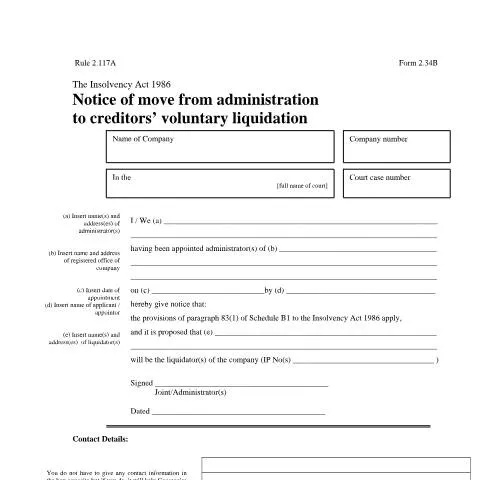
Form 2.34B acts as a formal notification to creditors that the administration period is coming to a close and that the company will be entering the liquidation phase. The document requires several key pieces of information:
- Name of the Company: This should be the official registered name as it appears on Companies House.
- Company Number: A unique identifier assigned by Companies House upon registration.
- Court Case Number: Reference number for the insolvency proceedings.
- Details of Administrators: Names and addresses of persons appointed as administrators.
- Liquidator Information: Proposed liquidator's name and IP number, which is crucial for the administration of the liquidation process.
This information ensures traceability and accountability throughout the transition, crucial components when dealing with financial insolvency.
The Importance of Accurate Information in the Notice
Providing precise details is essential to avoid complications during the liquidation process. Errors or omissions can lead to delays or legal challenges. Each section of Form 2.34B requires careful consideration:
- Company Name and Number: Must match the records held by Companies House to establish credibility.
- Administrators and Liquidators: It's vital to ensure that the correct individuals are named, as this impacts who is responsible for managing the liquidation and distributing assets.
- Signature and Date: The document must be signed by the administrator(s) and dated accurately to validate the notice.
Inaccuracies could not only invalidate the notice but also negatively impact stakeholders' rights and entitlements.
Legal Framework Governing the Notice and Its Implications
Form 2.34B is governed by the Insolvency Act 1986, specifically under the provisions outlined in Schedule B1. This framework not only stipulates the procedural aspects of notifying creditors but also protects the rights of shareholders and creditors during the transition phase. Understanding the legal implications of this notice is vital for:
- Creditors: They must be informed to know when they can expect distributions or claim any outstanding debts.
- Shareholders: While often last in line during liquidation, they need to be aware that the company is moving into liquidation.
- Administrators and Liquidators: Clarity on their roles and responsibilities during the transition period.
The legal framework not only ensures compliance but also secures a transparent procedure aimed at maximising the returns for creditors.
Communication with Creditors: The Next Steps After Submission
Once Form 2.34B is submitted to Companies House, communication with creditors becomes paramount. The administrators must be proactive in informing creditors about the transition to liquidation. This typically involves:
- Issuing a Notice of Creditors' Meeting: A crucial step where creditors can discuss the proposed liquidator and the course of action.
- Providing Updates: Keeping creditors informed about the progress of liquidation and any critical developments.
- Addressing Queries: Being available to respond to any questions or concerns raised by creditors regarding the liquidation process.
This communication strategy is not only a legal requirement but also a practice that fosters trust and transparency among all parties involved.
Common Situations Necessitating Form 2.34B
Several specific situations may require the use of Form 2.34B, making it a crucial document within the insolvency process. These include:
- Initial Administration Success: When an administration period has been successful but further financial issues force the company into liquidation.
- Inability to Rescue the Company: If the company cannot be turned around and must transition to liquidation to settle debts.
- Stakeholder Decision: When creditors vote for liquidation during an creditors' meeting, necessitating the filing of this notice.
Each of these scenarios underscores the necessity of Form 2.34B – it formalises the shift from one legal status to another, ensuring adherence to insolvency laws.
Understanding the Limitations of Form 2.34B and Related Processes
While Form 2.34B is an essential document, it is important to understand its limitations. This notice does not:
- Equate to an approval of the liquidator; rather, it is a proposal that requires further acceptance from creditors.
- Resolve any outstanding disputes between creditors and the company, which must be handled separately.
- Address every individual creditor's claim; it merely notifies of the movement to liquidation.
Therefore, administrators must ensure that they manage creditor expectations and clarify that further steps are necessary post-notice.
Practical Steps to Filing Form 2.34B with Companies House
Filing Form 2.34B with Companies House requires several systematic steps to ensure compliance with legal requirements:
- Preparation of the Document: Complete the form with all required details ensuring accuracy and clarity.
- Signature: Ensure the document is signed by the appointed administrator(s).
- Submission: Send the form to the Companies House address in Cardiff, adhering to any specified methods of delivery.
Following these steps diligently can prevent delays and ensure a smooth transition from administration to liquidation.
Conclusion: The Crucial Role of Form 2.34B in Company Administration
Form 2.34B is not merely a document; it represents a pivotal moment in a company's journey through insolvency. It signifies the shift from administration, where management may have been working to rescue the company, towards a definitive step into liquidation. Understanding its purpose, the legal frameworks surrounding it, and the importance of clear communication with creditors can significantly ease the transition for all stakeholders involved. As businesses navigate the complexities of insolvency, the clarity and transparency offered by Form 2.34B cannot be overstated.
Understanding Administration: What It Means for Your Business
When a company enters administration, it is typically due to financial difficulties, indicating that the company's debts may exceed its assets. Understanding the implications of administration is crucial not only for business owners but also for employees, creditors, and stakeholders. The primary aim of administration is to rescue the company as a going concern, if possible, or to achieve a better outcome for creditors than liquidation would provide.
The process is initiated by appointing an administrator, who may be an insolvency practitioner. This individual takes control of the company’s operations, overseeing its day-to-day activities while working to negotiate with creditors. The appointment of an administrator provides immediate legal protection from creditors, preventing them from taking legal action against the company without the administrator’s permission.
It’s important to note that during administration, the company’s directors lose their powers, which are transferred to the administrator. This can be a challenging adjustment for original leadership, especially if the administration is perceived as a last resort. However, the administrator will aim to work collaboratively with management to explore all viable options for the revitalization of the business.
Fill in your form directly online
No printing: type your details into the boxes of the official form, tick, then download the PDF ready to send.
- 1Type into the form boxes
- 2Tick in one click
- 3Save and download the PDF
Legal Considerations When Moving from Administration
Exiting administration involves various legal considerations that must be adhered to in accordance with the Insolvency Act 1986 and applicable regulations. Upon the successful implementation of a rescue plan or the sale of the company, the administrator will need to file specific documents with Companies House, including a notice to indicate that the company has successfully exited administration.
Moreover, understanding the rights of creditors during this phase is essential. Creditors have a right to receive updates regarding the company’s situation and recovery plan. It’s also pertinent to notify unsecured creditors when moving from administration. This can be done through a formal communication, often accompanied by documentation regarding the company's new structure and any changes in leadership or operational strategy.
Additionally, if any changes to the company's registration details are necessary, such as alterations in the registered office address or amendments to the directors' list, these must be submitted to Companies House promptly. Failing to comply with these requirements can lead to penalties and further complications down the line.
Post-Administration: Key Steps for Recovery and Future Compliance
Once a company has moved out of administration, it enters a critical recovery phase that necessitates strategic planning and execution. The focus during this time should be on financial stability and sustained operational viability. A post-administration plan typically involves reassessing business strategies, restructuring operations, and potentially renegotiating terms with remaining creditors.
One pivotal aspect of recovery is maintaining clear communication with all stakeholders. This includes not only informing employees about any changes in their roles or the direction of the company but also reassuring customers and suppliers about the company's stability and ongoing commitments. A transparent approach enhances trust and reduces uncertainties that can lead to the loss of business relationships.
Furthermore, compliance with regulatory obligations remains paramount. This includes submitting annual accounts and tax returns to HMRC within the stipulated deadlines and ensuring all payroll obligations are met under PAYE. Regular audits and reviews of financial practices can help identify areas of improvement and prevent future financial distress.
Another important step is to review the company's governance structure and internal controls. After emerging from administration, it’s advisable to establish clearer lines of accountability and responsibility within the company's leadership. This may involve appointing new board members or bringing in external advisors to bolster the company’s governance.
Lastly, consider engaging with the local business community and exploring networking opportunities to share experiences and best practices. Building a robust support network can be invaluable as the company works to regain its footing in a competitive market.