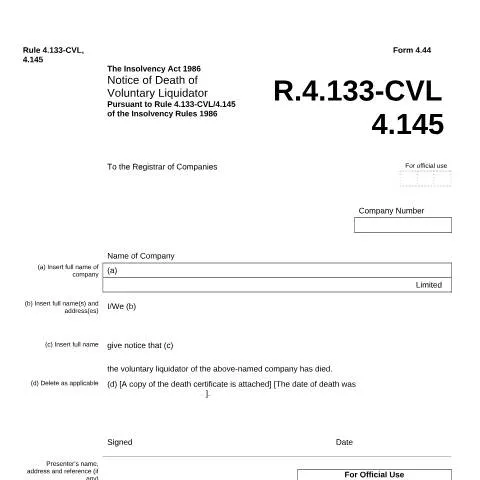
Navigating the Legal Landscape: Understanding the Importance of Form 4.44
In the complex realm of company management and insolvency within the UK, the death of a voluntary liquidator can introduce significant complications. Form 4.44, officially titled the "Notice of Death of the Voluntary Liquidator," serves as a crucial notification to Companies House, marking an important procedural step in the liquidation process. This document is not merely a formality; it initiates a series of necessary actions to ensure that the liquidation process continues smoothly, honouring the responsibilities that the deceased liquidator once held.
When Is Form 4.44 Required?
Understanding the scenarios that necessitate the submission of Form 4.44 is essential for company directors and stakeholders. This form becomes imperative in the following circumstances:
- Death of the appointed voluntary liquidator: The primary condition triggering the need for this notice is the unfortunate passing of the liquidator responsible for overseeing the dissolution of the company.
- Continuity of the liquidation process: To avoid potential delays in liquidation proceedings, timely submission of this notice ensures that the process does not stall due to administrative oversight.
- Legal compliance: Companies House requires this notification to maintain accurate records, adhering to the regulations set forth in the Insolvency Act 1986.
Identifying Key Stakeholders
Form 4.44 is primarily intended for use by company directors, stakeholders involved in the liquidation proceedings, and legal professionals managing the insolvency process. Specifically, the following parties may find themselves engaged in this procedure:
- Company Directors: It is the responsibility of the company directors to ensure that the death of the liquidator is formally reported to Companies House.
- Insolvency Practitioners: Practitioners may assist in filling out the form and providing guidance on the next steps following the liquidator's death.
- Beneficiaries and Creditors: Those with a vested interest in the company’s liquidation may require updates on the status of the process post-liquidator's death.
The Vital Components of Form 4.44
Form 4.44 may seem straightforward, but it contains critical components that must be accurately filled out to ensure compliance. Understanding each section can prevent errors that could delay the proceedings:
| Section | Details Required |
|---|---|
| Company Name | The complete name of the company as registered with Companies House. |
| Company Number | The unique identifier for the company, crucial for the registrar's records. |
| Liquidator's Name | The full name of the deceased voluntary liquidator. |
| Date of Death | The exact date the liquidator passed away, essential for record-keeping. |
| Death Certificate | A copy of the death certificate must be attached to validate the notice. |
Fulfilling Legal Obligations: Why Compliance is Essential
Failure to submit Form 4.44 can lead to serious consequences for the company and its directors. Here are some key reasons why compliance is not just advisable but essential:
- Legal Consequences: Inadequate reporting can attract penalties from Companies House, reflecting poorly on the company’s governance.
- Impediments to Liquidation: Without proper notification, the liquidation process may be disrupted, leading to complications in settling debts and distributing assets.
- Impact on Stakeholders: Creditors and beneficiaries depend on the timely progression of liquidation; delays can affect their financial recovery.
Understanding the Relationship with Other Documentation
Form 4.44 is not an isolated document; it interacts closely with various forms and processes within the insolvency framework. Familiarity with these related documents enhances understanding of the broader context:
- Form 4.45: This form is used to appoint a new liquidator following the death of the previous one, ensuring continuity in the liquidation process.
- Notice of Appointment of a Liquidator: This document initiates the liquidation process and provides the initial framework upon which Form 4.44 operates.
- Insolvency Procedures Manual: A comprehensive guide detailing the steps and obligations within the insolvency process, including the handling of Form 4.44.
Limitations and Specific Scenarios for Form 4.44
While Form 4.44 serves a crucial function, it is important to be aware of its limitations and the specific scenarios where its use is pertinent:
- Death of a Liquidator Only: This form is exclusively for notifying the death of a voluntary liquidator; it does not apply to other types of liquidators or insolvency practitioners.
- Not for Other Notifications: The form should not be used for other administrative changes or notifications unrelated to the liquidator's death.
- Effect on the Company’s Status: The submission of Form 4.44 does not automatically change the status of the company; it simply notifies Companies House of the liquidator's death.
Next Steps After Submitting Form 4.44
Once Form 4.44 has been submitted to Companies House, there are essential subsequent actions that must be taken to ensure a seamless transition in the liquidation process:
- Consider Appointing a New Liquidator: If the liquidation process is to continue, it is advisable to appoint a new voluntary liquidator using Form 4.45 to avoid stalling the proceedings.
- Communicate with Stakeholders: Directors should inform creditors, shareholders, and other stakeholders about the change in liquidator to maintain transparency and trust.
- Review Company Records: It's prudent to review the company's records to ensure all information is up to date, including financial statements and creditor lists.
Practical Considerations When Dealing with Form 4.44
In practice, managing the responsibilities associated with Form 4.44 can be daunting, particularly in emotionally charged situations. Here are some practical tips to navigate the process effectively:
- Seek Professional Guidance: If there are uncertainties regarding the completion of Form 4.44 or subsequent steps, consulting with an insolvency practitioner or solicitor can provide clarity and support.
- Maintain Accurate Records: Keeping detailed records of all communications and submissions related to the liquidation process is critical for legal and procedural compliance.
- Timeliness is Key: Submitting Form 4.44 promptly upon the liquidator's death helps to mitigate potential complications down the line.
Conclusion: The Importance of Diligence in Liquidation Processes
The death of a voluntary liquidator marks a significant moment in a company’s liquidation journey. Form 4.44 is a vital tool that ensures this pivotal event is documented properly, allowing the process to continue without unnecessary delays. Understanding the nuances of this form and remaining proactive in its management will facilitate a smoother transition in the liquidation process. Ultimately, diligence in adhering to these formalities not only upholds legal obligations but also fosters trust and accountability among all parties involved.
Fill in your form directly online
No printing: type your details into the boxes of the official form, tick, then download the PDF ready to send.
- 1Type into the form boxes
- 2Tick in one click
- 3Save and download the PDF
Understanding the Role of a Voluntary Liquidator in the UK
A voluntary liquidator plays a pivotal role in the process of winding up a company in the UK, especially in the context of voluntary liquidation, where the decision to liquidate is made by the company’s members or creditors. This often occurs when a company can no longer pay its debts and seeks to dissolve itself officially. The liquidator is responsible for settling the affairs of the company, which includes selling off assets, paying creditors, and ensuring that any surplus is distributed to shareholders.
In the UK, the voluntary liquidator is typically appointed during a general meeting of the company's members. Their role is to act in the best interests of both creditors and shareholders, ensuring that the liquidation process is transparent and compliant with the relevant legal framework, primarily governed by the Insolvency Act 1986. Understanding the implications of a voluntary liquidator's death is crucial, as it can significantly impact the winding-up process.
Steps to Take After the Death of a Voluntary Liquidator
When a voluntary liquidator passes away, it is essential to act promptly to ensure that the winding-up process continues without disruption. Here are the key steps to take:
- Notify the Insolvency Practitioner Association (IPA): The death of the liquidator should be reported immediately to the IPA. This organization regulates insolvency practitioners in the UK, and they can provide guidance on the next steps.
- Appoint a New Liquidator: The company’s members must convene a meeting to appoint a new voluntary liquidator. This new liquidator can be a qualified insolvency practitioner who will take over the responsibilities of the deceased liquidator. It’s essential to follow the proper procedures for appointing a replacement, which includes drafting and passing a resolution.
- Review the Financial Status of the Company: The new liquidator should conduct a thorough review of the company's financial status immediately upon taking over. This includes assessing outstanding debts, existing assets, and any ongoing obligations that need to be fulfilled to proceed with the liquidation process effectively.
- Liaise with Creditors and Stakeholders: It is crucial for the new liquidator to communicate with all stakeholders involved in the liquidation process, including creditors, shareholders, and employees, to keep them informed of the changes and progress.
Legal Considerations and Compliance Obligations
Upon the death of a voluntary liquidator, there are several legal considerations that must be adhered to, particularly concerning the duties outlined under the Insolvency Act 1986 and the Companies Act 2006. The new liquidator must ensure compliance with these acts to avoid any potential legal repercussions. Key compliance obligations include:
- Maintaining Accurate Records: The new liquidator must ensure that all records related to the liquidation process are meticulously maintained, including accounts of financial transactions, communications with creditors, and resolution meeting minutes.
- Filing Necessary Documentation: The Companies House requires specific forms to be filed when there is a change in liquidators. This includes submitting a notice of the change and updating the company's records to reflect the new liquidator's details.
- Adherence to the Data Protection Act 2018: During this transition, compliance with the Data Protection Act 2018 is critical, especially regarding the handling of personal data of both the deceased liquidator and the company's stakeholders. The new liquidator must ensure that all personal data is processed lawfully and securely during the handover period.