Understanding the Purpose and Implications of the Notice of Petition for Administration Order
In the complex landscape of business insolvency, the Notice of Petition for Administration Order: Form 2.2B (Scotland) serves a crucial function. When a company faces financial distress, stakeholders may seek to initiate an administration process to restructure or rescue the company. This document is not merely a form; it is a critical notification signaling the commencement of legal proceedings aimed at protecting the company’s assets while it undergoes potential rehabilitation.
Exploring the Administration Order Process
The process initiated by this notice is governed by the Insolvency Act 1986 and the Insolvency (Scotland) Rules 1986. Understanding how the administration order works is essential for any party involved in the administration process.
Key Steps in the Administration Process
- Petition Submission: The initial step involves submitting a petition to the court. This document officially notifies the court of the intent to initiate administration.
- Court Hearing: After the petition is presented, a hearing will be scheduled, where the court assesses the details of the petition.
- Appointment of an Administrator: If the court approves the petition, an administrator is appointed. This individual will manage the company’s affairs moving forward.
- Notification to Creditors: Once an administrator is appointed, creditors are notified. This communication includes details on how the administration affects their claims.
- Implementation of the Administration Plan: The administrator will work on a plan to either restructure the business or sell assets to pay off debts.
Critical Components of the Notice Document
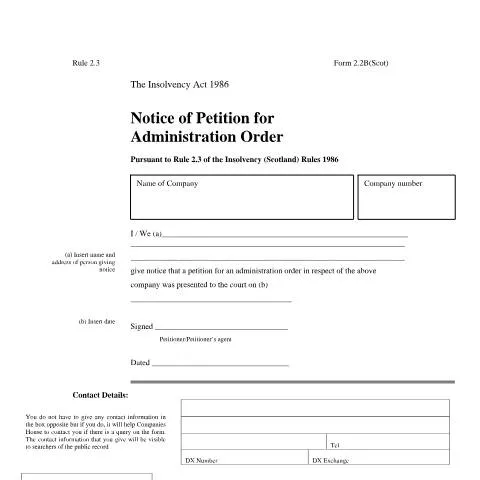
The Notice of Petition for Administration Order itself contains essential elements that reflect the particulars of the case. These components are vital not only for the legal process but also for the stakeholders who may be directly impacted by the administration.
Contents of the Notice
- Name of the Petitioner: The individual or entity that is initiating the petition, along with their contact details. This transparency facilitates communication between the court and stakeholders.
- Date of Petition: The specific date when the petition was submitted. This date is crucial for establishing timelines in the administration process.
- Name and Company Number: The specific company that is the subject of the petition, identified by its registered company number. This detail ensures that the correct entity is undergoing potential restructuring.
- Signature of the Petitioner: Legally binding, this signature confirms that the information presented is accurate and true to the best knowledge of the petitioner.
Key Terminology: Navigating the Insolvency Language
Understanding the legal terminology associated with the administration process is indispensable for all parties involved. Below are some key terms relevant to the Notice of Petition for Administration Order.
| Term | Definition |
|---|---|
| Administrator | An individual appointed by the court to manage the company's affairs during the administration period. |
| Insolvency | A state where a company cannot meet its financial obligations when they are due. |
| Petitioner | The person or entity that submits the petition for the administration order. |
| Creditors | Individuals or entities to whom the company owes money. |
Avoiding Common Misinterpretations
While the notice serves a straightforward purpose, misinterpretations can lead to significant procedural mistakes. Below are common areas of confusion:
Misconceptions in the Administration Process
- Believing the Petition Guarantees Approval: Submitting the notice does not guarantee that the court will approve the administration order. The court must evaluate the circumstances and merits of the case.
- Underestimating Creditors’ Rights: Creditors still retain rights even during the administration process. They must be informed and given opportunities to file claims against the company.
- Finality of the Administration: Some stakeholders may believe that once an administration order is in place, it is irreversible. However, depending on the circumstances, there are various outcomes, including liquidation.
Timing and Deadlines: Navigating the Administrative Timeline
Timing is pivotal in insolvency proceedings. Understanding the key dates associated with the notice and subsequent administration is important for petitioners and creditors alike.
Important Dates to Remember
- Date of Petition Submission: This date marks the beginning of the administration process.
- Hearing Date: The date when the court will review the petition. It is crucial to prepare necessary documentation and arguments by this date.
- Notification Period: Creditors must be notified promptly following the appointment of the administrator, typically within a specified timeframe.
Engaging with Companies House: Reporting Requirements
Following the initiation of an administration order, certain reporting requirements must be adhered to involving Companies House. Compliance is vital to maintain transparency and uphold legal obligations.
Companies House Notifications
When a petition for administration is filed, Companies House must be notified. This notification includes:
Fill in your form directly online
No printing: type your details into the boxes of the official form, tick, then download the PDF ready to send.
- 1Type into the form boxes
- 2Tick in one click
- 3Save and download the PDF
- Details of the administration order.
- The identity of the administrator.
- Any significant changes in the company’s structure.
Seeking Professional Guidance: The Role of Insolvency Practitioners
While the Notice of Petition for Administration Order provides a framework for initiating administration, the complexities involved in dealing with insolvency may require expert guidance. Insolvency practitioners can offer indispensable support throughout the process.
Benefits of Consulting an Insolvency Practitioner
- Expertise in Insolvency Law: They possess in-depth knowledge of the legal landscape surrounding insolvency and can help navigate the process effectively.
- Tailored Strategies: Insolvency practitioners can develop bespoke plans that align with the specific circumstances of the company.
- Communication with Stakeholders: They act as intermediaries between the company and its creditors, ensuring that all parties are kept informed and engaged.
Conclusion: Navigating the Path Ahead
In summary, the Notice of Petition for Administration Order is more than just a procedural document; it is a critical element in the journey of a financially distressed company towards potential recovery. By understanding the intricacies of this notice, including its implications, timeline, and associated terminology, stakeholders can better navigate the challenging waters of business insolvency.