Understanding the Notice of Resignation by Administrator: A Practical Guide
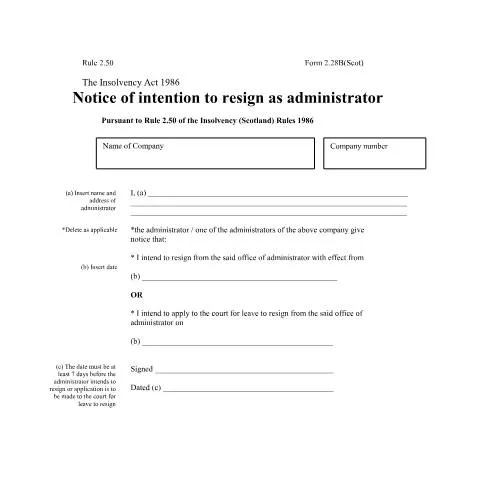
The Notice of Resignation by Administrator: Form 2.29B (Scotland) serves as a crucial document for administrators in the Scottish insolvency process. This notice informs relevant stakeholders, including creditors and company members, about the administrator's intention to resign from their position. It is a formal declaration that must be handled with attention to detail and legal compliance. Understanding how to utilise this document correctly is essential for ensuring a smooth transition during the insolvency process.
Key Components of the Notice
This notice comprises several key elements that the administrator must fill out accurately:
- Name and Address of Administrator: This section identifies the administrator resigning from their duties.
- Date of Resignation: The administrator must specify the date their resignation will take effect, providing at least 7 days’ notice before it occurs.
- Application for Leave: Optionally, the administrator may indicate an intention to apply to the court for permission to resign, if applicable.
- Company Information: The document requires the name and registration number of the company in question.
- Signature and Date: The administrator must sign and date the notice, affirming its validity.
Step-by-Step Process for Utilising the Notice
To effectively utilise the Notice of Resignation by Administrator (Form 2.29B), administrators should follow these steps:
- Evaluate Your Position: Determine if you need to resign or if you may apply to the court for leave to resign.
- Complete the Notice: Fill in your name, address, the date you intend to resign, and the company details accurately.
- Notify the Company: It is essential to inform the company about your intention to resign and share the notice accordingly.
- Submit to the Registrar: File the completed notice with the Registrar of Companies to ensure it is officially recorded.
- Communicate with Creditors: Inform all relevant stakeholders, including creditors, about your resignation to maintain transparency.
The Interplay with Other Documents in Insolvency Procedures
The resignation notice does not operate in isolation; it interacts with several other documents and processes in the insolvency framework. Key connections include:
- Insolvency Practitioner's Report: An administrator may need to provide a final report on the administration process alongside their resignation.
- Statement of Affairs: This document details the company’s financial position and is often necessary for creditors when evaluating the situation.
- Appointment of New Administrator: If applicable, a new administrator will need to be appointed to ensure continuity in managing the insolvency.
Common Procedural Questions Regarding the Notice
Administrators often have specific queries about the resignation process. Here are some prevalent questions:
- What if I resign without sufficient notice? Resigning without the mandatory notice may lead to legal implications and affect the company's administration.
- Can I withdraw my resignation? Once submitted, withdrawing a resignation can be complex and typically requires consent from the court.
- Do I need to provide a reason for my resignation? While not mandatory, providing a rationale can be beneficial for transparency with stakeholders.
- What happens to the administration after my resignation? The administration will continue, often requiring another administrator to take over, unless the court has ordered otherwise.
Understanding the Limitations of the Notice
While the Notice of Resignation by Administrator is a vital document, it has its limitations. It does not:
- Address the specific circumstances surrounding the resignation, such as conflicts of interest or potential misconduct.
- Provide guidance on the consequent management of the company post-resignation.
- Guarantee creditor approval or endorse the actions taken by the administrator leading to the resignation.
Understanding these limitations is essential to avoid misunderstandings and ensure compliance with the wider insolvency framework.
Avoiding Common Misinterpretations
There are several common misinterpretations of the resignation notice that administrators should be aware of:
- Misunderstanding the Notice Period: Some administrators may incorrectly assume that they do not need to provide at least 7 days' notice. Compliance with this requirement is crucial.
- Assuming Automatic Acceptance: Resigning does not automatically transfer responsibilities to another administrator. An appointment may be necessary.
- Confusing Resignation with Removal: Resignation is voluntary, while removal is initiated by the court or creditors. These processes differ significantly.
Being clear about these distinctions can help administrators navigate the resignation process more effectively.
Final Considerations for Administrators
Before submitting the Notice of Resignation by Administrator, it is advisable to consider the following:
- Seek Professional Advice: Engaging with legal or insolvency professionals can provide insight and support throughout the process.
- Maintain Transparency: Keeping all stakeholders informed enhances trust and facilitates smoother transitions during administrative changes.
- Document Everything: Ensure that all communications, notices, and decisions are well-documented for future reference and accountability.
By adhering to these principles, administrators can navigate the resignation process while minimising potential complications.
Understanding the Role of an Administrator in Scottish Insolvency
In the context of Scottish insolvency, an administrator plays a crucial role in managing the affairs of a company that is facing financial difficulties. This individual is appointed to operate the business, protect assets, and ultimately work towards a resolution that serves the best interests of creditors and stakeholders. Understanding the responsibilities and the legal framework surrounding the role of an administrator can help businesses navigate the complexities of insolvency and the resignation process.
Under the Insolvency Act 1986, particularly in the context of Scotland, administrators must adhere to strict guidelines and responsibilities. They are expected to take control of the company’s assets, assess its financial situation, and propose a way forward, which may include restructuring the business or opting for a formal insolvency process like CVA (Company Voluntary Arrangement) or liquidation.
A significant aspect of an administrator’s role is to communicate effectively with creditors and other interested parties. This involves providing updates on the company's status, how assets are being managed, and the strategy being employed to resolve the insolvency. An administrator must also ensure compliance with the Insolvency (Scotland) Regulations 1986, which mandates that they act in good faith, exercise reasonable care, and keep accurate accounts of their actions.
When it comes to the resignation of an administrator, it is vital to recognize that this is not merely a formality. The resignation must be handled with care and in accordance with the specific procedures outlined in the relevant laws. The administrator must prepare and submit a Notice of Resignation (form 2.29B), ensuring that all stakeholders are informed and that the transition is smooth. Failure to adhere to these guidelines can lead to complications, including potential legal challenges from creditors.
The Process of Resignation: Step-by-Step Guide
Resigning as an administrator involves a series of critical steps that must be followed diligently to ensure compliance with the law and to protect the interests of all stakeholders involved in the insolvency process. Below is a detailed step-by-step guide on how to navigate this process effectively.
Step 1: Assess the Need for Resignation
The first step in the resignation process is to assess whether resigning is indeed necessary. This may arise due to various reasons such as a conflict of interest, personal circumstances, or the completion of the administrator's mandate. Before proceeding, the administrator should consider consulting with legal advisers to understand the implications of their resignation.
Step 2: Prepare the Notice of Resignation (Form 2.29B)
The administrator must complete the Notice of Resignation (form 2.29B) accurately. This form requires specific details about the administrator, the company in question, and reasons for resignation. It is essential to ensure that all information is correct and comprehensive, as inaccuracies could lead to delays or further complications.
Step 3: Notify Relevant Parties
Once the Notice of Resignation has been completed, the administrator must notify the relevant parties. This includes the company directors, creditors, and any other stakeholders deemed necessary. Proper communication is crucial, and it is recommended to do so in writing to create a formal record of the resignation and to provide clarity on the next steps in the insolvency process.
Step 4: Submit the Notice to the Registrar
The next step involves submitting the Notice of Resignation to the Registrar of Companies in Scotland. This must be done promptly to ensure that the resignation is formally recorded. The administrator should keep a copy of this submission as part of their records.
Step 5: Handover Duties to Successor
If a successor administrator has been appointed, the resigning administrator must ensure a smooth handover of duties. This involves providing the successor with all necessary documentation, financial records, and information regarding ongoing matters related to the insolvency. The objective is to ensure continuity and to protect the interests of creditors and stakeholders.
Step 6: Complete Final Reporting
Fill in your form directly online
No printing: type your details into the boxes of the official form, tick, then download the PDF ready to send.
- 1Type into the form boxes
- 2Tick in one click
- 3Save and download the PDF
After the resignation process is complete, the administrator is often required to submit a final report that outlines the actions taken during their tenure. This report should include information about any assets recovered, distributions made to creditors, and any unresolved issues that may need attention. This helps maintain transparency and accountability in the insolvency process.
Common Pitfalls and How to Avoid Them
The process of resigning as an administrator is fraught with potential pitfalls that could lead to legal ramifications or complications within the insolvency process. By being aware of these common issues and taking proactive measures, administrators can avoid common pitfalls and ensure a smoother resignation process.
1. Incomplete Documentation
One of the most frequent mistakes is failing to complete the Notice of Resignation (form 2.29B) accurately or omitting required information. This can lead to delays and may necessitate the submission of additional documentation, which complicates the process. To mitigate this risk, administrators should carefully review the form and consult relevant guidelines to ensure all required sections are properly filled out.
2. Insufficient Communication
Another common issue is insufficient communication with stakeholders. Failing to notify creditors and directors about the resignation can lead to confusion and mistrust, potentially resulting in disputes or legal challenges. Administrators should develop a communication plan that outlines how and when they will inform key parties about the resignation, ensuring that all stakeholders are kept in the loop.
3. Delaying Submission
Delaying the submission of the Notice of Resignation to the Registrar of Companies can have serious repercussions, including potential penalties or challenges to the legitimacy of the insolvency process. Administrators must be vigilant about timelines and ensure that the resignation is submitted promptly upon completion of the necessary steps.
4. Neglecting Final Reporting
Neglecting to provide a final report can lead to issues with accountability and transparency. This report is essential for creditors and stakeholders to understand how the administrator managed the insolvency process and the outcomes achieved. Administrators should view this as a critical step in maintaining their professional reputation and fulfilling their legal obligations.
5. Ignoring Legal Advice
Lastly, ignoring the importance of legal advice can lead to significant complications. The insolvency landscape in Scotland can be complex, and having legal representation ensures that administrators navigate the resignation process safely and effectively. Seeking guidance can help administrators understand their rights and obligations, reducing the risk of missteps.