Understanding the Notice of Result of Creditors' Meeting
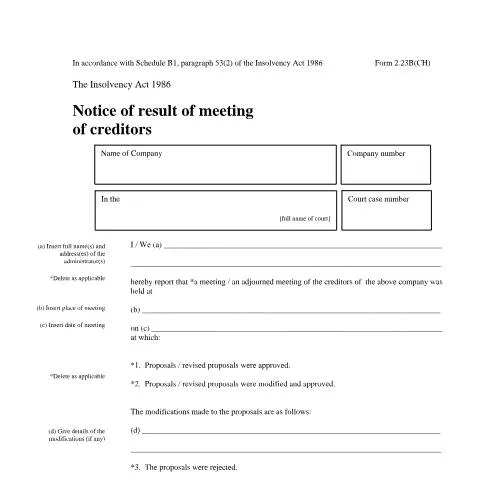
In the complex world of insolvency, the Notice of Result of Creditors' Meeting holds a crucial role. This document, officially designated as Form 2.23B(CH), serves as a formal declaration of the outcomes stemming from a creditors' meeting convened under the provisions of the Insolvency Act 1986. Understanding this document is essential for administrators and creditors alike, as it encapsulates the decisions made regarding the fate of the company in question.
Key Components of the Document
The notice is structured to convey specific information regarding the creditors' meeting. Here are its key components that need to be correctly filled out:
- Name of Company: Clearly state the full legal name of the company facing insolvency.
- Company Number: This unique identifier is assigned to the company by Companies House.
- Court Case Number: Mention the relevant case number associated with the insolvency proceedings.
- Date and Place of Meeting: Indicate where and when the creditors' meeting took place, which is critical for legality.
Decisions Made
At the heart of the notice are the decisions made during the meeting. The options include:
- Proposals or revised proposals were approved.
- Proposals or revised proposals were modified and subsequently approved, with specific modifications detailed.
- Proposals were outright rejected, indicating a crucial turn in the insolvency process.
- The meeting was adjourned to a later date for further discussion.
- Any other resolutions that may have been passed during the meeting.
Interpreting Modifications and Adjournments
When proposals undergo modifications, it is imperative to specify those changes clearly within the notice. This not only aids transparency but also allows creditors to understand the implications of those modifications. An adjourned meeting signifies that discussions are ongoing, reflecting the need for more deliberation among creditors. Failing to report these accurately can hinder the administration process and potentially lead to disputes.
Limits of the Document
While the notice serves as an important official document, it's essential to recognize its limits. It does not cover every aspect of the insolvency proceedings but rather focuses solely on the results of a specific creditors' meeting. Key points to consider include:
- The notice does not include detailed financial reports or updates on the company’s overall status.
- It should not be seen as the sole document guiding creditors' rights or options post-meeting.
How to Leverage the Notice in Practice
Utilizing the Notice of Result of Creditors' Meeting effectively can streamline administrative processes. Here’s how you can approach it:
- Ensure accurate completion of all fields to prevent delays in processing.
- Distribute the notice to all creditors involved, maintaining open lines of communication.
- Use the outcomes reported in the notice as a foundation for future meetings or negotiations.
Administrators should also be aware of the deadlines associated with submitting this notice to Companies House, ensuring compliance with insolvency regulations.
Connecting with Other Documents
The Notice of Result of Creditors' Meeting is intrinsically linked to various other documents in the insolvency process. It is essential to consider how it interacts with:
- Statement of Affairs: This outlines the company's financial position and is often referenced during creditors' meetings.
- Administrator's Proposals: These are the initial propositions that creditors vote on during the meeting.
- Creditors’ Committee Resolutions: If a creditors' committee is formed, their resolutions will also influence the context of the notice.
Navigating Common Misunderstandings
Various interpretations of the notice can lead to complications. Here are some common misunderstandings to avoid:
- Assuming the notice is a comprehensive financial report: It is simply a result summary, not a detailed financial analysis.
- Misinterpreting the approval of proposals: Approval does not guarantee successful implementation; it only indicates agreement among creditors.
- Ignoring the significance of adjournments: An adjournment suggests ongoing discussions, which may affect stakeholders significantly.
Practical Tips for Administrators
Administrators play a pivotal role in the insolvency process, and properly managing the Notice of Result of Creditors' Meeting is crucial. Here are practical tips:
- Keep detailed records: Document all communications and decisions leading up to the meeting.
- Engage with creditors: Foster open communication to ensure all parties are informed and aligned.
- Monitor deadlines: Stay vigilant about submission dates to avoid penalties or complications.
Conclusion of the Meeting Process
Ultimately, the Notice of Result of Creditors' Meeting serves as a keystone in the insolvency process. Its accurate completion and timely submission can greatly impact the subsequent steps of the administration. A thorough understanding of its components, limits, and connections with other documents will empower administrators and creditors alike to navigate the insolvency landscape successfully.
Understanding the Role of a Creditors' Meeting in Insolvency Procedures
Creditors' meetings play a critical role in insolvency processes within the UK, particularly under the provisions outlined in the Insolvency Act 1986. When a company enters administration or liquidation, creditors are afforded the right to convene and discuss the situation, strategies for asset recovery, and any potential proposals put forth by the appointed administrator or liquidator. This meeting, which may involve multiple creditors, allows them to collectively evaluate their options and vote on key matters regarding the insolvent entity.
The primary purpose of the creditors' meeting is to ensure that creditors are kept informed of the financial status of the company and to participate in decisions that could affect their recoveries. The appointed insolvency practitioner must provide a detailed report on the company’s financial situation, and any proposals or arrangements for the creditors must be outlined clearly. The outcome of this meeting is crucial, as it could lead to a creditors' voluntary liquidation or result in a proposal being put forward to restructure the company's debts.
The meeting also serves as an essential platform for creditors to voice their concerns and negotiate the terms of any repayment plan or ongoing arrangements. While the administrator or liquidator is responsible for guiding the meeting, creditors have a say in appointing a committee of creditors, which can assist in overseeing the administration process and representing the interests of the creditor body more effectively.
Legal Obligations and Best Practices for Notice Issuance
Issuing a notice of the result of a creditors' meeting is governed by specific legal obligations under the Insolvency Act and associated regulations. The appointed administrator or liquidator must ensure that they comply with these legal requirements to avoid any potential challenges or liabilities. Typically, the notice must be sent out within a specified timeframe following the meeting, ensuring that all registered creditors have the opportunity to review the outcomes and raise any concerns.
Fill in your form directly online
No printing: type your details into the boxes of the official form, tick, then download the PDF ready to send.
- 1Type into the form boxes
- 2Tick in one click
- 3Save and download the PDF
Best practices for issuing such notices include:
- Clarity and Transparency: Ensure that the notice clearly outlines the decisions made during the meeting, including the voting outcomes, any proposed actions, and the implications for creditors. Clarity prevents misunderstandings and potential disputes down the line.
- Timeliness: Adhering to the stipulated timeframes for issuing notices is crucial. Delays can lead to complications and might instigate a lack of confidence among creditors regarding the handling of the insolvency process.
- Recipient Verification: Before dispatching notices, confirm that all information regarding creditor identities and addresses is up to date. This step is particularly important to ensure compliance with the Data Protection Act 2018.
Moreover, the notice should be delivered to creditors via a method that confirms receipt, such as registered mail or electronic delivery where applicable. Proper documentation of the issuance process is also essential, as a record will support the administrator or liquidator in demonstrating compliance with their duties should any disputes arise later.
Impact of Creditors' Decisions on Future Corporate Operations
The decisions made at creditors' meetings can substantially impact the future operations of a company facing insolvency. If creditors agree to a proposed arrangement, such as a Company Voluntary Arrangement (CVA), they may allow the company to continue operating while making payments towards outstanding debts over an agreed period. This can result in a more favorable outcome for creditors, as they may recover more than they would through immediate liquidation.
In contrast, if creditors vote against any proposals, the company is likely to enter into a more severe insolvency process, such as liquidation. In such cases, the assets of the company will be sold off, and the return to creditors may be significantly reduced. The nature of these decisions emphasizes the importance of transparent communication during the creditors' meeting and the necessity for the insolvency practitioner to present a compelling case for any proposed actions.
Furthermore, decisions made can affect the company's reputation and stakeholder relationships in the long term. A positive outcome from a creditors' meeting that allows the company to restructure successfully may instill confidence among suppliers, customers, and employees, thereby aiding in the recovery process and ultimately contributing to the company's stability.
In summary, the creditors' meeting and the results thereof not only guide the current handling of the insolvency case but also have wider implications for the company's future trajectory. It is vital for insolvency practitioners to approach these meetings with diligence and strategic insight, ensuring that all parties are informed and engaged in the process.