Understanding the Final Meeting Notice in Creditors' Voluntary Winding Up
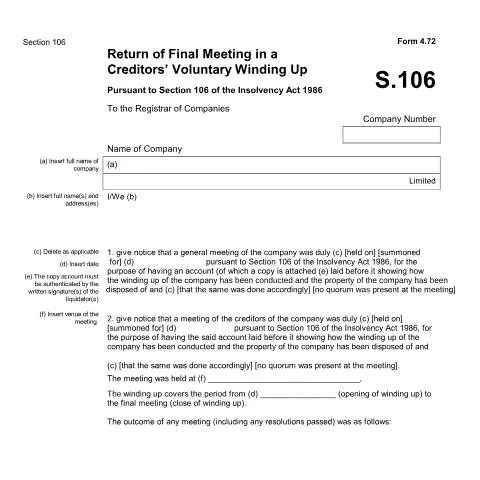
The Form 4.72, known as the Notice of Final Meeting in Creditors’ Voluntary Winding Up, serves as a critical document in the process of winding up a company. When a company enters voluntary winding up, it is essential that stakeholders are appropriately notified about the final meeting, where the company's affairs are concluded. This document is not merely procedural; it encapsulates the resolution of the company's financial obligations, providing transparency to creditors and ensuring compliance with the Insolvency Act 1986.
Key Elements of Form 4.72
Understanding the main components of this notice is vital. The Form 4.72 is structured to include several key elements that ensure clarity and compliance. Here’s a breakdown of its important sections:
- Company Full Name and Number: Identifies the company undergoing winding up.
- Date of Meeting: This specifies when the final meeting occurred, following the procedures laid out in the Insolvency Act 1986.
- Account of Winding Up: An account must be presented detailing how the winding up has been executed and how the assets of the company were distributed.
- Creditors' Meeting: Information about the creditors’ meeting is crucial, as it shows that creditors have been informed and have had the opportunity to participate in the final proceedings.
- Liquidator’s Signature: Validates the document and confirms that the liquidator has finalized the winding-up process.
Procedure for Completing Form 4.72
Engaging with Form 4.72 involves a series of steps that can ensure compliance and proper notification to creditors. Here is a practical outline to support understanding:
- Schedule the Final Meeting: Before issuing notice, confirm the date and venue of the meeting.
- Prepare the Account: The liquidator must prepare a comprehensive account detailing the winding-up process and asset disposition.
- Notify Creditors: All creditors should receive notification in advance, as mandated by legal requirements, allowing them the chance to attend or submit questions.
- Complete the Form: Fill out the Form 4.72 with all required details, ensuring accuracy, especially regarding dates and names.
- Sign and Submit: The liquidator must sign the form, and it should be submitted to Companies House for official recording.
The Importance of Timeliness in Notification
Timeliness is a crucial aspect of submitting the Form 4.72. The Insolvency Act 1986 stipulates specific timelines for notifying creditors of the final meeting. Failure to adhere to these timelines can have significant implications, including:
- Legal Challenges: Creditors may contest the winding-up process if they believe they have not been adequately informed.
- Delays in the Winding Up: Missing deadlines can prolong the winding-up process, resulting in additional costs.
- Reputation Risk: Companies risk damaging their reputation among creditors if they don’t follow proper notification procedures.
Communicating Effectively with Creditors
Effective communication with creditors during the winding-up process is paramount. The Form 4.72 is not just a procedural document; it represents a chance to maintain goodwill and transparency with creditors. Consider the following strategies:
- Clear Language: Use straightforward language in the notice to ensure all creditors understand the information presented.
- Follow-Up: After the notice is sent, consider a follow-up communication to confirm receipt and address any questions.
- Open Forum: Encourage questions at the meeting to clarify any concerns creditors may have regarding the winding-up process.
Interactions with Other Documentation
The Form 4.72 relates closely to other documents involved in the winding-up process. Understanding these interactions can provide a comprehensive view of the winding-up procedure:
| Document | Purpose | Relation to Form 4.72 |
|---|---|---|
| Form 4.70 | Notice of Appointment of Liquidator | Establishes the liquidator's role prior to the final meeting. |
| Form 4.71 | Notice of General Meeting | Precedes Form 4.72, notifying stakeholders of the upcoming final meeting. |
| Account of Liquidation | Detailed report on the assets and liabilities of the company | Must be attached to Form 4.72 to explain the winding-up process to creditors. |
Legal Framework and Compliance
Navigating the legal landscape surrounding Form 4.72 requires an understanding of the associated regulations. The Insolvency Act 1986 outlines the obligations of the company and its liquidator during the winding-up process. Key legal considerations include:
- Section 106 Requirements: This section mandates that companies must adhere to specific procedural steps for notifying creditors and conducting meetings.
- Data Protection Compliance: Any personal data disclosed during this process must comply with the Data Protection Act 2018 and UK GDPR.
- Meeting Quorum: Understanding the legal definition of a quorum is essential, as it determines whether decisions made during the meeting are valid.
Practical Scenarios: When to Use Form 4.72
There are various scenarios where the use of Form 4.72 becomes indispensable. Recognizing these situations can help stakeholders anticipate the need for this document:
- Complete Liquidation: When a company is completely liquidated, Form 4.72 is required to formally announce the conclusion of the winding-up process.
- Creditors' Interests: If there are significant unpaid creditors, the final meeting serves as a platform to address their concerns and finalize the distribution of remaining assets.
- Company Closures: In cases where a company has ceased trading, it is essential to inform creditors and stakeholders about the final actions taken regarding the company's assets.
Conclusion: The Role of Form 4.72 in Winding Up
In summary, the Form 4.72 notice holds significant importance in the creditors' voluntary winding up of a company. It ensures that all parties are informed and that the winding-up process complies with legal requirements. By understanding its components, procedures, and relevance within the broader context of insolvency, stakeholders can navigate the complexities of company liquidation more effectively. Engaging with this document thoughtfully can facilitate smoother transitions for all involved.
Understanding Creditors' Voluntary Winding Up
In a creditors' voluntary winding up, the company is unable to pay its debts and the decision to wind down operations is typically initiated by the shareholders. This process, outlined under the Insolvency Act 1986, allows for a structured way to handle the company’s financial obligations. At the core of this procedure is the need for transparency and communication with creditors, making the final meeting a crucial event in the winding-up process. This meeting provides an opportunity for creditors to discuss the management of the winding-up and to address any concerns regarding the distribution of assets.
Preparation for the Final Meeting
Before calling the final meeting, the liquidator must ensure all necessary steps have been taken to complete the winding-up process. This includes settling debts, selling assets, and preparing detailed accounts. The liquidator must prepare a final account that outlines how the company’s assets have been realized and how the funds have been distributed to creditors. It is vital that creditors receive comprehensive information ahead of the meeting, which facilitates informed discussion and decision-making.
Key Documents to Present
During the final meeting, the liquidator should present critical documents including:
- Final Account Statements: Detailed statements showing the liquidator's actions during the winding-up, including a reconciliation of all assets and liabilities.
- Liquidator’s Report: A summary report detailing the processes followed during the winding-up, highlighting any challenges faced, and explanations for any discrepancies in expected distributions.
- Meeting Agenda: A clear agenda helps keep the meeting structured and ensures all relevant points are discussed.
Communication with Creditors
Effective communication is essential for a successful final meeting. Creditors should receive written notice of the final meeting at least seven days in advance, in accordance with the Insolvency Rules. This notice must detail the time, venue, and purpose of the meeting. It should be sent to all known creditors, ensuring that those with small claims are included as well. If there are creditors whose addresses are not known, the liquidator should take reasonable steps to contact them. The communication should also mention the right of creditors to attend and vote on resolutions put forward at the meeting.
Voting Procedures at the Final Meeting
During the final meeting, creditors will be called upon to vote on several key resolutions proposed by the liquidator. The most significant resolutions typically include the approval of the liquidator’s final account and the dissolution of the company. Creditors have the right to vote based on the amount they are owed, with more significant debts equating to more considerable voting power.
Proxy Voting
If a creditor cannot attend the meeting in person, they have the option to appoint a proxy to vote on their behalf. This ensures that all creditors have a voice, even if they are unable to attend the proceedings. The liquidator must provide a proxy form alongside the notice of the meeting. It's crucial that the proxy form is returned in a timely manner, as stipulated in the notice, to ensure that the vote is counted.
Majority Rules and Outcomes
Resolutions at the final meeting are typically passed based on a majority vote. A simple majority, defined as more than 50% of the voting creditors by value, is usually sufficient to approve the resolutions. Should a resolution not receive majority support, the liquidator may need to revisit the concerns raised by creditors, potentially leading to further discussions or amendments before the winding-up process is concluded.
Fill in your form directly online
No printing: type your details into the boxes of the official form, tick, then download the PDF ready to send.
- 1Type into the form boxes
- 2Tick in one click
- 3Save and download the PDF
Post-Meeting Responsibilities of the Liquidator
After the final meeting, the liquidator has several responsibilities that must be fulfilled to ensure compliance with the legal framework governing insolvency. One of the primary tasks is to file the relevant documentation with Companies House. This includes a copy of the liquidator’s final account and a notice of the company’s dissolution.
Filing with Companies House
The liquidator must submit a Form DS01 (Application for Striking Off) within seven days after the final meeting. This form serves as a formal request to remove the company from the register, effectively completing the winding-up process. It’s crucial that the application is submitted promptly to avoid any complications or potential penalties. Companies House will then investigate the request; if no objections are raised, the company will be dissolved and removed from the register within a few months.
Retention of Records
In accordance with the Insolvency Act 1986, the liquidator is required to retain records related to the winding-up for a minimum of six years following the dissolution of the company. This includes correspondence with creditors, financial statements, and any other documentation gathered during the winding-up process. Retaining these records ensures compliance and allows for transparency in case of any future inquiries or disputes.
Addressing Objections and Complaints
It’s not uncommon for creditors to raise objections or complaints during or after the final meeting. The liquidator must be prepared to address these effectively. Any objections raised should be documented and carefully reviewed. If a creditor disputes the final account or the manner of asset distribution, the liquidator has a duty to investigate these claims and respond appropriately.
Dispute Resolution Mechanisms
Should significant disputes arise, the liquidator may consider involving the Insolvency Practitioner’s Association (IPA) or the Insolvency Service to mediate the situation. This is especially pertinent if there are allegations of misconduct or mismanagement during the winding-up. The liquidator's role is not only to conduct the winding-up but also to facilitate fair treatment for all parties involved.
Final Considerations for Creditors
For creditors, the final meeting represents not just the end of a business relationship, but a crucial opportunity to express any lingering concerns regarding the winding-up process. It’s vital for creditors to fully understand their rights during this final phase and to ensure that they contribute to the discussions. By actively participating, creditors can help ensure a more transparent and equitable closure to the winding-up process.