Navigating the Final Meeting of Creditors: A Comprehensive Guide
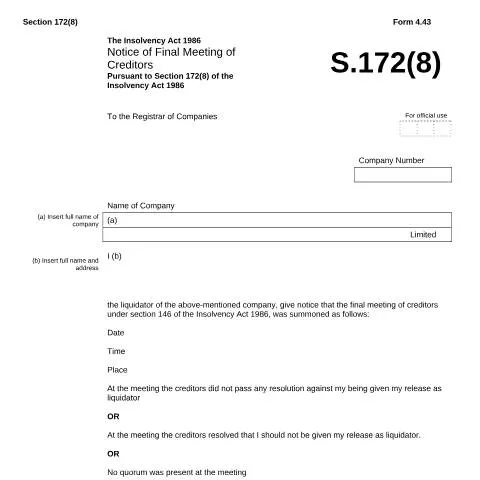
The final meeting of creditors is a crucial juncture within the insolvency process, representing a significant milestone for both the creditors and the liquidator. Under the provisions of the Insolvency Act 1986, specifically Section 172(8), the Notice of Final Meeting of Creditors (Form 4.43) is a formal document that provides essential information regarding this meeting's proceedings. Understanding its significance and the steps involved can streamline the winding-up process for companies facing insolvency.
Understanding the Purpose of the Notice
The Notice of Final Meeting of Creditors serves multiple purposes. Primarily, it informs creditors about the meeting's arrangements, allowing them to participate in discussions regarding the distribution of the company's remaining assets and the actions of the liquidator. The essence of this notice lies in its transparency and the opportunity it provides for creditors to voice any concerns they may have.
Key Elements of the Notice
- Company Information: The notice must clearly identify the company undergoing liquidation, including its full name and registration number.
- Meeting Details: It outlines the date, time, and location of the final meeting, ensuring all creditors have the opportunity to attend.
- Resolutions: The notice will indicate whether creditors passed any resolutions regarding the liquidator's release, which can significantly impact future proceedings.
- Liquidator's Details: Information about the liquidator, including their name and address, is also included for accountability.
Who Should Pay Attention to This Notice?
The primary audience for the Notice of Final Meeting of Creditors includes:
- Creditors: Individuals or entities that are owed money by the company and wish to understand their rights and the outcome of the liquidation process.
- Liquidators: Professionals managing the liquidation process, who must comply with legal obligations and communicate effectively with creditors.
- Company Directors: Those who have been involved in the management of the company should stay informed about the proceedings as they may have personal liabilities associated with the company's debts.
Steps Involved in Issuing the Notice
The process of issuing the notice is methodical, ensuring that all creditors are duly informed. It involves several key steps:
- Preparation: The liquidator prepares the notice, ensuring all the necessary information is included as per the requirements set out in the Insolvency Act.
- Distribution: The notice is distributed to all known creditors, ensuring compliance with legal obligations regarding notification.
- Meeting Conduct: On the specified date, the liquidator conducts the meeting, addressing any questions from creditors and outlining the liquidation process.
- Recording Resolutions: Outcomes of the meeting, including any resolutions passed, are documented officially and may be submitted to Companies House as necessary.
The Outcomes of the Meeting: What to Expect
The results of the final meeting can vary based on creditor participation and opinions. Potential outcomes include:
- Release of the Liquidator: If creditors agree, the liquidator may be released from their duties, allowing them to conclude their responsibilities.
- No Release Granted: Creditors may choose to withhold a release for various reasons, often relating to outstanding concerns about the liquidation process or asset distribution.
- No Quorum: If insufficient creditors attend the meeting, the meeting may adjourn, leading to complications in the liquidation timeline.
Consequences of Each Outcome
| Outcome | Consequences |
|---|---|
| Release Granted | The liquidator can officially close the liquidation process, subject to resolving all outstanding matters. |
| No Release Granted | The liquidator remains responsible for further duties, which may delay the finalisation of the process. |
| No Quorum | The meeting may have to be rescheduled, prolonging uncertainty for creditors and possible legal ramifications. |
Common Misinterpretations Surrounding the Notice
Misunderstandings can arise when interpreting the Notice of Final Meeting of Creditors, leading to potential issues in the liquidation process. Here are some frequent misinterpretations:
- Assuming Automatic Approval: Some creditors may mistakenly believe that their presence at the meeting guarantees their influence over the final decisions.
- Misunderstanding Resolutions: The language used in the notice can be complex; thus, creditors may not fully grasp the implications of the resolutions presented.
- Neglecting Attendance: Failing to attend can lead to missed opportunities to voice concerns or influence the outcome.
How to Safely Navigate the Process
To effectively engage with the final meeting of creditors, creditors should take proactive steps to ensure their rights and concerns are adequately addressed:
- Review the Notice Thoroughly: Take the time to understand all sections of the notice, clarifying any ambiguous language with the liquidator.
- Prepare Questions: Formulate any questions or concerns in advance to raise during the meeting, ensuring a clear dialogue.
- Document Everything: Keep a record of all communications and proceedings related to the liquidation for future reference.
Final Thoughts: The Importance of Transparency and Communication
The Notice of Final Meeting of Creditors (Form 4.43) is more than just a formal requirement; it represents an opportunity for creditors to engage in the liquidation process effectively. Understanding its contents and implications allows creditors to safeguard their interests during what can be a complicated and emotional time. By fostering clear communication and maintaining transparency, all parties involved can navigate the winding-up process with greater confidence and clarity.
Understanding the Legal Framework for the Final Meeting of Creditors
In the UK, the process of notifying creditors about the final meeting is governed by specific laws designed to ensure transparency and proper communication. Under the Insolvency Act 1986, a final meeting of creditors must be convened when a company is entering liquidation. This meeting plays a key role in the creditor's involvement in the liquidation process, as it provides an opportunity for them to review the activities of the liquidator and make decisions regarding the distribution of assets. Furthermore, it is essential for the liquidator to observe the statutory timeframes and procedures outlined by the legislation to avoid any potential disputes or claims of negligence.
The legal requirement under Section 94 of the Insolvency Act stipulates that a final meeting must be called within a specific time frame. Typically, this meeting should be held no later than one year after the appointment of the liquidator. Additionally, creditors must be given at least 14 days’ notice prior to this meeting. This notice period is crucial as it allows creditors sufficient time to prepare any necessary questions or comments regarding the final accounts and the distribution of assets. Failure to comply with these notice requirements can result in legal complications and may affect the validity of the meeting.
The Process of Notifying Creditors: Best Practices and Guidelines
Notifying creditors about the final meeting is not just about compliance; it is a critical step in ensuring that all stakeholders are adequately informed and can participate meaningfully in the process. Best practices for this notification process involve several key steps. First, ensure that the notice clearly states the purpose of the meeting, its date, time, and location. It should also outline the agenda, which typically includes the presentation of final accounts, the liquidator's report, and any proposals for asset distribution.
Fill in your form directly online
No printing: type your details into the boxes of the official form, tick, then download the PDF ready to send.
- 1Type into the form boxes
- 2Tick in one click
- 3Save and download the PDF
Moreover, when preparing the notification, it's essential to utilize multiple communication methods to reach all creditors effectively. While a formal letter is standard, supplementing this with electronic communications, where possible, can enhance engagement. Utilizing registered post can provide proof of delivery, which is particularly important in a legal context. If you are dealing with a significant number of creditors, consider using a dedicated insolvency management software to streamline this process and ensure all records are maintained accurately.
Consequences of Notifying Creditors Incorrectly
Failure to appropriately notify creditors about the final meeting can have serious repercussions. If creditors are inadequately informed, they may be unable to attend and voice their opinions, which could lead to dissatisfaction and potential legal action. For instance, creditors who feel they did not receive proper notice may challenge the validity of the liquidation process itself, delaying the distribution of assets and resulting in increased costs through legal proceedings.
Additionally, if a liquidator fails to provide a clear breakdown of the proposed distribution of assets or does not adhere to the requirements laid out in the Insolvency Act, creditors may dispute the liquidator's actions and can even file a complaint with relevant regulatory bodies such as the Insolvency Service. It is, therefore, paramount for the liquidator to not only send the notice but also ensure that it is comprehensive and complies with all legal stipulations to protect both their own interests and those of the creditors.
In summary, the final meeting of creditors is a vital component of the insolvency process, and the manner in which creditors are notified can significantly affect the outcome of the liquidation. By adhering to the legal requirements, best practices in communication, and understanding potential repercussions, liquidators can navigate this complex area with greater confidence.