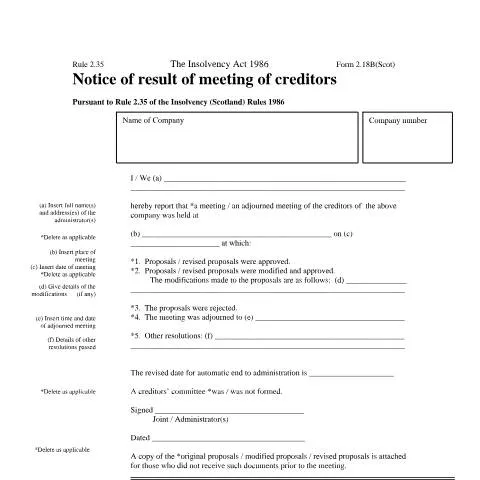
Understanding the Notice of Result of Meeting of Creditors
The Notice of Result of Meeting of Creditors, known as Form 2.18B, serves as a crucial document in the insolvency process in Scotland. This guide aims to provide an in-depth understanding of this document, focusing on its importance for creditors, the procedures involved, and how it interacts with other insolvency documentation.
Who Benefits from This Notice?
This notice is primarily designed for creditors of a company that has entered administration. When a company is unable to meet its financial obligations, it may enter administration, which is a process aimed at rescuing the business or returning it to profitability. The notice is essential for:
- Creditors: Understanding the outcomes of creditor meetings is vital for creditors to know their standing and what actions may be taken next.
- Administrators: They must report back on the decisions made during meetings to ensure transparency and adherence to regulatory practices.
- Company directors: To grasp the implications of creditor decisions on the company's future.
Common Scenarios Where This Notice is Used
The notice is employed in various situations, including but not limited to:
- A meeting where proposals for repayment plans are put forth and require approval from creditors.
- Meetings where modifications to previously approved proposals are discussed and voted upon.
- Adjourned meetings where decisions from a previous meeting are revisited or revised.
- Context where creditors decide to reject proposals, impacting the administration process.
The Structure and Content of the Notice
The notice follows a specific structure as outlined in Rule 2.35 of the Insolvency (Scotland) Rules 1986. It includes the following key sections:
- Report of the Meeting: The administrator must report the outcomes of the meeting, including the location and date.
- Decisions Made: Clear enumeration of what was decided during the meeting, such as approval or rejection of proposals.
- Modifications: If proposals were approved with modifications, details must be provided.
- Formation of Creditors’ Committee: Notation on whether a creditors' committee was formed to oversee the administration.
Key Details to Note
Within the notice, several specific details must be included:
| Detail | Description |
|---|---|
| Meeting Location | The physical place where the creditors convened. |
| Meeting Date | The exact date of the creditor meeting. |
| Proposals Status | Whether the proposals were approved, modified, or rejected. |
| Adjourned Meeting Date | If applicable, the new date for an adjourned meeting. |
| Creditors' Committee | Indication if a committee was formed or not. |
Navigating the Procedure: Step by Step
To effectively utilize the Notice of Result of Meeting of Creditors, understanding the procedure is key. Below is a step-by-step guide to the process:
- Preparation for the Meeting: Administrators should ensure all necessary documentation, including proposals to creditors, is prepared and distributed before the meeting.
- Conducting the Meeting: During the meeting, the administrator presents the proposals, discusses potential modifications, and facilitates voting among creditors.
- Documenting Outcomes: Following the meeting, it’s critical that the outcomes are documented thoroughly on Form 2.18B, detailing all resolutions passed.
- Submission to Companies House: The completed notice must be submitted to the Registrar of Companies, signifying the results of the meeting.
Critical Terminology and Concepts
Several key terms are associated with the Notice of Result of Meeting of Creditors. Understanding these can be crucial for all parties involved:
- Administrator: The person responsible for managing the company’s affairs during administration.
- Creditors: Individuals or entities that the company owes money to.
- Proposals: Plans set forth by the administrators outlining how debts will be repaid or handled.
- Adjournment: The postponement of a meeting to a later date, often required to allow for further negotiations.
Common Misinterpretations
While navigating the insolvency process, several common misinterpretations can lead to confusion:
- The Role of Creditors: Creditors often believe their role is passive; however, they have the power to influence outcomes significantly through their votes.
- Understanding Modifications: Modifications to proposals must be clearly communicated; failure to do so can lead to disputes later on.
Interconnections with Other Documents and Procedures
The Notice of Result of Meeting of Creditors doesn’t exist in a vacuum. It interacts with several other key documents and procedures within the insolvency framework:
- Proposals Document: The initial document presented at the meeting, detailing how creditors will be repaid.
- Form 2.18A: This is the notice of the meeting itself, which must precede the results notice.
- Company Voluntary Arrangements (CVAs): These arrangements can be influenced by the outcomes documented in Form 2.18B.
Practical Implications of the Notice
The implications of the notice can be far-reaching:
- For Creditors: Decisions made can determine recovery rates on debts owed, influencing credit risk assessments.
- For Administrators: Transparency in reporting is crucial for maintaining trust among creditors and ensuring compliance with the law.
- For the Company: The outcomes can dictate the company’s future, whether it continues under administration, is liquidated, or returns to solvency.
Final Thoughts on Utilizing the Notice
The Notice of Result of Meeting of Creditors is more than just a report; it’s a pivotal document that encapsulates the collective decision-making of creditors during an administration process. Understanding its content, implications, and relationship with other documents is essential for all stakeholders involved in insolvency proceedings. By engaging with this document effectively, creditors, administrators, and company directors can navigate the complexities of insolvency with greater confidence and clarity.
Understanding the Importance of the Notice of Result of Meeting of Creditors
The Notice of Result of Meeting of Creditors, specifically Form 2.18B in Scotland, plays a pivotal role in the insolvency process. This document not only informs creditors about the decisions made during the meeting but also serves as a critical element of transparency and accountability within the insolvency framework. It ensures that all stakeholders are kept informed and have the opportunity to understand the outcomes of the proceedings.
In particular, the notice must detail the resolutions passed, including any agreements made regarding the management of the insolvent estate. For example, if creditors voted on a proposed arrangement or the appointment of a liquidator, these details must be outlined explicitly in the notice. This clarity helps to prevent misunderstandings and potential disputes among creditors, providing a clear record of what was decided during the meeting.
It's important to highlight that failure to properly issue Form 2.18B can lead to complications. Creditors may have grounds to challenge the procedures undertaken, which can create delays in the insolvency process. As such, it is critical for the appointed insolvency practitioner to ensure that all details are accurately recorded and communicated. This not only helps to maintain trust among creditors but also aligns with the best practices set forth by The Insolvency Service and other governing bodies.
Fill in your form directly online
No printing: type your details into the boxes of the official form, tick, then download the PDF ready to send.
- 1Type into the form boxes
- 2Tick in one click
- 3Save and download the PDF
Filing Requirements and Deadlines for Form 2.18B
When dealing with Form 2.18B, it's essential to understand the filing requirements and associated deadlines. Typically, the notice must be issued within a prescribed timeframe following the meeting of creditors, often within 14 days. This deadline ensures that creditors receive timely communication regarding the outcomes of the meeting and can take any necessary actions based on the information provided.
The process for filing the notice involves the appointed insolvency practitioner. They have the responsibility to ensure that the documentation is completed accurately and submitted to the appropriate parties. In practice, this may mean sending the notice to all known creditors and filing a copy with the relevant regulatory body, such as the Accountant in Bankruptcy (AiB) in Scotland. This ensures that the process is compliant with the standards set out in The Insolvency (Scotland) Regulations 1986 as amended.
It’s also worth noting that creditors must be given sufficient notice about the meeting itself. This usually involves sending out a formal invitation that includes details about the meeting's date, time, and location, as well as instructions on how they can participate, either in person or via proxy. The timely issuance of Form 2.18B is a continuation of this obligation, reinforcing the principle of fairness in the insolvency proceedings.
Implications of the Meeting Outcomes on the Creditors and Debtor
The implications of the outcomes documented in Form 2.18B can be significant for both creditors and the debtor. For creditors, the decisions made during the meeting can directly influence their recovery prospects. For instance, if the creditors decide to accept a proposed arrangement, this may result in a more favourable outcome than if the business were to enter liquidation. Understanding the implications of these decisions can help creditors make informed choices about their future interactions with the debtor and any potential recovery strategies.
Moreover, for the debtor, the outcomes can dictate how their financial obligations will be managed moving forward. Acceptance of a voluntary arrangement may allow the debtor to retain control over their business and assets, but it also requires compliance with the terms set out in the arrangement. Failing to adhere to these terms could lead to further action from creditors, including potential liquidation or bankruptcy proceedings.
The notice also serves to document any dissenting opinions expressed during the meeting. If there are creditors who disagreed with the majority decision, their concerns should be recorded in Form 2.18B. This transparency can provide a basis for future discussions and negotiations, especially if the situation becomes contentious. Therefore, it is essential for creditors to understand their rights and the implications of the decisions made during the meeting, as they can impact not only the immediate outcomes but also the long-term viability of the debtor's financial recovery.