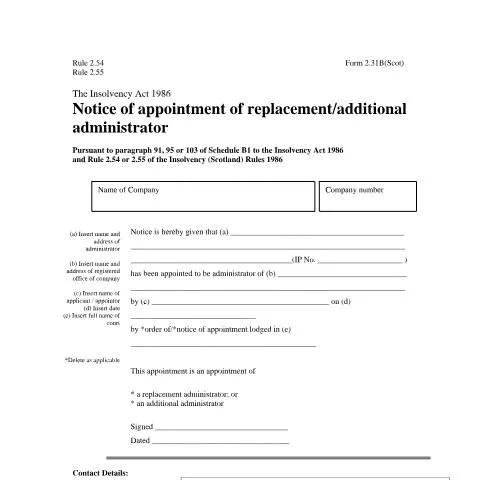
Understanding the Notice of Appointment of Replacement/Additional Administrator (Form 2.31B) in Scotland
The Notice of Appointment of Replacement/Additional Administrator (Form 2.31B) serves as a vital document within the framework of insolvency procedures in Scotland. This document is primarily used to inform relevant parties about the appointment of an administrator to a company undergoing insolvency. It becomes indispensable during critical moments when a company’s financial viability is in jeopardy, and an administrator is necessary to manage its affairs.
Identifying the Key Players in the Appointment Process
Understanding who is involved in this process is essential for grasping the intricacies of Form 2.31B. The principal actors include:
- Insolvency Practitioner (IP): An appointed individual, qualified to act as an administrator, who will oversee the insolvency process. Their registration number (IP No.) must be provided in the form.
- Applicant/Appointor: The person or entity that applies for the administrator's appointment. This could be a director of the company, a creditor, or another interested party.
- Company: The organisation experiencing insolvency, which requires an administrator to manage its affairs.
When and Why is Form 2.31B Required?
This document becomes necessary under specific circumstances, typically when a company is unable to pay its debts and needs restructuring through an administration process. Here are key situations where this form is crucial:
- Replacement of an Administrator: When the current administrator can no longer fulfill their duties, a replacement must be appointed, necessitating the use of Form 2.31B.
- Appointment of an Additional Administrator: In cases where the complexity of the insolvency case demands further expertise, an additional administrator may be appointed alongside the existing one.
Decoding the Legal Framework: The Insolvency Act 1986
Form 2.31B operates under the auspices of the Insolvency Act 1986 and adheres to specific regulations outlined in the Insolvency (Scotland) Rules 1986. It is essential to understand how these laws underpin the use of the form:
- Paragraph 91, 95, or 103 of Schedule B1: These sections provide the legal basis for the appointment of administrators and outline the necessary procedural steps.
- Rules 2.54 and 2.55: These rules specify the requirements for completing and submitting Form 2.31B, ensuring that all necessary information is captured accurately.
Navigating the Structural Components of Form 2.31B
Form 2.31B consists of several key sections that must be filled out correctly:
| Section | Description |
|---|---|
| (a) | Insert the name and address of the appointed administrator, including their IP number. |
| (b) | Provide the name and address of the company undergoing administration. |
| (c) | Indicate the name of the individual or entity making the appointment. |
| (d) | Include the date the appointment is made. |
| (e) | Enter the full name of the court where the appointment notice is lodged. |
Exploring the Limitations and Scope of the Document
While Form 2.31B plays a critical role in the insolvency process, it is important to be aware of its limitations. Here are some key aspects to consider:
- Not a Formal Application: The completion of this form does not equate to a formal application for administration. It merely serves as a notification of the appointment.
- Specific to Scotland: This form is tailored to the legal landscape of Scotland; hence, it may differ from equivalent forms used in other jurisdictions within the UK.
- Public Record Visibility: The details provided are visible to the public, which can raise privacy concerns, particularly for the individuals involved.
Step-by-Step Guide to Utilizing Form 2.31B Effectively
Utilizing Form 2.31B effectively requires a thorough understanding of the steps involved in the process:
- Verify Eligibility: Ensure that the appointed administrator meets the legal requirements set forth by the Insolvency Act 1986.
- Gather Information: Collect all necessary details, including the names and addresses of the administrator, company, and appointor.
- Complete the Form: Carefully fill out each section, ensuring accuracy to prevent any potential issues with submission.
- Sign and Date: The form must be signed and dated by the appointor to validate the appointment.
- Submit the Form: Send the completed form to the Registrar of Companies at the specified address in Edinburgh, ensuring it reaches them promptly.
Common Misinterpretations and How to Avoid Them
As with any official documentation, misunderstandings can lead to complications in the appointment process. Here are some common misinterpretations:
- Confusing Replacement and Additional Appointments: It is crucial to understand the difference between a replacement administrator and an additional administrator; using the wrong designation could complicate legal matters.
- Overlooking Court Requirements: Failing to provide the correct court information can lead to delays in processing the appointment.
- Neglecting to Provide Accurate Contact Information: Providing incorrect or no contact details can hinder communication with Companies House, which is vital for resolving any queries.
The Impact of Data Protection Legislation on Form 2.31B
In light of the Data Protection Act 2018 and UK GDPR, it is crucial to handle the information on Form 2.31B with care:
- Personal Data Handling: The form contains personal data, which must be processed in compliance with data protection laws. Individuals completing the form should be aware of their rights regarding the information provided.
- Public Record Considerations: Since information submitted becomes part of the public record, the implications of data visibility must be considered, especially concerning privacy.
Conclusion: Functionality and Significance of Form 2.31B
Form 2.31B is an integral part of the insolvency process in Scotland, facilitating the appointment of administrators crucial for managing a company's financial distress. By understanding its structure, the legal framework surrounding it, and how to navigate its requirements, stakeholders can ensure a smoother insolvency process. Recognising its limitations and common pitfalls further enhances its effectiveness, making it a vital tool for those involved in corporate administration.
Understanding the Role of an Administrator in Scotland
In the context of insolvency, the appointment of an administrator serves a critical function. An administrator is primarily tasked with managing the affairs of a company facing financial distress. In Scotland, the legal framework governing administrators is outlined under the Insolvency Act 1986, and the specific processes can vary depending on whether a company is in administration or facing liquidation.
The role of an administrator involves various responsibilities, such as assessing the company's financial status, advising on possible recovery strategies, and ensuring compliance with legal requirements. This professional must act in the best interests of creditors while also considering the welfare of employees and other stakeholders. Importantly, the administrator's actions can significantly influence the outcome for the company and its stakeholders, making the appointment process crucial.
When it comes to replacing or adding an administrator, the Notice of Appointment of Replacement/Additional Administrator, or form 2.31B, is essential. It ensures that the newly appointed administrator can carry on with the duties necessary to navigate the insolvency process effectively. This form must be lodged with the appropriate court and the Insolvency Service, ensuring transparency and compliance with local regulations.
Key Considerations for Filing Form 2.31B
The process of completing and filing form 2.31B requires meticulous attention to detail to avoid delays and ensure compliance with statutory requirements. Applicants must provide comprehensive information regarding the existing administrators, the reasons for their replacement or the addition of new administrators, and the qualifications of the incoming personnel.
Key considerations include:
- Documentation: Ensure you have all necessary documentation, such as the original appointment letter, proof of the administrator's qualifications, and any relevant resolutions or decisions made by creditors or stakeholders.
- Timeliness: The form must be filed promptly to ensure that there are no gaps in administration. Delays can lead to complications in managing the company's affairs effectively and can result in potential legal challenges.
- Stakeholder Communication: Clear communication with all stakeholders is essential. Notify creditors and any other relevant parties of the changes in administration to maintain transparency and trust throughout the process.
It's advisable to consult with a legal expert specializing in insolvency to ensure that the filing of form 2.31B meets all legal standards and that the transition between administrators is seamless. This can prevent disruptions that might negatively impact the company's operations during a critical time.
Common Challenges and How to Overcome Them
Completing and filing form 2.31B may present certain challenges. Understanding these potential pitfalls is essential for a smooth process. Here are some common issues that applicants might encounter, along with practical solutions:
- Incomplete Information: One of the most common challenges is providing incomplete or incorrect information on the form. To overcome this, double-check all entries against supporting documents before submission. Include full names, addresses, and qualifications of the new administrator(s) to prevent administrative errors.
- Lack of Understanding of Legal Obligations: The legal obligations surrounding a change of administrator can be complex. Engaging a licensed insolvency practitioner to guide you through the process, including a proper understanding of sections of the Insolvency Act, can facilitate compliance and ensure a smoother transition.
- Potential Objections from Creditors: Sometimes, creditors may object to the appointment of a new administrator. Maintaining open lines of communication and transparency with creditors can help mitigate concerns. Providing them with a detailed rationale for the change and the potential benefits it presents to the overall recovery process can help in gaining their support.
Lastly, ensure that you are familiar with the Scottish insolvency framework and the specific tasks the new administrator will be taking on. By anticipating challenges and preparing adequately, you can effectively navigate the complex landscape of insolvency administration.