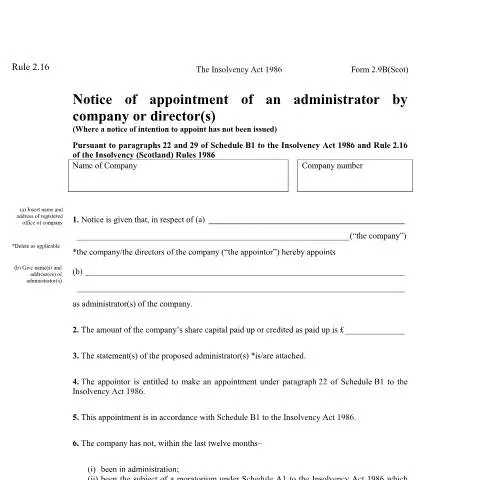
Navigating the Nuances of Form 2.9B: A Crucial Step in Company Administration
When a company finds itself in financial distress, the pathway to recovery can be intricate and laden with legal stipulations. Among the vital documents in this context is the Notice of Appointment of Administrator by Company or Director(s): Form 2.9B, particularly relevant under the Scottish jurisdiction. The appointment of an administrator can significantly impact the trajectory of a business, and understanding the implications and requirements of this notice is essential for directors and companies alike.
Understanding the Context: Why Choose Administration?
Before delving into the specifics of Form 2.9B, it's crucial to comprehend the broader implications of entering administration. Administration serves as a legal method for companies to restructure their debts while protecting them from creditors. This process allows the appointed administrator to regain control and devise a plan to save the company, which may include negotiating with creditors or selling the business.
The appointment itself can be initiated by the company’s directors. However, it requires careful consideration of the Insolvency Act 1986, particularly paragraphs 22 and 29 of Schedule B1, mandating compliance with stringent criteria. This document serves as both a formal notice and a declaration of intent, thus facilitating a smooth transition into administration.
Key Components of the Form: What’s Inside?
Form 2.9B comprises several critical sections, each serving a distinct purpose:
- Company Information: The form requests the name and registered office of the company, its unique company number, and details of the appointed administrator(s).
- Share Capital Declaration: Details regarding the company’s paid-up share capital are required to establish financial standing.
- Administrator's Statement: This section includes statements from the proposed administrators, outlining their qualifications and readiness to assume the role.
- Eligibility Confirmation: The appointor must declare that the company has not undergone administration or related proceedings within the past twelve months, thus ensuring compliance with the law.
- Legal Compliance: An affirmation that the company has no pending winding-up petitions or administrative applications is necessary to confirm the legitimacy of the appointment.
- Insurance and Financial Undertakings: The form also checks if the company is an insurance or credit institution, which could alter the nature of the administration proceedings.
- Resolution or Decision Record: Attached documentation proving the appointor's authority to make this appointment is crucial for validating the process.
- Declaration of Truthfulness: The individual making the declaration must solemnly affirm the accuracy of the information provided, ensuring legal accountability.
Utilising Form 2.9B: Step-by-Step Insights
Utilising Form 2.9B effectively is critical for a successful administration process. Here’s how to navigate this document systematically:
Step 1: Gather Essential Information
Before completing the form, collect all necessary company information, including:
- Company name and registration number
- Details of the appointed administrator(s)
- Share capital status
Step 2: Confirm Eligibility
Review the company’s recent history to ensure it has not been in administration or subject to an active winding-up petition within the last twelve months. This is crucial for compliance with the Insolvency Act 1986.
Step 3: Complete the Form Accurately
As you fill out the form, ensure that all details are accurate and that you attach any required supporting documentation, including:
- Resolution of the company or decision of the directors
- Statements from administrators
Step 4: Submit to the Appropriate Court
The completed notice, along with accompanying documents, must be lodged in the correct court. This is a pivotal step, as it formally initiates the administration process.
Common Misinterpretations and Pitfalls
While the process may seem straightforward, several common misinterpretations can complicate matters:
Misinterpretation of Company Eligibility
One frequent error is misunderstanding the eligibility criteria outlined in paragraphs 6 and 7 of the form. Misrepresentation of the company's status can lead to serious legal repercussions.
Insufficient Documentation
Another common pitfall is the failure to attach required documents. Omitting the resolution or administrator statements can delay proceedings and complicate the administration process.
Interdependencies with Other Documents
The appointment of an administrator through Form 2.9B isn’t an isolated transaction; it’s intertwined with several other legal documents and processes:
Link to the Notice of Intention to Appoint
If a Notice of Intention to Appoint has been issued, a different procedure may apply. Understanding this distinction is critical, as it can change the timeline and requirements for administration.
Post-Appointment Procedures
Following the successful submission of Form 2.9B, the administrator must adhere to specific protocols, including notifying creditors and submitting subsequent reports to the court.
Frequently Asked Procedural Questions
Directors often have questions regarding the nuances of the administrative process:
What Happens After Filing Form 2.9B?
Once filed, the appointed administrator assumes control of the company, initiating the restructuring process. All communications should now be directed to them.
How Long Will the Administration Last?
The duration can vary based on the complexity of the company’s situation. Administrations are typically intended to last for a short term unless further extended by court order.
Final Thoughts on the Importance of Compliance
Understanding the intricacies of Form 2.9B is paramount for any company director considering administration. The implications of this document extend far beyond initial filings; it is a pivotal step towards financial recovery and restructuring. Ensuring accuracy, compliance, and thorough documentation will enhance the likelihood of a successful administration and ultimately, the rescue of the company. As the financial landscape continues to evolve, remaining informed and proactive is essential for navigating these challenging waters effectively.
Understanding the Role of an Administrator in Company Insolvency
An administrator is a licensed insolvency practitioner appointed to manage a company's affairs when it enters into administration. The role of an administrator is crucial as they are responsible for salvaging the company, protecting its assets, and ensuring creditors' interests are considered. Their primary objective is to rescue the company as a going concern, if possible, or to achieve a better return for creditors than would be realised through liquidation.
In Scotland, the process begins with the completion of Form 2.9B, which is submitted to the Court of Session. It’s important to understand that the administrator’s powers and duties are defined by the Insolvency Act 1986, and they must act in the best interests of the creditors. The administrator will assess the company's financial situation, communicate with creditors, and develop a strategy to either restructure or wind down the business effectively.
Additionally, the administrator is required to prepare an initial report for creditors detailing the company's financial status, the reasons for the administration, and proposed next steps. This report serves as a transparent communication tool that ensures all parties involved understand the situation and the proposed resolution moving forward.
Filing Requirements and Considerations for Form 2.9B
Submitting Form 2.9B is not merely a formality; it involves a meticulous understanding of the information required and the implications of each section. When completing this form, the appointing party—whether a company director or creditor—must provide comprehensive details about the company's financial standing and the reasons for entering administration.
Field-specific details include the company’s registered address, its trading name, and any previous alterations in company structure. Be aware that inaccuracies or omissions can lead to delays in the administration process or even potential legal repercussions. Therefore, it is advisable to gather all necessary documentation, including financial statements, creditor lists, and any correspondence that may provide context for the appointment of an administrator.
Furthermore, the timing of the filing is critical. The appointment should be executed as soon as insolvency is anticipated, as delays could worsen the financial situation and diminish the potential for recovering losses for creditors. The form must be filed with the Office of the Accountant of Court alongside the necessary fees, ensuring compliance with the procedural requirements established in the Insolvency (Scotland) Rules 1986.
Impacts of Administration on Employees and Contracts
One significant consideration when a company enters administration is the impact on its employees. Under the Employment Rights Act 1996, employees’ rights are generally protected during an administration procedure. Employees may be transferred to a new employer if the company is sold as a going concern, preserving their existing contracts. However, if the business is ultimately closed, employees may be entitled to redundancy pay and other statutory entitlements, which are often claimed through the Redundancy Payments Service.
Another critical aspect is the treatment of contracts. When a company is placed into administration, existing contracts may be reviewed by the administrator. They have the authority to decide whether to continue or terminate these contracts based on what is deemed beneficial for the creditors. This evaluation process must consider both the financial position of the company as well as the obligations outlined in each contract.
The administrator may also enter into new contracts to facilitate the ongoing operation of the company in administration. This could include negotiating with suppliers to secure better terms and keeping key contracts alive that could lead to a successful turnaround. It is essential to understand that these decisions can significantly influence the recovery process and creditor outcomes; hence, the administrator must navigate these complexities with thoroughness and strategic insight.