Understanding the Role of the Administrator: Implications of Form 2.11B
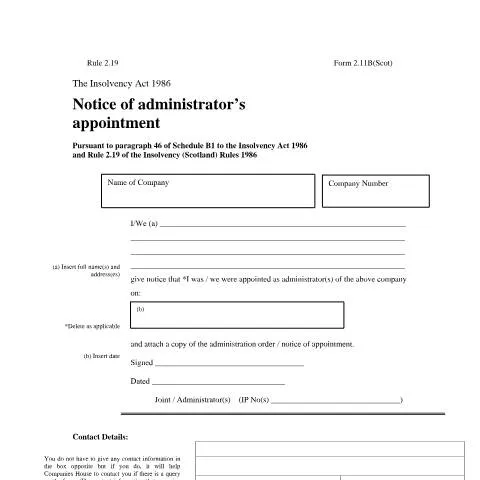
The Notice of Administrator's Appointment: Form 2.11B (Scotland) serves as a critical document in the realm of insolvency proceedings in Scotland. When a company faces financial difficulties and requires intervention, the appointment of an administrator becomes essential. This form communicates to the relevant authorities and stakeholders that an administrator has been officially appointed to manage the affairs of a distressed company.
Understanding the intricacies of this document is vital for various stakeholders, including directors, creditors, and potential investors, as it establishes the framework within which the administrator operates. The proper execution of Form 2.11B can significantly impact the administration process and the outcomes for all parties involved.
Key Components of the Form: What to Look For
Form 2.11B encompasses several components that must be understood for effective navigation through the insolvency process. Here are the main elements included in the form:
- Identification of the Administrator: The form requires the name and address of the appointed administrator(s), ensuring their identity is clear.
- Date of Appointment: The specific date when the administrator was appointed is crucial as it marks the beginning of the administration period.
- Submission of the Administration Order: A copy of the administration order or notice of appointment is to be attached, providing formal evidence of the administrator's authority.
- Contact Information: While optional, providing contact details can facilitate communication with Companies House in case of queries.
This document serves not only as a formal notification but also as a record that can be referred to by various stakeholders throughout the administration process.
Navigating the Administration Process: Step-by-Step
To effectively utilize Form 2.11B, stakeholders must understand how it fits into the broader context of the administration process. Here’s a step-by-step guide to navigate this procedure:
- Appointment of the Administrator: The process begins when the directors of a distressed company decide to appoint an administrator. This decision can be made under the provisions of the Insolvency Act 1986.
- Completion of Form 2.11B: The appointed administrator must fill out Form 2.11B with the required information, ensuring accuracy in the details provided.
- Attach Supporting Documentation: The administration order or notice of appointment must be attached to the form to validate the appointment.
- Submission to Companies House: The completed form, along with attachments, should be submitted to the Registrar of Companies at Companies House in Edinburgh.
- Public Record Maintenance: Upon receipt, Companies House will update the public register to reflect the administrator's appointment, allowing creditors and other interested parties to be informed.
By adhering to this process, stakeholders can ensure that the administration is conducted in a transparent and legally compliant manner.
Common Misinterpretations: Clarity in Communication
Misunderstandings surrounding Form 2.11B can arise, particularly in the context of its implications for the company and its stakeholders. Here are a few common misinterpretations:
- Scope of Authority: Many stakeholders mistakenly believe that the administrator has unlimited powers once appointed. In reality, their authority is limited to what is necessary for the administration of the company’s affairs and must be exercised in the best interests of creditors.
- Timing of Notification: Some may think that the filing of Form 2.11B is a mere formality that can be delayed. However, timely submission is crucial: failing to notify Companies House promptly can lead to legal complications.
- Confusion with Other Documents: It’s important to distinguish Form 2.11B from other insolvency-related documents, such as the Statement of Affairs, which provides a comprehensive overview of the company’s financial situation.
By clarifying these points, stakeholders can better navigate the complexities of the insolvency process and make informed decisions.
Intersections with Other Legal Documents
The administration process often involves various legal documents, each serving a distinct purpose. Understanding how Form 2.11B intersects with these documents is crucial for proper navigation:
| Document | Purpose | Relation to Form 2.11B |
|---|---|---|
| Administration Order | Legal document confirming the appointment of an administrator. | Must be attached to Form 2.11B. |
| Statement of Affairs | Details the financial status of the company. | Provides context for the administrator's actions but is separate from Form 2.11B. |
| Creditor Reports | Communicates the findings and actions of the administrator to creditors. | Relies on information initially laid out in Form 2.11B. |
Each document plays a key role in shaping the outcome of the administration process, and understanding their interconnectedness can aid significantly in navigating insolvency proceedings.
Essential Terminology in the Context of Insolvency
For those involved in the administration process, being familiar with specific terminology is critical for effective communication. Here are some key terms that frequently appear in the context of Form 2.11B and the administration process:
- Administrator: An individual appointed to manage the affairs of a company in financial distress.
- Insolvency: The state of being unable to pay debts as they come due.
- Creditors: Individuals or entities to whom the company owes money.
- Administration: A legal process where the administrator is appointed to rescue a company or achieve a better return for creditors.
- Companies House: The UK’s registrar of companies, where filings and documentation related to companies must be submitted.
Understanding these terms and their implications can empower stakeholders to actively engage in the insolvency process and contribute to its outcomes.
Practical Considerations for Stakeholders
In engaging with Form 2.11B and the wider administration process, stakeholders should remain aware of several practical considerations that can influence their decisions:
- Legal Advice: It is advisable for directors and stakeholders to seek professional legal advice when navigating insolvency proceedings to ensure compliance with all relevant laws and practices.
- Timeliness: Prompt submission of Form 2.11B and other related documents is paramount. Delays can complicate the administration process and adversely affect creditor recovery.
- Communication with Creditors: Transparent communication with creditors about the progress of the administration can foster goodwill and potentially ease tensions during what can be a fraught process.
- Understanding the Process: Familiarity with the steps involved in administration, from the appointment of the administrator to the filing of necessary documents, can prevent missteps and empower stakeholders.
By adhering to these considerations, stakeholders can navigate the complexities of the administration process more effectively, ensuring that all parties involved are informed and engaged.
Understanding the Role of an Administrator in Scottish Insolvency
In the context of Scottish insolvency procedures, the administrator plays a critical role in managing the affairs of a company facing financial difficulties. Appointed under the Insolvency Act 1986, an administrator's primary objective is to rescue the company as a going concern or, if that is not possible, to achieve a better result for creditors than would be likely in a winding-up scenario.
The appointment of an administrator is often initiated by the company itself, creditors, or even court orders. This flexibility allows various stakeholders to act swiftly in the face of financial distress. Administrators are bound by statutory duties and have the authority to make decisions concerning the assets and operations of the company during the administration period.
One critical aspect of an administrator's role includes preparing a detailed report for all stakeholders, highlighting the company's financial position, potential recovery plans, and the administrators' strategies for maximizing asset values. This transparency is crucial for maintaining trust among creditors, and it can also pave the way for continued operations under new management if a successful restructuring plan is implemented.
Fill in your form directly online
No printing: type your details into the boxes of the official form, tick, then download the PDF ready to send.
- 1Type into the form boxes
- 2Tick in one click
- 3Save and download the PDF
Filing and Notification Procedures for Form 2.11B
When filing the Notice of Administrator’s Appointment using form 2.11B, there are specific procedural requirements that must be observed to ensure compliance with Scottish law. The administrator is responsible for filing the form with the relevant authorities, including the Registrar of Companies, to officially notify the public and stakeholders about the appointment.
Alongside the form, the administrator must also submit supporting documents, which may include evidence of the appointment, such as the resolution or court order that sanctioned the administration. Failure to provide these documents or any inaccuracies in the form can lead to delays or complications in the administration process.
Once the form 2.11B is filed, it is vital for the administrator to communicate with all creditors and stakeholders promptly. This communication typically includes sending out copies of the notice, along with key details about the administration process, timelines, and what creditors can expect moving forward. Clarity at this stage can help mitigate anxiety among creditors and foster a more cooperative environment during the administration period.
Common Challenges and Considerations in Administration Appointments
The appointment of an administrator, while designed to protect the interests of creditors and the company, often comes with its own set of challenges. One of the most significant hurdles can be dealing with the existing management and staff within the company. There may be resistance or concerns regarding job security, especially if employees perceive administration as a precursor to redundancy.
Moreover, administrators must carefully navigate the delicate balance of managing stakeholder expectations while ensuring compliance with legal requirements. For instance, they must frequently assess whether the administration is in the best interest of creditors or if there are alternative measures that could be pursued. Regular updates and consultations with creditors can help alleviate potential discontent and promote a more transparent process.
Another challenge is working with suppliers and customers, as the uncertainty created by administration can lead to hesitation in continuing trade relationships. Maintaining the confidence of these stakeholders is essential for the company to stabilize and eventually recover. As such, administrators often adopt proactive outreach strategies to assure partners of the company's commitment to fulfilling its obligations.
Ultimately, a successful administration hinges on the administrator's ability to navigate these challenges effectively while adhering to the legal framework set out by the Insolvency Act. Continuous training and awareness of best practices can equip administrators with the skills needed to manage various scenarios that may arise during the course of their appointment.