Understanding the Role of Liquidators in Company Insolvency
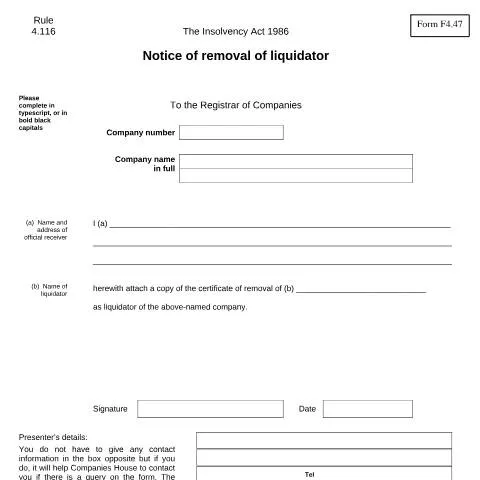
When a company enters insolvency, the appointment of a liquidator is a crucial step in resolving its financial issues. Liquidators are responsible for winding up a company's affairs, managing its assets, and ensuring that creditors are paid. However, circumstances may arise where a liquidator needs to be removed before their term is complete. This is where the Notice of Removal of Liquidator (F4.47) plays an essential role.
The Importance of Liquidation in the Business Lifecycle
Liquidation is a formal process where a company's assets are sold off to repay creditors. It marks a significant moment in a company's lifecycle, often reflecting financial distress. The appointment of a liquidator ensures that this process is conducted legally and transparently. However, situations may warrant the removal of the liquidator, which can be initiated through the notice form F4.47.
Navigating the Process of Liquidator Removal
Removing a liquidator isn't a straightforward task; it involves specific procedural steps. Understanding these steps can prevent delays and ensure compliance with legal requirements.
Step-by-Step Guide to Submitting the F4.47 Notice
- Prepare the Required Documentation: You must obtain a certificate confirming the removal of the liquidator.
- Complete the Form F4.47: Fill in the company name, number, and details of the liquidator being removed. Ensure that all information is typed clearly or written in bold black capitals.
- Attach Necessary Certificates: Include a copy of the removal certificate alongside the form.
- Submit to Companies House: Send your completed notice to the Registrar of Companies at the specified address.
| Step | Description |
|---|---|
| 1 | Gather the removal certificate. |
| 2 | Complete Form F4.47 accurately. |
| 3 | Attach the certificate of removal. |
| 4 | Send to Companies House. |
Key Terminology: Demystifying Liquidation Terms
To navigate the removal of a liquidator successfully, it's essential to understand certain key terms:
- Liquidator: A person appointed to oversee the liquidation process.
- Certificate of Removal: A document confirming that a liquidator's appointment has ended.
- Registrar of Companies: The authority that maintains company records in the UK.
Understanding the Legal Framework Behind F4.47
The removal of a liquidator is governed by various provisions under the Insolvency Act 1986. This legislation outlines the legal parameters within which liquidators operate, including how and when they can be removed. Familiarity with these regulations is crucial for anyone involved in the removal process.
Legal Precedents and Conditions for Removal
Several conditions may justify the removal of a liquidator, such as:
- Misconduct: If a liquidator fails to perform their duties responsibly.
- Conflict of Interest: Situations where the liquidator cannot act impartially.
- Incompetence: If the liquidator lacks the necessary skills to manage the company's affairs effectively.
Articulating the F4.47 Within the Broader Insolvency Process
The F4.47 notice does not operate in isolation; it is part of a greater framework of insolvency processes. Understanding where it fits helps clarify its importance.
Relation to Other Forms and Notices
Several other forms may come into play when managing a company’s insolvency, including:
- Form F4.45: Notice of appointment of a liquidator.
- Form F4.46: Notice of intention to appoint an administrator.
Each form serves a distinct purpose, contributing to the overall insolvency narrative.
Common Misinterpretations and Pitfalls
Many individuals and companies struggle with the nuances of the F4.47 process, leading to potential errors that could affect the legitimacy of the notice.
Clarifying Misconceptions
Some common misconceptions include:
- All liquidators can be removed at any time: Removal must be justified and comply with legal provisions.
- The removal process is informal: Several formal steps must be followed to ensure legality.
Ensuring accurate understanding of these factors can significantly streamline the process.
Practical Tips for a Smooth Removal Process
Successfully removing a liquidator requires careful planning and execution. Here are some practical tips:
- Consult Professionals: Involve legal or insolvency practitioners if you are unsure about the process.
- Double-check Documentation: Ensure that all documents are accurate and complete to avoid delays.
- Keep Records: Maintain copies of all submitted documents for your records.
Final Steps After Submission
Once the F4.47 notice has been submitted, there are several steps to follow to ensure that the process is concluded properly:
- Monitor for Confirmation: Wait for confirmation from Companies House regarding the removal.
- Communicate with Stakeholders: Inform creditors and relevant parties of the change in liquidator status.
- Plan for Next Steps: Consider the implications of the removal on the ongoing insolvency process.
Being proactive after submission can facilitate a smoother transition and help preserve stakeholder relationships during this challenging time.
Conclusion: Navigating the Complexities of Liquidator Removal
Removing a liquidator is far from a trivial matter. It involves navigating a complex landscape of legal requirements, procedural steps, and potential pitfalls. Understanding the Notice of Removal of Liquidator (F4.47) and its place within the broader insolvency framework is critical for directors and stakeholders alike. By familiarizing oneself with the relevant legislation, utilizing the right terminology, and following the outlined steps, one can ensure that the process is conducted effectively and in compliance with UK law.
Understanding the Role of a Liquidator in UK Company Law
Before diving into the process of giving notice of the removal of a liquidator, it’s essential to understand their role in UK company law. A liquidator is appointed to wind up a company’s affairs, which includes realising assets, settling debts, and distributing any remaining assets to shareholders. The position of a liquidator can arise during voluntary liquidation, compulsory liquidation, or as part of insolvency proceedings.
The liquidator acts in the best interests of creditors, with a duty to treat all creditors fairly. This includes reporting to creditors and shareholders on the progress of the liquidation. When a liquidator is appointed, the authority over the company’s assets passes from the directors to the liquidator, who must adhere to the statutory framework governing insolvency in the UK. This framework is primarily set forth in the Insolvency Act 1986, which outlines the duties and responsibilities of liquidators.
Fill in your form directly online
No printing: type your details into the boxes of the official form, tick, then download the PDF ready to send.
- 1Type into the form boxes
- 2Tick in one click
- 3Save and download the PDF
However, there are circumstances where a liquidator may not be fulfilling their duties adequately, or there could be a need for a change in leadership for various reasons, including conflicts of interest or a lack of transparency. In such instances, the process to remove a liquidator becomes crucial for the orderly winding up of the company’s affairs.
The Legal Process of Removing a Liquidator
The removal of a liquidator is governed by specific legal procedures to ensure that the process is fair and transparent. Section 114 of the Insolvency Act 1986 provides the statutory framework for the removal of a liquidator. The process typically begins with a resolution passed by the company’s creditors or members, depending on the type of liquidation.
To initiate the removal, a formal meeting must be convened. The notice for this meeting must include details such as the date, time, and location, along with an agenda outlining the resolution to be passed. Under the Insolvency (England and Wales) Rules 2016, specific requirements must be followed, including providing at least 14 days’ notice to the creditors and obtaining the necessary approvals.
During the meeting, the creditors will vote on the resolution to remove the liquidator. A simple majority is usually required for the resolution to pass. If the liquidator is removed, the creditors may appoint a new liquidator, or the existing one may be replaced by an alternative individual if the creditors wish to maintain continuity in the liquidation process. It’s crucial to document all proceedings meticulously, as these records will be important for future reference and compliance.
Implications of Liquidator Removal on Stakeholders
The removal of a liquidator can have widespread implications for various stakeholders involved in the liquidation process. For creditors, the change of liquidator may signal a shift in how claims are handled and could potentially impact the recovery of debts owed to them. If the newly appointed liquidator is perceived to be more competent or trustworthy, it may lead to increased confidence among creditors that their interests will be better represented.
For the company’s directors, the removal of the liquidator can significantly affect their standing and responsibilities. If a director was instrumental in the appointment of the liquidator, the removal may indicate a loss of control over the liquidation process. Directors should also be aware that their conduct during the insolvency process may come under scrutiny, particularly if the removal stems from alleged misconduct or negligence on the liquidator’s part.
Additionally, employees of the company may be impacted by the liquidator's removal, especially in terms of job security and the handling of their outstanding wages and entitlements. The new liquidator may have different priorities or approaches to managing the estate, which could affect the timing and amount of any potential payouts to employees.
Overall, the removal of a liquidator is not merely a procedural event; it has real implications for all parties involved. It's essential for stakeholders to remain informed and engaged throughout the process to ensure their interests are adequately represented during the transition.