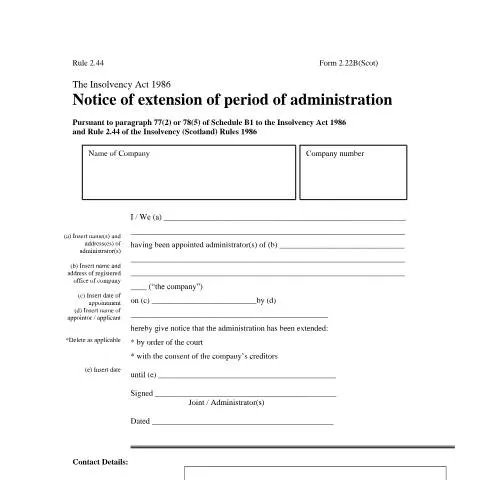
Understanding the Notice of Extension: Period of Administration - Form 2.22B (Scotland)
The Notice of Extension: Period of Administration - Form 2.22B is a crucial document regulated by The Insolvency Service under the Insolvency Act 1986. In the context of financial distress, this notice serves to formally extend a company's administration period, allowing administrators more time to manage and resolve the company’s financial situation. This document is pivotal for both the administrators and the creditors involved, and understanding its implications is essential for anyone navigating the insolvency landscape in Scotland.
Scope and Limitations of the Notice
This notice applies specifically to companies undergoing administration in Scotland. It extends the administration period either by a court order or with the consent of creditors, as specified under Rule 2.44 of the Insolvency (Scotland) Rules 1986. The extension granted through this notice is critical as it provides necessary breathing room for the administrators to develop a viable plan for the company's recovery or for the orderly winding up of its affairs.
- Types of Extensions: The administration can be extended in two main scenarios:
- By order of the court, which is often required in more complex cases.
- With the consent of the company's creditors, typically in less complicated situations where stakeholders are aligned on the course of action.
- Duration of Extension: The document outlines the period of extension, which must be explicitly stated. This is crucial as it determines how long the administrators can operate under the administration framework before a review or further action is required.
Target Audience and Situational Necessity
The primary users of the Form 2.22B are the appointed administrators of the company in question. Additionally, creditors of the company also have a vested interest in the notice, as it directly affects their position and potential recovery of debts. Understanding when and why to file this notice is essential for both parties:
- Appointed Administrators: They must file this notice when they require additional time to either resolve the company's financial issues or prepare for a potential liquidation.
- Creditors: They should be aware of this notice as it signals a change in the administrative proceedings that could impact their financial recovery.
This document becomes indispensable when:
- The initial administration period is nearing its end, and a resolution has not yet been achieved.
- There are complexities in the case that require further investigation or negotiation among creditors.
Common Misinterpretations and Pitfalls
When dealing with the Form 2.22B, there are several common misunderstandings that can lead to complications:
- Assuming Automatic Approval: Some administrators may mistakenly believe that extending the administration period is guaranteed. However, filing for an extension requires adherence to either obtaining a court order or garnering creditor consent.
- Incorrectly Stating Dates: Failing to accurately specify the new end date of the administration can lead to legal challenges or further complications in the proceedings.
- Neglecting Communication with Creditors: Not informing creditors about the intended extension can result in mistrust and complications during negotiations, affecting the overall administration process.
Interconnections with Other Documentation
The Form 2.22B interacts with several other documents and processes within the insolvency framework. Understanding these relationships is vital for a smooth administrative process:
| Document | Purpose | Relationship with Form 2.22B |
|---|---|---|
| Form 2.22A | Notice of Administrator’s Appointment | Precedes Form 2.22B; establishes the need for administration. |
| Form 2.23 | Progress Report to Creditors | Updates creditors on the administration’s status; often filed alongside the extension notice to maintain transparency. |
| Court Order | Legal document authorizing specific actions within the administration | Required if extending the administration period by court order. |
Utilizing the Notice Effectively: Step-by-Step Guide
To maximize the effectiveness of the Notice of Extension, it is beneficial to follow a structured approach:
- Assessment of Needs: Prior to filing the notice, assess whether an extension is genuinely necessary based on the current circumstances of the administration.
- Consultation with Stakeholders: Engage with creditors to gauge their willingness to consent to the extension, which can facilitate a smoother process.
- Drafting the Notice: Carefully fill out the Form 2.22B with accurate information, paying close attention to the new end date and the conditions under which the extension is being sought.
- Submission to Companies House: After signing the notice, submit it to the relevant office, ensuring that it is sent to Companies House at the correct Edinburgh address.
- Documenting Communications: Keep a record of all communications and decisions made with stakeholders during this process for future reference.
Common Procedural Inquiries
While navigating the process of extending the administration period using Form 2.22B, administrators may encounter a variety of procedural inquiries:
- What happens if creditors refuse to consent? If creditors do not consent to the extension, administrators must consider seeking a court order to proceed, ensuring compliance with legal requirements.
- How long can the administration period be extended? The court or creditors typically decide the length of extension based on the specific circumstances, with no standard duration enforced.
- Can multiple extensions be filed? Yes, multiple extensions can be sought as long as each is justified based on ongoing circumstances and has the requisite approvals.
- What implications does the extension have on the company’s status? An extension means the company remains under the protection of administration, which can impact creditors' ability to pursue debts or initiate legal proceedings.
Overall, the Notice of Extension: Period of Administration - Form 2.22B is a fundamental part of the administration procedure in Scotland, and understanding its intricacies is essential for all parties involved. The key to effectively utilizing this notice lies in clear communication, meticulous documentation, and a strategic approach to administration management.
Understanding the Administration Process in Scotland
The administration process in Scotland is often complex, involving various stakeholders including creditors, the courts, and administrators. Under the Insolvency Act 1986, an administrator is appointed to manage a company that is unable to pay its debts. This process aims to maximize returns to creditors while ensuring that the company is given the best chance of survival, if feasible.
Form 2.22B, specifically tailored for Scotland, is crucial in this context, as it serves to notify the court and interested parties of an extension of the administration period. This extension is often necessary due to unforeseen circumstances that may hinder timely resolution of the company’s financial issues.
When considering an extension, administrators must provide a solid justification, focusing on the company's potential for recovery or the complexities surrounding its debts. This may include factors like ongoing negotiations with creditors, potential sales of assets, or efforts to restructure the company’s operations.
Key Components of Form 2.22B
Form 2.22B consists of several key components that administrators must complete accurately to ensure compliance with legal requirements. Understanding these components is crucial for effective completion of the form:
- Applicant Details: The administrator must provide their contact details, including the address where they can be reached for any queries related to the administration.
- Company Information: This section requires the administrator to detail the company’s name, registration number, and the address of its registered office.
- Reason for Extension: Administrators must clearly state the reason for requesting an extension of the administration period. This could range from ongoing negotiations with creditors to the need for additional time to conduct a sale process.
- Proposed Extended Period: The form requires the administrator to specify how long they believe the extension should be. This duration must be justified based on the circumstances surrounding the company's situation.
- Creditors’ Comments: The form allows space for creditors or other interested parties to submit their comments regarding the proposed extension, ensuring that all voices are heard in this process.
Submitting Form 2.22B: Key Considerations
When preparing to submit Form 2.22B, it is essential to be mindful of several key considerations to ensure compliance and effectiveness:
- Timeliness: The application for an extension must be submitted within a specific timeframe, generally before the current administration period expires. It is advisable to submit the form at least a few weeks in advance to allow for any potential issues.
- Legal Representation: Depending on the complexity of the case, it may be beneficial to consult with legal professionals who specialize in insolvency matters. They can provide crucial insights into the application process and ensure that all legal requirements are met.
- Communicating with Creditors: Engaging with creditors before submitting the form can facilitate smoother negotiations and increase the likelihood of their support for the extension. Transparent communication can also mitigate any concerns they may have about the administration process.
- Documentation: Accompanying the form with supporting documentation that outlines the reasons for the extension can strengthen the application. This may include financial statements, progress reports, or evidence of negotiations with potential buyers.