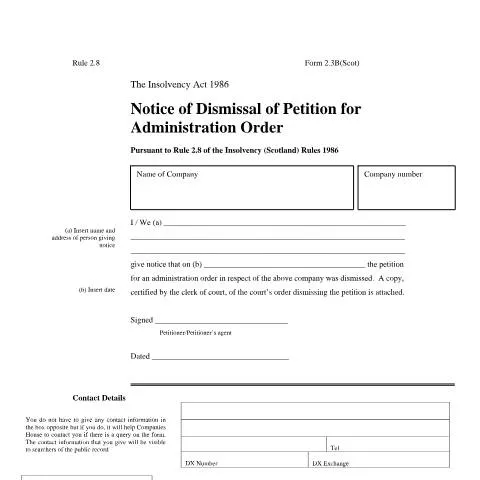
Understanding the Dismissal of a Petition for Administration Orders in Scotland
When navigating the complexities of insolvency in Scotland, the Notice of Dismissal of Petition for Administration Order becomes a pivotal document. Issued under Rule 2.8 of the Insolvency (Scotland) Rules 1986, this notice is essential for companies and their stakeholders seeking clarity regarding the outcome of an administration order petition. It marks a critical juncture in the insolvency process and outlines the dismissal of such a petition by the court.
Who Benefits from This Notice and When Is It Essential?
This notice serves a broad audience, including directors of distressed companies, creditors, and legal representatives. Understanding when and why this document is necessary can help avoid unnecessary complications and ensure compliance with legal obligations.
1. Distressed Companies
- Directors: If a company is facing financial difficulties and a petition for an administration order has been filed, directors must be vigilant about the notice's implications. It signifies the end of the petition process and allows them to focus on other recovery strategies.
2. Creditors
- Creditors’ Awareness: For creditors, this notice is important as it clarifies whether the company will enter administration or if they need to consider alternative debt recovery options.
3. Legal Advisors
- Legal Counsel: Solicitors and financial advisors must accurately interpret the implications of this notice to guide their clients effectively through the insolvency framework.
The Scope and Limitations of the Document
While the Notice of Dismissal of Petition for Administration Order conveys vital information, it is essential to understand its limitations. This notice only addresses the dismissal of the specific petition and does not imply that the company is free from financial difficulties or that all creditors will be satisfied. Here are the primary points to consider:
- Single Petition Dismissal: The notice only pertains to the specific petition dismissed; further petitions can still be filed against the same company.
- No Financial Resolution: Dismissal does not resolve any ongoing financial issues for the company, nor does it prevent creditors from taking other legal actions.
- Certification Requirement: A certified copy of the court order must accompany the notice, which reinforces the formal closure of that particular petition.
Decoding Key Elements of the Notice
Understanding the components within the notice is paramount for all parties involved. The document includes specific details that not only provide clarity but also ensure that all legal procedures are adhered to. Below are the critical elements:
| Element | Description |
|---|---|
| Petitioner Information | The individual or entity that filed the initial petition for the administration order, often the company directors or creditors. |
| Date of Dismissal | The date when the court dismissed the petition, which is crucial for timelines regarding any potential appeals or further actions. |
| Certified Copy | A certified copy of the court's dismissal order is attached, lending legal weight to the notice. |
| Contact Information | While optional, including contact details can facilitate further communication with Companies House regarding the company's status. |
| Submission Details | Instructions on where to send the notice are provided, ensuring that it reaches the appropriate authority for official records. |
Potential Misinterpretations and How to Avoid Them
With the stress that often accompanies insolvency proceedings, misinterpretations of the notice can occur. Understanding these pitfalls can help mitigate misunderstandings.
Common Misinterpretations
- Assuming Financial Stability: A dismissed petition does not equate to financial health; it merely states that the specific action for administration has not been granted.
- Perceived Finality: Some may think the dismissal is the end of all proceedings, while it often opens the door for alternative resolutions or further actions.
- Misunderstanding Certification Requirements: Failure to attach a certified copy of the court order can lead to complications in acknowledging the dismissal.
Utilizing the Notice in Your Insolvency Strategy
Implementing the insights gained from the Notice of Dismissal of Petition for Administration Order into your insolvency strategy is crucial. Here is a step-by-step approach to using this notice effectively:
- Review the Document Thoroughly: Ensure you understand the implications of the dismissal. Note the date and relevant parties involved.
- Consult Legal Advisors: Engage with legal professionals to discuss potential next steps, especially if further actions are required.
- Communicate with Stakeholders: Inform employees, creditors, and other stakeholders about the dismissal and its implications for the business moving forward.
- Consider Alternative Strategies: Explore other avenues for financial recovery or restructuring, as a dismissal does not preclude future administration or bankruptcy options.
- Document Everything: Keep a record of all correspondence related to the dismissal and any subsequent actions taken.
Related Documents and Their Interconnections
Understanding how the notice interacts with other related documents is vital for navigating the insolvency landscape. Here are some key documents often associated with the administration process:
- Notice of Intention to Appoint Administrators: This document is often filed prior to the administration petition and serves as a precursor, indicating intent without committing to the process.
- Administration Order: Should a petition be accepted, this order outlines the terms of the administration, including the appointment of an administrator.
- Individual Voluntary Arrangement (IVA): In cases where administration is not feasible, exploring IVAs as an alternative can be beneficial.
- Liquidation Notice: If all recovery options fail, a liquidation notice may follow, indicating the company will be dissolved.
Practical Tips for Managing Insolvency Notices
Managing insolvency notices requires diligence and organization. Here are practical tips to streamline your process:
- Establish a Timeline: Keep track of all relevant dates, including the dismissal date, for compliance and strategic planning.
- Maintain Open Communication: Regularly update all relevant parties on the status of the company's insolvency proceedings to manage expectations.
- Seek Professional Guidance: Do not hesitate to reach out for professional advice to ensure all legal obligations are met and to explore viable options.
- Be Prepared for Questions: Stakeholders may have concerns; being proactive in communication can alleviate uncertainty.
- File Accordingly: Ensure that the notice is sent to Companies House promptly to avoid any regulatory issues.