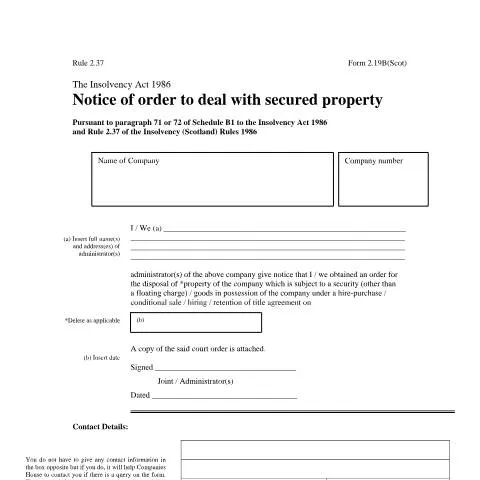
Navigating the Notice of Order to Deal with Secured Property: Form 2.19B in Scotland
In the intricate world of insolvency, the Notice of Order to Deal with Secured Property (Form 2.19B) stands as a crucial document for administrators managing a company undergoing insolvency proceedings in Scotland. This notice is not merely a formality; it is a vital tool for ensuring that secured creditors and other relevant parties understand the legal landscape surrounding a company's assets during its insolvency process.
Understanding the Core Purpose of Form 2.19B
The Form 2.19B is primarily designed to inform parties about an order obtained by the administrator regarding the disposal of secured property. This means that if a company has assets that are under some form of security agreement—such as a hire purchase or conditional sale—the administrator must notify stakeholders about the court's decision related to these assets. The order can encompass various types of secured properties, clarifying what can be disposed of and the nature of the security involved. The significance of this notice cannot be overstated; it informs creditors of their rights and the status of their secured interests in the assets.
How the Notice Affects Stakeholders
- Creditors: Secured creditors are particularly affected as the notice impacts their ability to reclaim debts secured against the company's assets.
- Administrators: For administrators, this notice is a legal obligation that ensures transparency and compliance with the insolvency process.
- Company Directors: Directors must be aware of this notice as it reflects the company's financial status and the implications for their responsibilities.
Unpacking the Legal Framework
The Insolvency Act 1986 provides the foundational legal context for the operations of Form 2.19B. Specifically, it is governed under Schedule B1, which outlines the relevant procedures for dealing with insolvency in Scotland. Understanding this framework is crucial for administrators as it dictates not only when and how to use the form but also the legal ramifications of the court order attached to it.
The Role of the Insolvency Rules
Rule 2.37 of the Insolvency (Scotland) Rules 1986 specifies the requirements for issuing a notice under this order. These rules are essential reading for administrators, as the procedures laid out therein guide how to effectively handle secured properties amidst insolvency. Not adhering to these rules can lead to significant legal consequences, including challenges from creditors.
A Step-by-Step Approach to Utilizing Form 2.19B
When faced with the necessity of issuing a Notice of Order to Deal with Secured Property, it is essential to approach the process methodically. Here is a straightforward guide to navigating this requirement:
- Obtain the Court Order: Before issuing the notice, ensure you have received the relevant court order that authorizes the disposal of the secured property.
- Complete the Form: Fill out all necessary details on Form 2.19B, including names, addresses, and company details.
- Attach Supporting Documentation: Include a copy of the court order with your notice to provide proof of legitimacy.
- Sign and Date: Ensure the administrator(s) sign and date the form, confirming their authority and responsibility.
- Submit to Companies House: Send the completed form to the Registrar of Companies at the specified address in Edinburgh to ensure it is officially recorded.
Linking Form 2.19B to Other Insolvency Documents
Form 2.19B does not exist in isolation; it is part of a broader ecosystem of insolvency documentation and procedures. Understanding how this form interacts with others is crucial for administrators.
Related Documentation
- Form 2.19A: Often used alongside Form 2.19B, this notice pertains to unsecured creditors and may provide essential context for stakeholders.
- Insolvency Practitioner Reports: These reports must be consistent with the notices provided to ensure transparency across all communications.
- Creditors' Meetings: Outcomes and discussions from creditors' meetings may influence the content and urgency of the 2.19B notice.
Identifying Your Public and Situations of Necessity
Understanding the target audience for Form 2.19B is vital. The primary users of this notice are administrators appointed to handle insolvent companies, but it also extends to creditors and legal representatives involved in the insolvency proceedings.
Specific situations where this form becomes indispensable include:
- When dealing with multiple secured creditors: It’s critical to communicate clearly about the status of secured assets.
- In cases of contested claims: If there are disputes regarding the rights to the secured property, clear notifications help clarify the administrator's position.
- During asset liquidation: If the company is moving towards liquidation, this notice serves as a formal communication of asset management steps.
Conclusion: The Importance of Compliance and Clarity
In summary, the Notice of Order to Deal with Secured Property (Form 2.19B) is not just a procedural step; it is a vital communication tool within the insolvency process. For administrators in Scotland, understanding the intricacies of this notice, including its legal implications and its relationship with other documents, can significantly enhance the management of an insolvent company's assets.
As the landscape of insolvency can often be complex and fraught with challenges, leveraging the full potential of Form 2.19B ensures clarity and compliance with legal obligations, ultimately serving the interests of all stakeholders involved.
Understanding the Role and Importance of Form 2.19B in Secured Property Transactions
The Notice of Order to Deal with Secured Property, designated as Form 2.19B in Scotland, plays a crucial role in the legal landscape surrounding the management of secured property. This document is often issued by courts to allow for certain actions to be taken concerning property that has been pledged as security against a debt. Understanding the intricacies of this form is essential for individuals, businesses, and legal practitioners involved in transactions that may involve secured assets.
Secured property typically refers to assets such as real estate, vehicles, or equipment that have been used as collateral for loans. When a borrower defaults on their obligations, lenders may seek to recover their losses through the sale of these secured assets. However, the process is not straightforward and often requires careful navigation of legal protocols. Form 2.19B serves as a formal notification that provides clarity to all parties involved regarding the status of the secured property.
One important aspect of Form 2.19B is its requirement for detailed information regarding the property in question, the parties involved, and the nature of the secured debt. This is essential for ensuring that all stakeholders are aware of the potential implications and can prepare adequately for any forthcoming actions. It is important to note that the issuance of this order does not guarantee that the lender will be able to repossess or sell the property; rather, it serves as an initial step in the legal process.
Additionally, the form outlines the rights of the borrower and any potential remedies they may have if they wish to contest the order. This includes the ability to submit evidence showing why the property should not be dealt with in the manner proposed by the creditor. Understanding these rights is vital, as failure to respond appropriately to a Form 2.19B could lead to adverse outcomes, including the loss of property without the opportunity for recourse.
Common Scenarios Leading to the Issuance of Form 2.19B
There are various scenarios in which Form 2.19B may be issued, each with its own set of circumstances and implications. It is important to examine these scenarios to understand how they influence the process of dealing with secured property.
One common scenario involves a borrower entering into administration or insolvency proceedings. In such cases, the appointed administrator may seek to liquidate secured assets to repay creditors. The issuance of Form 2.19B becomes critical in this context, as it allows the administrator to formally notify all stakeholders of their intent to deal with the property in question, ensuring that the process is transparent and compliant with legal requirements.
Another scenario arises when a borrower disputes the legitimacy of the secured debt or the terms under which the property was secured. In this case, creditors may still apply for Form 2.19B as a means to assert their rights over the property while also allowing the borrower an opportunity to present their objections. The court will then consider the arguments from both sides before making a ruling regarding the validity of the order.
Additionally, Form 2.19B may be employed in cases involving multiple secured creditors. In situations where there is more than one claim against the property, the order serves to clarify the hierarchy of claims and inform all parties of their standing in relation to the secured asset. This is vital for managing disputes and ensuring that legal processes are followed to protect the rights of all stakeholders involved.
How to Respond to a Notice of Order to Deal with Secured Property
Receiving a Notice of Order to Deal with Secured Property (Form 2.19B) can be a stressful experience for borrowers and property owners. However, knowing how to respond effectively can play a significant role in the outcome of the situation. Here are key steps to follow when faced with this notice:
1. Review the Notice Carefully: The first step is to read the Form 2.19B thoroughly. Note the details regarding the secured property, the creditor's claims, and any deadlines for response. Understanding the content of the notice is essential for formulating a response.
2. Gather Evidence: If you believe you have grounds to contest the order, collect evidence to support your claims. This may include documentation related to the debt, payment records, or correspondence with the creditor. Well-documented evidence can strengthen your position if the matter escalates to court.
3. Consult Legal Advice: It is often advisable to seek legal counsel when dealing with secured property issues. A solicitor experienced in property law can provide valuable insights into your rights and options, as well as help you draft an appropriate response to the order.
4. Submit Your Response Promptly: If you intend to contest the order or seek to negotiate terms, ensure that your response is submitted within the specified timeframe. Failing to respond can result in the court granting the order in favor of the creditor, potentially leading to the loss of your property.
5. Prepare for Court Proceedings: If the matter progresses to court, ensure you are prepared for hearings. This might involve presenting your case, answering questions from the judge, and demonstrating why the order should not be upheld. Understanding court procedures can help mitigate anxiety and improve your chances for a favorable outcome.