Understanding the Importance of the Notice of Insufficient Property
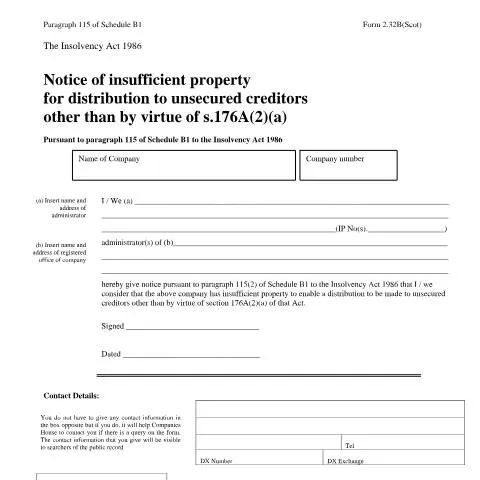
The Notice of Insufficient Property (Insolvency Form 2.32B) serves as a critical communication tool within the Scottish insolvency framework. When a company enters administration, it may be necessary for the appointed administrator to inform creditors regarding the insufficiency of assets available for distribution. This notice is crucial as it delineates the financial reality of the company’s situation, thereby managing creditor expectations and streamlining communication with the Registrar of Companies.
Key Elements of the Notice
Delving deeper into the document, several key elements and sections warrant examination:
- Administrator Information: This section requires the name and IP number of the administrators who have been appointed to manage the company's insolvency process.
- Company Details: Including the registered name and office address of the company in administration is essential for proper identification and record-keeping.
- Notification Clause: The core of the notice succinctly states that the administrators find the assets insufficient for a distribution to unsecured creditors, except as outlined in section 176A(2)(a) of the Insolvency Act 1986.
- Signature and Date: To validate the notice, it must be signed and dated by the administrators, reinforcing accountability.
Navigating the Insolvency Process with Form 2.32B
For administrators, understanding how to appropriately use the Form 2.32B is paramount. This process can be broken down into practical steps:
- Assessing Company Assets: Before issuing the notice, administrators must conduct a thorough assessment of the company's assets to confirm the insufficiency.
- Preparing the Notice: Administrators should fill out the details accurately, ensuring all necessary information is included to avoid ambiguity.
- Submission to Companies House: Once completed, the notice must be submitted to the Registrar of Companies at the Edinburgh address specified in the form.
- Maintaining Communication: Although not obligatory, providing contact details can facilitate communication with Companies House in the event of queries regarding the notice.
Common Misinterpretations of the Notice
As with any legal document, misunderstandings can arise regarding the Notice of Insufficient Property. Here are some common misinterpretations:
- Confusion with Asset Distribution: A frequent misconception is that this notice signals a complete closure of asset distribution. Rather, it indicates that unsecured creditors will not receive funds from the current assets.
- Misunderstanding the Legal Implications: Some administrators may not fully grasp the implications of section 176A(2)(a), which outlines specific scenarios where certain creditors may still receive payment.
- Assumption of Obligation to Pay: The notice does not create an obligation for the administrators or the company to pay unsecured creditors; it merely informs them of the current situation.
Linking the Notice to the Insolvency Act 1986
The Notice of Insufficient Property is intrinsically linked to the Insolvency Act 1986. Understanding this connection helps in navigating insolvency proceedings:
| Aspect | Detail |
|---|---|
| Purpose | To inform unsecured creditors of the inability to distribute assets |
| Legal Basis | Paragraph 115 of Schedule B1 of the Insolvency Act 1986 |
| Creditor Rights | Rights of creditors are impacted by the notice, influencing their next steps |
| Section 176A(2)(a) | Specifies exceptions to general distribution rules for certain creditors |
This table emphasizes the pivotal role that the Insolvency Act plays in shaping the framework within which the notice operates.
When is the Notice Indispensable?
The necessity of issuing a Notice of Insufficient Property arises in specific scenarios, emphasizing its importance within the insolvency process:
- Company Administrations: Whenever a company enters administration and the assets available are not sufficient to cover liabilities to unsecured creditors.
- Communication with Creditors: When the administrators need to communicate the lack of distributions clearly, this notice serves as an official document.
- Compliance with Legal Obligations: Failing to issue this notice when required may result in legal repercussions for administrators, including scrutiny from regulatory bodies.
Beyond the Notice: Managing Creditor Relations
After the issuance of the Notice of Insufficient Property, administrators must consider how to manage relationships with creditors who may be disappointed by this news:
- Open Communication: Maintaining open lines of communication with creditors can help in alleviating concerns and mitigating frustrations.
- Providing Updates: Regular updates regarding the status of the company and any potential developments can foster trust.
- Offering Explanations: Administrators should be prepared to explain the rationale behind the notice and the legal context, helping creditors understand their situation.
Conclusion: The Role of Form 2.32B in the Insolvency Landscape
In the intricate realm of insolvency, the Notice of Insufficient Property (Insolvency Form 2.32B) acts as a vital instrument for transparency and communication. By understanding its content, significance, and implications, administrators can ensure they adhere to legal requirements while maintaining professional relationships with creditors. This notice is not merely an administrative requirement; it encapsulates the challenges and realities faced by companies in distress, offering a glimpse into the significant impact of insolvency on all stakeholders involved.