Understanding the Importance of the Notice of Order to Deal with Charged Property
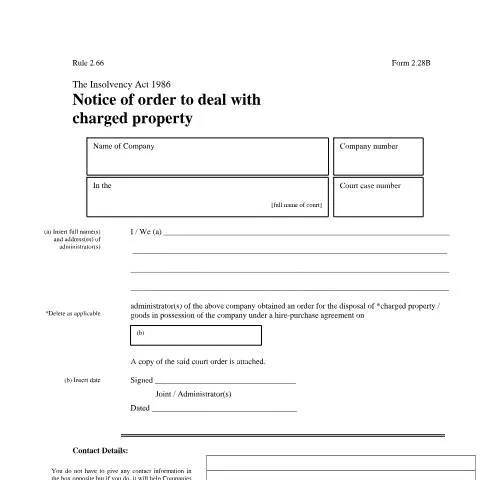
In the complex world of corporate insolvency, the Notice of Order to Deal with Charged Property (2.28B), issued by Companies House, serves as a crucial legal instrument. It arises from the provisions of the Insolvency Act 1986, enabling administrators to notify stakeholders about the court's order regarding the disposal of charged assets. This document is not merely bureaucratic; it is a lifeline that facilitates the orderly management of a company's assets in distress. Understanding this notice and its implications is essential for all involved parties.
Decoding the Document: Key Components Explained
The notice itself is structured to relay vital information succinctly. Here’s a breakdown of its core components:
- Administrator Details: The names and addresses of the administrators are paramount, as these individuals are legally responsible for managing the company’s affairs during insolvency.
- Court Order Reference: A copy of the court order attached to the notice serves as a testament to the legal authority behind the action, ensuring transparency and legitimacy.
- Details of Charged Property: This section identifies the specific assets being dealt with, whether they are goods in possession of the company or those under hire-purchase agreements.
- Signatory and Date: The document must be signed by the administrator(s) along with the date of signing, providing a clear timeline of actions taken.
What Constitutes Charged Property?
Charged property refers to assets that have been pledged as security against a loan or credit. In the context of insolvency, administrators must navigate through these assets carefully. The following are examples of charged property:
- Inventory and Equipment: Common in businesses, these may include stock that is vital for operational continuity.
- Real Estate: Properties owned by the company that may be encumbered with a mortgage.
- Vehicles: Particularly those purchased under hire-purchase agreements.
Practical Steps to Utilize the Notice Effectively
For administrators and companies, effectively utilizing the Notice of Order to Deal with Charged Property involves several strategic steps:
- Identify Charged Assets: Ascertain which properties are charged to ensure that the correct assets are included in the notice.
- Obtain a Court Order: Secure a court order that validates the authority to dispose of these properties, a prerequisite for the notice.
- Complete the Notice: Fill in the required fields accurately, ensuring that all necessary details are included to avoid complications.
- Attach Required Documentation: Include a copy of the court order as proof, as this strengthens the notice's validity.
- Submit to Companies House: Send the completed notice to the designated address to formally register the action.
Common Procedural Queries Regarding the Notice
In the course of dealing with the Notice of Order to Deal with Charged Property, administrators often have questions. Addressing these can preempt procedural snags:
How to Confirm the Court Order's Validity?
It is essential to ensure that the court order is current and applicable to the assets listed. This can typically be done through correspondence with the court that issued it. Additionally, keeping copies of all communications related to the court order is advisable.
What If the Court Order is Not Attached?
Failing to include the court order can render the notice ineffective. Companies House may refuse to process the document without it. Always verify that the order accompanies the notice before submission.
The Interrelation with Other Procedural Documents
The Notice of Order to Deal with Charged Property does not exist in isolation. It interacts with various other documents within the realm of insolvency:
- Form 2.28A: This form relates to the appointment of administrators and should precede the notice, setting the groundwork for the administrator's authority.
- Statement of Affairs: Required in many insolvency cases, this document provides a comprehensive view of the company's financial situation, which can inform decisions about charged properties.
- Notice of Intended Disposal: This notice may be necessary if the administrators plan to sell charged assets, ensuring all stakeholders are informed.
Target Audience: Who Needs to Be Informed?
The notice serves multiple stakeholders in the corporate ecosystem:
- Creditors: They need to understand the situation surrounding charged assets that may affect their claims.
- Company Management: Ensures they are apprised of the administrators’ actions and the overall financial health of the company.
- Potential Buyers: Individuals or entities looking to acquire charged properties need to be aware of the notice to avoid purchasing issues.
Challenges and Misinterpretations of the Document
While the Notice of Order to Deal with Charged Property is largely straightforward, several common misunderstandings can arise:
Misunderstanding the Scope of the Notice
Some administrators may assume that the notice gives them blanket authority to dispose of all assets. It is critical to understand that the notice only pertains to the assets specifically identified as charged. Thus, any non-charged assets remain under the company's control unless otherwise specified by the court.
Overlooking the Importance of Timeliness
Timeliness is vital in the context of insolvency. Submitting the notice promptly after obtaining the court order is essential, as delays can complicate the disposal process and possibly lead to legal challenges from creditors.
Case Studies: Practical Applications in Real Scenarios
To further illustrate the significance of the Notice of Order to Deal with Charged Property, consider the following hypothetical scenarios:
Scenario 1: Liquidation of a Retail Business
A retailer undergoing liquidation may have significant charged inventory. By issuing the notice promptly, the administrators notify creditors of their intention to liquidate the charged stock while complying with legal requirements. This transparency can facilitate smoother transactions and potentially yield better recovery rates for creditors.
Scenario 2: Resolving a Dispute Over Vehicles
In a scenario where a company has several vehicles under hire-purchase agreements, timely issuance of the notice can prevent disputes with the hire-purchase companies about the disposition of these assets. By clearly notifying all parties about the court's order and the steps being taken, the administrators can mitigate legal risks.
Navigating the Aftermath: What Comes Next?
Once the notice has been submitted and the ordered actions commence, administrators must remain vigilant in managing the outcomes:
- Monitoring Asset Disposal: Administrators should keep detailed records of how charged assets are disposed of, ensuring compliance with both the court order and any relevant laws.
- Communicating with Stakeholders: Continuously inform creditors of the progress and outcomes related to the disposal of charged assets, as transparency is key in insolvency processes.
- Preparing for Potential Challenges: Be ready to handle any queries or disputes that may arise regarding the notice, as stakeholders may question the validity or the implications of the court's order.
By grasping the intricacies of the Notice of Order to Deal with Charged Property, administrators can navigate the often turbulent waters of insolvency with greater confidence. This document is not merely a procedural formality; it is a critical tool that lays the foundation for transparent and responsible asset management in times of corporate distress.
Understanding the Notice of Order: Key Considerations
When dealing with charged property, issuing a Notice of Order is crucial. This legal instrument ensures that all parties with an interest in the property are informed of any intentions to deal with it. A Notice of Order must be clear and comprehensive to prevent any misunderstandings or potential disputes. Here are several key considerations:
- Identify All Interested Parties: It's essential to ascertain and document all parties who may have an interest in the charged property. This includes mortgage lenders, leaseholders, and any other stakeholders. Failure to notify all relevant parties could invalidate the notice.
- Specify the Nature of the Charge: Clearly describe the charge that affects the property. This may involve referencing mortgage agreements, liens, or other encumbrances. Providing this context helps recipients understand the implications of the notice.
- Legal Compliance: Ensure that the notice complies with relevant legal provisions as laid out in the Law of Property Act 1925 and the Land Registration Act 2002. Non-compliance can lead to legal challenges and delays.
Procedure for Issuing a Notice of Order
The process of issuing a Notice of Order to deal with charged property involves several steps that must be meticulously followed to ensure legal validity. Here’s a detailed procedure for issuing such notices:
- Drafting the Notice: Begin by drafting the notice in accordance with legal standards. Include all relevant details such as the property address, nature of the charge, and the parties involved.
- Serving the Notice: Serve the notice to all interested parties. This can typically be done via recorded delivery to ensure that there is proof of receipt. It’s advisable to keep copies of all correspondence for future reference.
- Await Responses: After serving the notice, allow a reasonable period for responses. This period can vary, but allowing at least 14 days is often considered a minimum to respond adequately.
- Document Any Responses: If parties respond, document their replies carefully. If there are objections or concerns, consider addressing these through negotiation or mediation to find an amicable resolution before proceeding further.
- Finalise the Order: If no objections are raised or if all concerns have been resolved, you can proceed to formalise the order, possibly by filing with relevant authorities such as the Land Registry.
Common Pitfalls and How to Avoid Them
While issuing a Notice of Order may seem straightforward, there are several common pitfalls that individuals must navigate to avoid legal complications. Understanding these pitfalls can save time and resources:
- Inadequate Legal Consultation: Failing to seek legal advice can lead to improperly drafted notices. Always consult a solicitor experienced in property law before initiating this process to ensure compliance with all legal requirements.
- Ignoring Timeframes: Adhering to statutory timeframes is crucial; missed deadlines can invalidate the notice. Familiarise yourself with specific timelines applicable to your situation.
- Failure to Update Records: After dealing with the property as per the notice, ensure that all relevant registrations with the Land Registry and any other pertinent authorities are updated. This is vital to maintain accurate public records.
- Neglecting to Keep Evidence: Maintaining detailed records of all communications and transactions related to the notice is essential. These documents may be invaluable in case of future disputes or legal proceedings.