Navigating the Waters of Liquidation: Understanding the Notice of Appointment of Liquidator (Form 4.31)
When a company faces financial distress, one of the critical steps that may be taken is the appointment of a liquidator. This process is formalised through the Notice of Appointment of Liquidator (Form 4.31), a document that plays a pivotal role in the winding-up proceedings of a company under the court's jurisdiction. Understanding how to effectively utilise this document is essential for directors, creditors, and stakeholders involved in the liquidation process.
Decoding Form 4.31: What’s Inside?
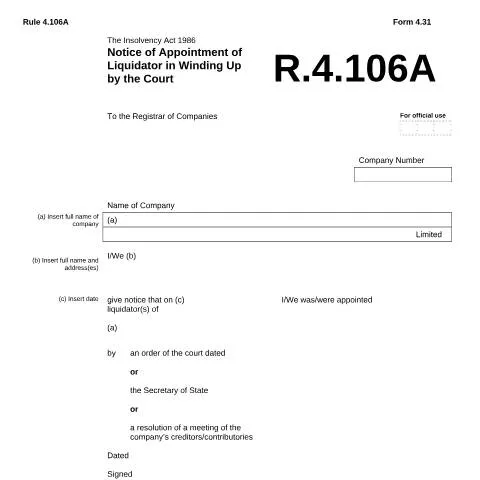
The Notice of Appointment of Liquidator is governed by the Insolvency Act 1986 and serves to officially communicate the appointment of a liquidator to the Registrar of Companies. This document is crucial because it signifies that the company is entering a formal process of winding up, which impacts various stakeholders.
Key Components of Form 4.31
- Company Name and Number: The full name and registration number of the company must be clearly stated.
- Liquidator Information: Details of the appointed liquidator, including their name and address, are essential for transparency.
- Appointment Date: The specific date of the liquidator's appointment must be included, as this marks the beginning of the winding-up process.
- Appointing Authority: The document must specify whether the liquidator was appointed by a court order, the Secretary of State, or via a resolution by creditors.
By carefully filling out these sections, stakeholders can ensure the proper notification of the company's winding-up status, which is vital for both legal and procedural compliance.
The Target Audience: Who Needs This Document?
The Notice of Appointment of Liquidator is not merely a bureaucratic requirement; it is a vital tool for various participants in the liquidation process. The following entities are particularly impacted:
Directors and Company Owners
- Understanding the implications of liquidating a company, including potential personal liabilities.
- Compliance with legal obligations to notify the Registrar.
Creditors
- Creditors are directly affected as they need to understand the status of their claims against the company.
- The appointment of a liquidator can impact the recovery of debts owed to them.
Liquidators
- Liquidators must ensure that proper procedures are followed to protect their interests and those of the creditors.
- The document serves as a formal acknowledgment of their authority to act on behalf of the company.
Understanding who needs to be informed and why is crucial in managing the complexities surrounding the winding-up process.
Procedural Steps: From Resolution to Notification
Once a company has decided to enter liquidation, there are several procedural steps that must be followed to ensure compliance with UK insolvency law. Here’s a streamlined overview:
- Resolution to Wind Up: A resolution must be passed by the company (often involving a meeting of shareholders or creditors).
- Appointment of Liquidator: A liquidator is appointed through a court order or by the creditors.
- Completion of Form 4.31: The relevant details of the liquidator and the appointment must be filled in accurately.
- Submission to Companies House: The completed Form 4.31 must be submitted to the Registrar of Companies.
- Notification to Stakeholders: All stakeholders, including creditors and employees, should be informed about the liquidation process.
This sequence of events is crucial for ensuring that the liquidation process is conducted legally and effectively.
Common Misunderstandings: Clarifying the Legal Context
In the realm of insolvency, legal jargon and processes can often lead to misunderstandings. Here are some common misconceptions about the Notice of Appointment of Liquidator:
Liquidation vs. Bankruptcy
Many assume that liquidation and bankruptcy are synonymous. However, liquidation refers specifically to the winding-up of a company, while bankruptcy pertains to individuals. Understanding this distinction is vital for directors who may be personally liable for corporate debts.
The Role of the Liquidator
A common misconception is that liquidators solely exist to sell off company assets. While this is a part of their role, they are also responsible for:
- Assessing claims from creditors
- Ensuring compliance with statutory obligations
- Distributing any remaining assets after creditors are settled
Legal Considerations: What to Keep in Mind
When dealing with the Notice of Appointment of Liquidator, several legal considerations come into play. Familiarity with these aspects can help mitigate potential pitfalls:
Data Protection Compliance
Under the Data Protection Act 2018, it is important to ensure that the personal data of all parties involved in the liquidation process is handled appropriately. This includes:
- Storing personal information securely
- Ensuring that only necessary information is shared with relevant parties
- Complying with requests for data access from stakeholders
Timeliness of Submission
Failure to submit the Form 4.31 in a timely manner can result in legal complications or delays in the winding-up process. The legal framework typically requires that the notice is submitted promptly following the appointment of the liquidator.
| Step | Action Required | Timeframe |
|---|---|---|
| Appointment of Liquidator | Secure a resolution or court order | Immediate |
| Completion of Form 4.31 | Fill out required details | Within 7 days of appointment |
| Submission | Submit to Companies House | Within statutory timeframe |
Effective Communication: Keeping Stakeholders Informed
Effective communication is paramount during the liquidation process. The Notice of Appointment of Liquidator serves as an official communication tool that must be complemented by proactive outreach to stakeholders. Here are some strategies:
Informing Employees
Employees must be kept in the loop regarding their employment status. This includes:
- Explaining potential redundancies
- Providing information on final pay and entitlements
- Outlining the support available to them during the transition
Engaging with Creditors
Creditors are often left in the dark during the liquidation process. Maintaining open lines of communication can help mitigate disputes:
- Hold meetings to update creditors on the process
- Provide regular updates on asset sales and debt recovery efforts
- Encourage creditors to submit their claims promptly
Final Thoughts: The Liquidation Journey
The path through liquidation is often fraught with challenges, yet the Notice of Appointment of Liquidator (Form 4.31) provides a necessary framework for moving forward. By ensuring adherence to legal requirements, communicating effectively with stakeholders, and understanding the intricacies of the process, companies can navigate the complexities of insolvency more effectively.
Ultimately, the key to a successful liquidation lies not just in the proper completion of Form 4.31, but in adopting a holistic approach that values transparency, compliance, and stakeholder engagement throughout the winding-up journey.
Understanding the Role of a Liquidator in the UK
When a company becomes insolvent, appointing a liquidator is a pivotal step in the winding-up process. A liquidator is a qualified professional tasked with managing the liquidation of a company. Their responsibilities include selling off assets, settling outstanding debts, and ensuring that the company's financial obligations are met in accordance with UK insolvency laws.
Liquidators can be appointed in various situations, such as voluntary liquidation initiated by the company's directors or creditors' voluntary liquidation. It's essential to understand that the liquidator's primary duty is to act in the best interests of the creditors, ensuring that they recover as much as possible from the remaining assets.
The appointment process typically involves preparing a notice of appointment, which must be filed with Companies House and communicated to all interested parties. This document outlines the liquidator’s responsibilities and confirms their authority to act on behalf of the company. It is crucial for the liquidator to be a licensed insolvency practitioner, as this guarantees adherence to the necessary legal and regulatory standards.
Furthermore, the liquidator will conduct a thorough investigation into the company's financial affairs to identify any potential misconduct or wrongful trading by directors, which can lead to further repercussions beyond the liquidation process itself.
Fill in your form directly online
No printing: type your details into the boxes of the official form, tick, then download the PDF ready to send.
- 1Type into the form boxes
- 2Tick in one click
- 3Save and download the PDF
The Legal Framework Governing Liquidation Appointments
The process of appointing a liquidator is governed by the Insolvency Act 1986, which lays out the legal foundation for both voluntary and compulsory liquidations in the UK. Understanding the nuances within this framework is crucial for company directors and stakeholders to ensure compliance and proper execution of the liquidation process.
For instance, under Section 88 of the Insolvency Act, a company can appoint a liquidator in a creditors' voluntary liquidation if an extraordinary resolution is passed by the shareholders. This must be done alongside a meeting of creditors, where the proposed liquidator is nominated and appointed. Notice of this appointment must be filed at Companies House within specific timeframes to ensure the legality of the process.
In contrast, in cases of compulsory liquidation, the appointment of a liquidator occurs when a court order is made, often due to a petition by creditors who are owed money. Here, the court will appoint an Official Receiver, and they can subsequently decide to appoint a liquidator. The legal requirements in such situations are detailed in Sections 124 to 151 of the Insolvency Act, and it is imperative to adhere closely to these stipulations to avoid any future complications.
Moreover, data protection considerations under the Data Protection Act 2018 and UK GDPR must be observed throughout the liquidation process, particularly concerning how personal and sensitive information about employees and creditors is handled and processed.
Post-Appointment Responsibilities of Liquidators
Once a liquidator has been appointed, they take on a series of responsibilities that extend well beyond merely winding up the company. One of the key duties is to communicate effectively with all stakeholders, including creditors, employees, and shareholders, providing them with updates on the progression of the liquidation process.
Liquidators must also prepare detailed reports outlining the financial status of the company and any recovery efforts made. These reports are vital for ensuring transparency and can impact the distribution of any remaining assets. Furthermore, they must ensure compliance with statutory obligations, including filing returns and paying taxes owed to HMRC.
Another crucial aspect of their role includes conducting investigations into the actions of the directors prior to the liquidation. If any wrongful or fraudulent activities are detected, the liquidator has the authority to pursue further action, which may involve reporting to the Insolvency Service for potential disqualification proceedings against the directors.
Moreover, the liquidator must handle any claims from creditors, which can be a complex task, particularly in cases where creditors may dispute the amount owed. Liquidators are responsible for assessing these claims and determining their validity based on both contractual agreements and statutory regulations.
Finally, liquidators must ensure that any recovered funds are distributed fairly among creditors, following the established order of priority in insolvency law – secured creditors, unsecured creditors, and finally, shareholders. This process must be executed with integrity and in a timely manner to uphold the liquidator's duties and maintain trust amongst all parties involved.