Navigating the WU02: A Guide to Understanding the Notice of Order of Appointment of Provisional Liquidator
The appointment of a provisional liquidator is a critical aspect of the insolvency process, often indicating that a company is facing serious financial difficulties. The WU02 document serves as the official notice for this appointment, and understanding its implications is essential for directors, stakeholders, and legal representatives. This article delves into the intricacies of the WU02, offering insights into its contents, purpose, and procedural relevance within the broader context of company insolvency.
Decoding the WU02: Key Components and Terminology
At first glance, the WU02 may appear as a standard administrative form, but it is laden with specific terminologies that define its function and importance.
Primary Elements of the WU02
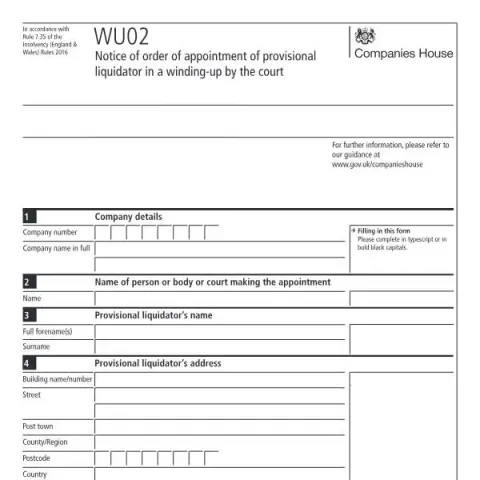
- Company Details: The document begins by requiring the full name of the company and its registration number. This information is critical as it verifies the identity of the entity undergoing liquidation.
- Court Information: It is important to mention the name of the court that issued the order, as well as the date of the court's decision.
- Provisional Liquidator’s Information: The form requires detailed contact information of the appointed provisional liquidator, including their full name, address, email, and telephone number. This allows for clear communication during the proceedings.
Understanding these components is crucial for ensuring that the WU02 is completed accurately and submitted in accordance with the applicable regulations.
Common Misinterpretations and Pitfalls
Misunderstandings regarding the WU02 can lead to significant consequences, including delays in the liquidation process or complications in legal proceedings. Below are several common areas where misinterpretations often occur:
Misidentification of the Company
One frequent error is the incorrect representation of the company name or number. It is vital to ensure that the details provided match exactly with the records at Companies House to avoid rejection of the notice.
Overlooking the Court Order
Another common misstep involves failing to attach the court order as required. The WU02 explicitly states that a copy of this document must accompany the notice; neglecting this step can result in significant delays.
Inaccurate Liquidator Information
It's important that the provisional liquidator’s information is not only complete but also accurate. Any discrepancies can complicate the communication process and hinder the operational capacity of the provisional liquidator.
Step-by-Step Usage of the WU02
Utilizing the WU02 effectively involves a detailed understanding of the process surrounding the appointment of a provisional liquidator. Here’s a step-by-step guide to navigating the procedure.
1. Preparation of Relevant Documents
Before initiating the WU02, gather all necessary documents, including:
- The court order appointing the provisional liquidator.
- Proof of the company’s financial status if required by the court.
2. Completing the WU02 Form
Fill out the WU02 form with precision. Ensure that:
- The company name and number are accurate and correspond with Companies House records.
- You provide complete details of the provisional liquidator along with their contact information.
3. Submission of the WU02
After completing the form, submit the WU02 to Companies House. While it can be sent to any of their addresses, the recommended submission address is:
The Registrar of Companies, Companies House, Crown Way, Cardiff, Wales, CF14 3UZ.
This submission must include the court order as mentioned earlier.
The Importance of Timeliness in Submitting the WU02
Timeliness is a critical aspect of the WU02 process. The appointment of a provisional liquidator often happens under urgent circumstances, and delays can exacerbate the company's financial issues. Not only does the timing of the WU02 submission affect the current status of the company, but it also influences the perceptions of creditors and stakeholders.
Impact on Creditor Relations
The prompt filing of the WU02 signals to creditors and stakeholders that the company is taking decisive action to address its financial challenges. Failing to act quickly can lead to a loss of confidence, which may further complicate recovery efforts.
Legal Implications
Additionally, the Insolvency (England & Wales) Rules 2016 stipulate timelines for various actions within the liquidation process. Adhering to these timelines, including the submission of the WU02, is essential to avoid legal penalties or further complications in the liquidation procedures.
Interconnections: The WU02 and Other Insolvency Documents
The WU02 does not exist in isolation. It is part of a larger framework of documents and notices that govern the insolvency process. Understanding how it interacts with other forms can enhance compliance and efficiency.
Related Documents to Consider
- Winding-Up Petition: This document initiates the process leading to the appointment of a provisional liquidator.
- Liquidation Accounts: These provide a financial overview of the company’s status post-appointment, helping to assess the effectiveness of the provisional liquidator.
- Final Liquidator Notice: Once the provisional liquidator's role concludes, a subsequent notice will be necessary to inform Companies House about the transition to a final liquidator.
Each of these documents plays a vital role in the overall process, and familiarity with them can streamline your experience when navigating company insolvency.
Contacting Companies House: Effective Communication
Effective communication with Companies House is essential during this process. Should any questions arise regarding the WU02 or related matters, having a clear communication strategy can alleviate confusion and expedite the process.
Utilizing Contact Information
The WU02 encourages individuals to provide a contact name and details for any queries related to the submission. While it is not mandatory, doing so can facilitate faster resolution of any issues that may arise.
Understanding the Role of Companies House
Companies House operates as the official register of companies in the UK, making it a crucial player in the insolvency process. Awareness of their protocols and expectations can significantly impact the efficiency of your submissions and queries.
A Final Note on Transparency and Public Records
It is important to note that information provided in the WU02 form will appear on the public record. This transparency is intended to protect stakeholders and maintain the integrity of the corporate governance process. Thus, ensuring that all information is correct and honest is paramount.
Fill in your form directly online
No printing: type your details into the boxes of the official form, tick, then download the PDF ready to send.
- 1Type into the form boxes
- 2Tick in one click
- 3Save and download the PDF
Potential Consequences of Incorrect Information
Providing inaccurate details can lead to unnecessary legal challenges and further complications in the liquidation process. Stakeholders, including creditors and employees, have a right to access accurate information about the company’s financial status. Therefore, due diligence in completing the WU02 is crucial.
In conclusion, the WU02 notice of appointment of provisional liquidator is a pivotal document in the liquidation process, requiring careful attention to detail, timely submission, and a clear understanding of its implications within the broader landscape of corporate insolvency. By following the guidelines outlined in this article, directors and stakeholders can navigate this complex process more effectively.
Understanding the Role of a Provisional Liquidator
A provisional liquidator is appointed in certain circumstances to manage the affairs of a company during a period of financial distress or when an insolvency process is imminent. This role is particularly crucial as it helps to safeguard the assets of the company and protect the interests of creditors and stakeholders. The appointment usually occurs before a full winding-up order is made and can be initiated by the company itself or by a creditor.
The provisional liquidator's responsibilities include assessing the company's financial situation, maintaining the company’s operations where possible, and ensuring that the company complies with legal requirements during this transitional period. It is important to note that the provisional liquidator acts under the authority of the court, which delineates their powers and obligations. They may have the authority to make decisions that can influence the outcome of the liquidation process, such as whether to continue trading or to sell off assets. Understanding these responsibilities is key for any parties involved in the potential appointment of a provisional liquidator.
Implications for Creditors and Stakeholders
The appointment of a provisional liquidator has significant implications for creditors and stakeholders of the company. For creditors, the involvement of a provisional liquidator can initially provide a sense of relief, as it indicates that the company is taking steps to address its financial difficulties. However, it can also raise concerns about the eventual recovery of debts owed. The provisional liquidator will need to determine the priority of claims against the company’s assets, which may not always work in favor of all creditors.
For stakeholders, including employees and suppliers, the impact can vary. Employees may face uncertainty regarding their employment status, especially if the company is not able to continue trading. Suppliers may need to reassess their contracts and the possibility of unpaid invoices. Clear communication from the provisional liquidator regarding the company's status and the next steps is essential to manage these concerns and expectations effectively.
Furthermore, stakeholders should be aware that the provisional liquidator must adhere to the principles outlined in the Insolvency Act 1986, which requires them to act in the best interests of all creditors and stakeholders throughout the process. This legal framework ensures that the actions taken by the provisional liquidator are fair and just, promoting transparency during the winding-up process.
Filing the WU02 Notice: Step-by-Step Guide
Filing the WU02 notice is a critical step in the appointment process of a provisional liquidator. This notice informs the court and relevant parties about the intention to appoint a provisional liquidator and the reasons behind this decision. Here is a step-by-step guide that outlines the essential procedures involved in accurately filing the WU02 notice:
- Obtain the Form WU02: The first step is to acquire the WU02 form, which can typically be found on the official government website or from the court where the application will be submitted.
- Complete the Form: Fill out the WU02 form with accurate details regarding the company, including the company's name, registration number, and the specific reasons for seeking the appointment of a provisional liquidator. It’s imperative to be clear and concise, as any inaccuracies can lead to delays or complications.
- Prepare Supporting Documents: Alongside the WU02 form, you will need to gather supporting documentation. This may include financial statements, details of creditors, and other relevant information that justifies the need for a provisional liquidator.
- File with the Court: Submit the completed WU02 form and supporting documents to the appropriate court. Ensure you have the necessary copies for your records and to serve to all relevant parties, including creditors.
- Notify Interested Parties: Once the form is filed, a notice must be served to all interested parties, including creditors and shareholders. This step is vital to ensure that all stakeholders are aware of the proceedings.
- Await Court Approval: After filing, the court will review the WU02 notice and supporting documents. If approved, they will issue an order that officially appoints the provisional liquidator, which will become effective immediately.
Following these steps diligently will help ensure that the appointment of a provisional liquidator proceeds smoothly and in accordance with the legal requirements laid out in the Insolvency Act 1986.