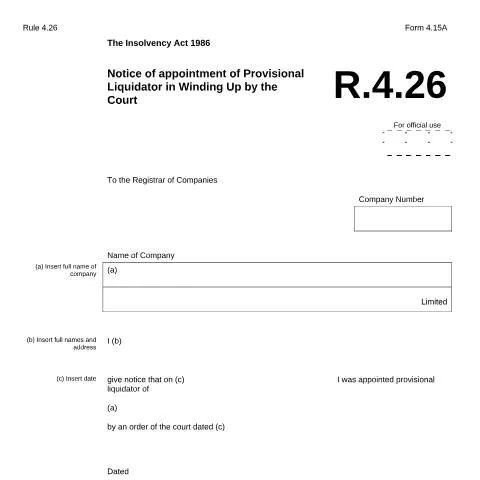
Navigating the Notice of Appointment of Provisional Liquidator (Form 4.15A)
The process of appointing a provisional liquidator is a critical step in the management of a company facing insolvency in the UK. The Notice of Appointment of Provisional Liquidator (Form 4.15A), issued by Companies House, serves as an essential tool for businesses navigating the complex waters of insolvency. Understanding the intricacies of this document is vital for directors, stakeholders, and legal representatives.
Understanding the Scope of Form 4.15A
This document is not merely a formality; it encapsulates crucial information regarding the provisional liquidator's appointment and the company's status. The Insolvency Act 1986 governs this process. The essence of the Form 4.15A lies in its role as an official notification to Companies House about the provisional liquidator’s appointment.
Key Components of the Document
- Company Number: A unique identifier assigned to the company registered with Companies House.
- Name of Company: The complete legal name of the company, followed by 'Limited' where applicable.
- Appointed Liquidator: The full name and address of the appointed provisional liquidator.
- Date of Appointment: The specific date when the court order for the provisional liquidator’s appointment was issued.
These components are foundational in ensuring that the appointment is duly recognized and recorded. It is crucial for the provisional liquidator to act swiftly to mitigate any potential complications arising from the insolvency situation.
Scenarios Necessitating the Appointment of a Provisional Liquidator
Several circumstances may compel a company to seek the appointment of a provisional liquidator. Recognizing these scenarios can guide stakeholders in understanding when to utilize Form 4.15A.
Common Situations
- Imminent Insolvency: When a company is unable to pay its debts as they fall due, a provisional liquidator can be appointed to manage the company's affairs before a full winding-up process.
- Protection Against Creditors: The appointment of a provisional liquidator can provide immediate protection against creditor actions, allowing time to restructure or negotiate settlements.
- Preventing Asset Dissipation: In cases where there is a risk of assets being disposed of by the company, the court may appoint a provisional liquidator to safeguard these assets.
These situations underline the necessity of Form 4.15A. It acts as a clear declaration of the company’s status and the measures being undertaken to address its financial difficulties.
Key Concepts to Grasp for Effective Application
Understanding certain key concepts is paramount when dealing with the provisional liquidation process. These concepts not only facilitate a smoother procedural flow but also help in making informed decisions.
Understanding the Role of a Provisional Liquidator
A provisional liquidator is typically appointed by the court to oversee a company’s assets and operations during a critical period of financial distress. Their responsibilities include:
- Preserving Company Assets: Ensuring that the assets are not mismanaged or sold off without due process.
- Conducting Investigations: Looking into the financial dealings of the company to assess the viability of continuing operations or pursuing restructuring.
- Reporting to the Court: Regular updates and reports on the status of the company and the actions taken are essential for transparency.
The Significance of the Court Order
The appointment of a provisional liquidator is not automatic; it requires a court order. This court order is crucial for the legitimacy of the appointment and outlines the powers and limitations placed on the provisional liquidator. It is essential to understand:
- The specific authority granted to the provisional liquidator.
- Any restrictions imposed on the company’s operations during the provisional liquidation period.
The court order must be referenced in Form 4.15A, indicating that the appointment is backed by judicial authority.
Common Misinterpretations and Pitfalls
While the process may seem straightforward, there are numerous pitfalls that can complicate the appointment of a provisional liquidator. Awareness of these common misinterpretations can prevent costly mistakes.
Misunderstandings About Responsibilities
- Assuming Full Control: It is a misconception that a provisional liquidator has complete control over the company. Their role is to manage the company's assets and affairs under the court's supervision, not to make unilateral decisions.
- Underestimating Reporting Obligations: Provisional liquidators must keep the court updated, failing which can lead to legal repercussions.
Inaccuracies in Notification
Errors in completing Form 4.15A can lead to significant delays and complications. Common issues include:
- Incorrect or incomplete company name or number.
- Missing court order details, which can invalidate the notice.
Attention to detail when completing the form is crucial, as even minor inaccuracies can have far-reaching implications.
Utilizing Form 4.15A in Practical Steps
Once the decision to appoint a provisional liquidator has been made, utilizing Form 4.15A effectively is essential. Below, we outline a step-by-step approach to ensure successful submission.
Step-by-Step Process
- Consult with Legal Advisors: Before taking any action, consult with legal experts who specialize in insolvency to understand the implications of appointing a provisional liquidator.
- Obtain the Court Order: Ensure that the court order for the provisional liquidator's appointment is secured. This document will be necessary for Form 4.15A.
- Complete Form 4.15A: Fill out the form with accurate details. Pay particular attention to the company name, number, and the court order date.
- Submit to Companies House: File the form with Companies House. Ensure you retain a copy for your records.
- Notify Stakeholders: Inform all relevant stakeholders, including creditors and employees, of the appointment of the provisional liquidator.
Following these steps carefully can help streamline the process and prevent unnecessary delays.
Documenting the Provisional Liquidation Process
Documenting the provisional liquidation process is crucial for maintaining transparency and ensuring compliance with legal obligations. This documentation not only serves as a record of events but also helps in future proceedings.
Essential Documentation to Maintain
- Copies of Court Orders: Keep a record of all court orders related to the provisional liquidation.
- Provisional Liquidator Reports: Regularly compile and file reports provided by the provisional liquidator regarding the company's status.
- Correspondence: Maintain copies of all correspondence with Companies House and other stakeholders.
Proper documentation can serve as a protective measure and provide clarity in case of disputes or inquiries.
Final Considerations and Best Practices
As the appointment of a provisional liquidator marks a significant point in a company’s trajectory, engaging with the process thoughtfully and methodically is paramount. Here are some best practices to follow:
Emphasizing Communication
Keeping lines of communication open among all parties — including the provisional liquidator, court, and stakeholders — is vital. Regular updates and discussions can help address concerns as they arise, providing reassurance to all involved.
Seeking Professional Guidance
Insolvency matters can be complex and fraught with legal nuances. Engaging with professionals who have expertise in insolvency law can help navigate the procedural landscape effectively and ensure compliance with all regulations.
By taking a proactive approach and utilizing Form 4.15A correctly, companies can manage the potentially distressing process of insolvency with greater confidence and clarity.
Understanding the Role of a Provisional Liquidator
A provisional liquidator is often appointed when a company is facing financial distress, and immediate intervention is necessary to protect the interests of creditors and shareholders. The provisional liquidator has a unique role, acting as an interim manager of the company's affairs while the court makes decisions regarding its future. This individual will take control of the company's assets, assess its financial status, and make crucial decisions about the company's operations during this critical period.
The appointment of a provisional liquidator can occur under various circumstances, typically when there are signs of insolvency or when there is a risk that the company's assets are being mismanaged. The court may appoint a provisional liquidator upon the petition of a creditor, a shareholder, or even the company itself. Their responsibilities include safeguarding company assets, preparing reports on the company’s financial position, and ensuring compliance with existing regulations, particularly under the Insolvency Act 1986.
Fill in your form directly online
No printing: type your details into the boxes of the official form, tick, then download the PDF ready to send.
- 1Type into the form boxes
- 2Tick in one click
- 3Save and download the PDF
It’s also important to note that the powers of a provisional liquidator are generally limited. They cannot sell the company’s assets without court approval, and any decisions made must reflect the best interests of the creditors. This role is pivotal in maintaining order and transparency during what can often be a chaotic time for the company involved.
The Process of Appointing a Provisional Liquidator
The process for appointing a provisional liquidator is relatively straightforward but must be followed meticulously to ensure compliance with the law. The initiation typically begins with a formal application to the court, which must include specific details, such as the reasons for requiring a provisional liquidator and evidence of the company’s financial distress.
Once the application is submitted, the court will schedule a hearing where all interested parties can present their views. It’s critical to prepare a robust case that highlights the necessity of the provisional liquidator's appointment. If the court is satisfied with the evidence, it will issue an order to appoint the provisional liquidator, detailing their powers and duties.
Upon their appointment, the provisional liquidator will notify all relevant parties, including HMRC and creditors, of the situation. Communication is a vital component of this process, as all stakeholders must be informed about the appointment and any potential implications for them. Additionally, the provisional liquidator is required to provide regular updates to the court regarding the company's status and any actions taken in their interim management role.
Importantly, the timeframe for appointing a provisional liquidator can vary depending on the complexity of the case and the court’s schedule. Typically, a decision can be made within a matter of weeks, but it’s crucial to prepare for potential delays, especially in more intricate situations involving multiple creditors or complex financial arrangements.
Implications for Stakeholders During a Provisional Liquidation
The appointment of a provisional liquidator can have significant implications for various stakeholders involved with the company. For employees, the situation can lead to uncertainty regarding their job security. In many cases, the provisional liquidator will assess the viability of the company and determine whether it can continue operating or if it should proceed towards full liquidation. Employees should stay informed about their rights through their contracts and any applicable collective agreements.
For creditors, the provisional liquidator plays an essential role in managing the company’s debts and assets. Creditors should be aware that, although their claims may be temporarily on hold, the provisional liquidator is tasked with ensuring that any payments due are met, where possible. Creditors will be invited to submit their claims, and the liquidator will prioritize these based on legal standings, often following the statutory order of preference outlined in the Insolvency Act.
In cases involving shareholders, the situation can become more complex. Shareholders may find their investments at risk, especially if the provisional liquidator recommends the outright liquidation of the company. However, the provisional liquidator might also explore restructuring options that could ultimately benefit shareholders, although this is subject to the company’s financial health and market conditions.
Ultimately, stakeholders should remain engaged during this process and communicate openly with the provisional liquidator, as doing so can provide clarity and improve their chances of recovering what is owed to them, whether that be through restructuring or liquidation.