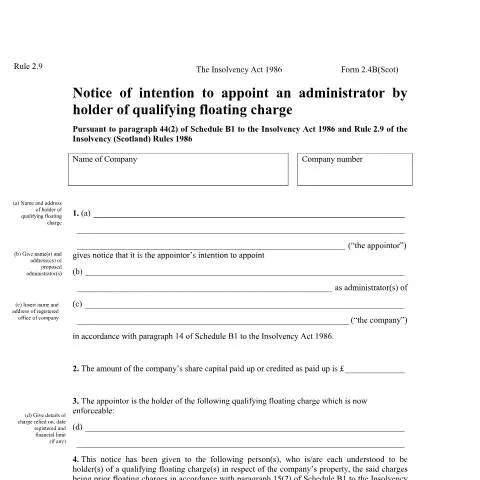
Navigating the Notice of Intention to Appoint an Administrator
Understanding the complexities of corporate insolvency can be daunting, especially for business owners facing financial distress. The Notice of Intention to Appoint an Administrator by Holder of Qualifying Floating Charge (Form 2.4B, Scotland) serves as a critical document in the insolvency process under the Insolvency Act 1986. This guide aims to provide a thorough exploration of the document's components, its application, and its implications for businesses contemplating administration.
Key Components of Form 2.4B
The Form 2.4B is not merely a procedural document; it offers a structured way for the holder of a qualifying floating charge to initiate the appointment of an administrator. Here’s a breakdown of its essential sections:
1. The Appointor's Declaration
- The appointor must clearly state their intention to appoint one or more administrators.
- It should include the appointor’s name and the company’s details, making it crucial to ensure accuracy to avoid confusion later in the process.
2. Company Capital and Qualifying Floating Charge
In this section, the appointor specifies the paid-up share capital of the company and details about the qualifying floating charge. This charge is a vital part of the insolvency landscape, allowing creditors to secure their claims against a company's assets.
3. Notification of Other Charge Holders
Form 2.4B requires that the appointor notifies any other holders of qualifying floating charges. This disclosure is critical as it ensures transparency and allows for potential challenges to the appointment.
4. Current Insolvency Proceedings
This section addresses whether the company is currently undergoing insolvency proceedings. If so, it has significant implications for the process of appointing an administrator.
Practical Pathways to Utilize Form 2.4B
To effectively use the Form 2.4B, it’s essential to follow a structured approach:
Step 1: Gather Required Information
- Compile the necessary company details, including the name, registered office address, and company number.
- Collect data on the qualifying floating charge, including registration details and financial limits.
Step 2: Complete the Notice Accurately
Accuracy is paramount. Every section must be filled out with precision to avoid complications later. For instance, ensure the appointor’s details are unambiguous, as any errors could lead to delays or disputes.
Step 3: Issue the Notice
Once completed, the notice must be lodged with the relevant court. This step formalizes the intent to appoint an administrator and triggers subsequent actions.
Interconnections with Other Key Documents
The Notice of Intention to Appoint an Administrator does not function in isolation. It interacts with various other documents throughout the insolvency process:
1. The Administration Application
Once Form 2.4B is lodged, the next step often involves the completion of an administration application. This document details the grounds for seeking administration and typically accompanies Form 2.4B.
2. Notices to Creditors
After appointing an administrator, the creditors must be notified. This action is paramount in maintaining transparency and ensuring all stakeholders are informed about the administration proceedings.
Understanding the Legal Landscape
The process outlined in Form 2.4B is underpinned by legal frameworks that govern insolvency in the UK:
1. The Insolvency Act 1986
This Act provides the legislative foundation for insolvency procedures in Scotland and the rest of the UK. Understanding its key provisions is vital for anyone involved in the administration process.
2. The Insolvency (Scotland) Rules 1986
These rules set out the procedural standards that must be followed when navigating insolvent circumstances in Scotland. Familiarity with these rules is essential for anyone looking to utilize Form 2.4B effectively.
Frequently Encountered Procedural Questions
Various common queries arise in connection to the use of Form 2.4B. Addressing these can illuminate the process for more informed decision-making:
1. What Happens if Other Charge Holders Object?
In cases where other holders of qualifying floating charges object to the appointment of an administrator, it may lead to complications. The appointor must navigate these objections carefully, possibly necessitating legal advice.
2. What are the Implications of Existing Insolvency Proceedings?
If a company is already subject to insolvency proceedings, the implications can be significant. The appointor may need to consider whether to proceed with the appointment or seek other remedies.
Crucial Concepts in the Administration Process
To effectively utilize Form 2.4B, it is essential to grasp several key concepts:
1. Qualifying Floating Charge
A qualifying floating charge is a type of security interest that allows the charge holder to secure their debts against the company’s assets. Understanding its nature and implications is crucial for the appointor.
2. Administrator’s Role
The appointed administrator assumes control of the company to manage its affairs, with the main aim of rescuing the business wherever possible or ensuring a better return for creditors. Familiarity with this role can help set proper expectations during the administration process.
Conclusion: Maximizing the Effectiveness of the Notice of Intention
The Notice of Intention to Appoint an Administrator (Form 2.4B) is an essential tool for businesses facing financial challenges. By understanding its structure, interrelations with other documents, and the broader legal framework, appointors can navigate the complexities of insolvency proceedings more effectively. While the road ahead may be fraught with challenges, familiarity with this process can empower stakeholders to make informed decisions to safeguard their interests.
Understanding the Qualifying Floating Charge in the Context of Administration
To comprehend the implications of Form 2.4B and the process of appointing an administrator, it is essential to grasp the nature of a qualifying floating charge. A qualifying floating charge is a type of security interest over a company’s assets that allows the company to use those assets in the ordinary course of business while still providing security to the lender.
The importance of this charge lies in its flexibility; it enables companies to continue trading while under financial distress, a crucial factor for preserving value in insolvency situations. The holder of a qualifying floating charge has the right to appoint an administrator without the need for a court order, which can expedite the process significantly. It is vital to ensure that the charge is valid under the Companies Act 2006 and properly registered with Companies House.
In Scotland, the legal framework governing floating charges differs slightly from that in England and Wales, so stakeholders must be aware of these nuances. When considering a notice of intention to appoint an administrator, the holder must check whether the floating charge qualifies and if it is adequately documented. Furthermore, understanding how this charge interacts with other forms of creditor security can be instrumental in crafting a strategy for both the appointment of the administrator and the overall insolvency process.
Steps Involved in Completing Form 2.4B
Form 2.4B is a specific statutory form required for the notice of intention to appoint an administrator by the holder of a qualifying floating charge in Scotland. Completing this form accurately is crucial to ensuring compliance with the Insolvency Act 1986. Below are detailed steps to follow when completing Form 2.4B:
- Gather Company Information: Ensure you have the company’s registered name and number, as this information must be accurately reflected on the form.
- Details of the Charge Holder: Clearly state the name and contact details of the qualifying floating charge holder, including any relevant addresses. This may include email and physical addresses for communication.
- Outline the Intention: State the intention to appoint an administrator and the reasons for this decision. It is advisable to keep this section clear and concise, focusing on the financial distress faced by the company.
- Attach Necessary Documentation: Supporting documents such as a copy of the floating charge agreement should be attached. Ensure that the charge is properly registered to avoid complications later.
- Signing the Form: The form must be signed by the individual making the application. If the holder is a corporate entity, an authorised signatory should sign on behalf of the company.
Once completed, the form should be submitted to the relevant parties, including notifying the company in question and ensuring compliance with any statutory requirements.
Implications of Filing a Notice of Intention to Appoint an Administrator
Filing a notice of intention to appoint an administrator under Form 2.4B carries significant implications for both the company and its creditors. This process acts as an initial step in the administration process, providing a temporary breathing space for the company while the administrator is appointed. Here are several key implications to consider:
- Moratorium Protection: Once the notice is filed, a moratorium is automatically put in place, preventing most creditors from taking legal action against the company. This allows the company some time to regroup, potentially leading to a viable turnaround strategy.
- Impact on Employees: The filing does not automatically terminate employment contracts, but it often signals potential redundancies in the near future. Employees should be informed transparently about the situation and what it means for their roles.
- Potential for Restructuring: During the administration period, the appointed administrator can devise a plan to restructure the company’s operations, potentially preserving jobs and value. This plan may include selling parts of the business or renegotiating contracts with suppliers and customers.
- Creditor Prioritisation: Creditors should be aware that the moratorium may affect their ability to recover debts. The administrator will have the responsibility to act impartially, considering all creditors' interests while navigating the administration process.
- Legal and Financial Consequences: Misfiling or failing to comply with the requirements set forth in the Insolvency Act can lead to legal challenges. It is critical to ensure that the process is conducted with due diligence to avoid any potential repercussions.
Overall, the implications of filing a notice of intention to appoint an administrator are far-reaching. Stakeholders must be proactive in understanding their rights and obligations throughout this complex process.