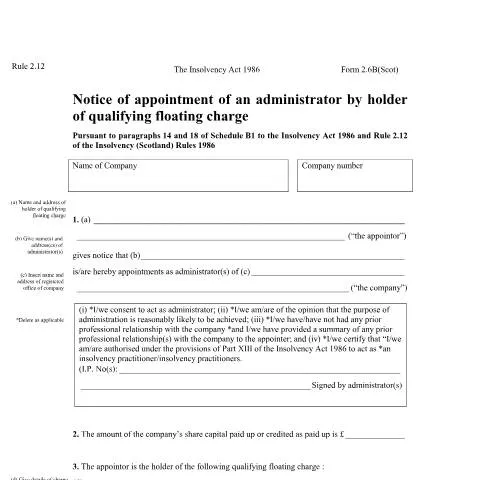
Understanding the Notice of Appointment of Administrator: Form 2.6B (Scotland)
In the complex world of insolvency, Form 2.6B serves as a vital tool for holders of qualifying floating charges in Scotland. This notice provides a formal mechanism for appointing an administrator, a key figure in insolvency proceedings. Understanding the intricacies of this document is crucial for creditors, practitioners, and businesses facing financial difficulties. Below, we explore the essential elements and practical implications of Form 2.6B, guiding you through its application in real-world scenarios.
The Role of the Administrator and Its Significance
An administrator is appointed to manage the affairs of a company in financial distress. The role of the administrator is multifaceted, encompassing several responsibilities that are central to the administration process:
- Rescuing the Company: The primary aim of appointing an administrator is to rescue the company as a going concern, preserving jobs and value.
- Maximising Returns for Creditors: If rescue is not feasible, the administrator must sell the company's assets to maximize returns to creditors.
- Ensuring Compliance: The administrator must ensure that all actions comply with legal requirements, notably the Insolvency Act 1986.
Understanding the significance of the administrator's role can help stakeholders grasp the broader implications of Form 2.6B. The notice not only facilitates the appointment but also sets the stage for subsequent actions and decisions regarding the company's future.
Breaking Down the Notice: Essential Components
The Form 2.6B contains several critical sections that provide necessary information regarding the appointment:
- Appointment Details: The first section includes the name of the appointor and the administrator along with the company name and registration number.
- Consent and Qualifications: The administrators must declare their consent to act and provide a summary of any prior professional relationships with the company.
- Share Capital: The notice requires details of the company’s paid-up share capital, indicating its financial standing.
- Details of the Floating Charge: This section outlines the qualifying floating charge held by the appointor, which underpins the authority to make the appointment.
- Prior Charges: The notice addresses whether any prior qualifying floating charges exist and details their holders.
This structured format ensures clarity and provides a comprehensive overview of the situation, which is essential for all parties involved.
Practical Steps to Utilize Form 2.6B Correctly
To effectively navigate the application process for Form 2.6B, consider the following practical steps:
- Gather Required Information: Ensure that you have all necessary company details, including the name, registration number, and share capital.
- Document Relationships: Prepare a summary of any prior professional relationships with the company to accompany the notice.
- Review Existing Charges: Confirm whether any prior qualifying floating charges exist and obtain consent from their holders if applicable.
- File the Notice: Submit the completed Form 2.6B to the relevant court, ensuring all sections are filled out accurately to avoid complications.
- Communicate with Stakeholders: Keep all stakeholders informed about the appointment and its implications for the company.
Following these steps can significantly enhance the efficacy of the administration process and reduce the likelihood of procedural delays.
Common Misinterpretations Regarding Form 2.6B
Despite its importance, there are frequent misinterpretations regarding the use of Form 2.6B that can lead to complications:
- Mistaking “Floating Charge” for “Fixed Charge”: A qualifying floating charge is distinct from a fixed charge and has specific legal implications that should not be confused.
- Assuming Automatic Rights: Some appointors may mistakenly believe that holding a qualifying floating charge automatically entitles them to appoint an administrator without fulfilling all legal requirements.
- Overlooking Prior Charges: Not addressing prior qualifying floating charges can undermine the validity of the appointment and lead to legal challenges.
Awareness of these misunderstandings is essential for all parties involved, ensuring that the appointment process is conducted smoothly and in compliance with the law.
Who Should Consider Using Form 2.6B?
This notice is particularly relevant for specific stakeholders within the business ecosystem:
- Creditors with Qualifying Floating Charges: Those holding such charges have the right to initiate administration proceedings to safeguard their interests.
- Insolvency Practitioners: Professionals engaged in insolvency must be well-versed in this process to effectively advise their clients.
- Companies Facing Financial Distress: Businesses at risk of insolvency should understand the implications of appointing an administrator and how Form 2.6B facilitates this process.
Recognizing the target audience helps tailor the approach to the notice, making it a more effective tool for those facing demanding circumstances.
Legal Framework: Contextualizing Form 2.6B
The legal framework surrounding Form 2.6B is rooted in the Insolvency Act 1986 and subsequent amendments. Familiarity with these legal underpinnings is crucial for understanding how the notice operates within the broader context of insolvency law in Scotland:
- Insolvency Act 1986: This act lays down the principles governing insolvency, including the appointment of administrators and the rights of creditors.
- Schedule B1: It details the administration process, stipulating how and when administrators can be appointed and their roles post-appointment.
- Insolvency (Scotland) Rules 1986: These rules govern procedural aspects of insolvency in Scotland, including the filing and management of notices like Form 2.6B.
Understanding this framework is vital for ensuring compliance and safeguarding stakeholder interests during insolvency proceedings.
Limitations and Considerations of Form 2.6B
While Form 2.6B plays a pivotal role in the administration process, it is important to consider its limitations:
- Not a Guarantee of Outcome: Appointing an administrator does not guarantee the company will be rescued; various external factors can impact the effectiveness of the administration.
- Requires Additional Documentation: The notice must be supported by further documentation that demonstrates compliance with legal requirements, which can complicate the process.
- Potential for Legal Challenges: If not executed correctly, the appointment may be contested by creditors or other stakeholders, leading to prolonged disputes.
Being aware of these limitations ensures that stakeholders proceed with caution and seek professional advice as necessary.
Final Thoughts on Navigating Form 2.6B
Navigating the complexities of Form 2.6B requires diligence, attention to detail, and a solid understanding of the legal framework that underpins it. For creditors and insolvency practitioners, this document is not just a procedural formality; it represents a critical juncture in the survival of a company facing financial difficulties. By following the outlined steps, avoiding common pitfalls, and acknowledging the legal context, stakeholders can maximize the potential benefits of administration while safeguarding their interests.
Understanding the Role and Responsibilities of an Administrator
When a company enters into administration, it is crucial to understand the key role that the administrator plays in the process. An administrator is appointed to manage the affairs of the company, ensuring that creditors' interests are protected while trying to rescue the company as a going concern wherever possible. The administrator has the authority to make significant decisions regarding the company’s assets and operations, influencing the overall outcome of the administration process.
One of the primary responsibilities of an administrator is to assess the financial state of the company. This includes reviewing all assets and liabilities to formulate a plan that maximizes returns to creditors. Administrators are required to act in the best interests of the creditors collectively, which means they must balance the different interests of various stakeholders, including secured and unsecured creditors.
Furthermore, administrators must adhere to legal requirements as laid out in the Insolvency Act 1986, including preparing and submitting reports to creditors and the courts. These reports provide transparency and allow creditors to understand the progress of the administration. It's also the administrator's job to assess whether there are viable options for rescuing the business, such as restructuring or selling parts of the business, which could help in repaying debts.
Filing the Notice of Appointment: Key Considerations and Procedures
The process of filing a Notice of Appointment of Administrator is one laden with procedural considerations that need meticulous attention. The form 2.6B must be accurately completed and submitted to the court alongside the relevant appointment documentation. It is important to ensure that all details are correct, inclusive of the name and address of the appointee, as well as the details of the qualifying floating charge that permits the appointment.
Once the notice is filed, it must be registered with the Companies House. This registration is not merely a formality; it serves to inform creditors and the public of the administration process and the appointed administrator's details. This is crucial for transparency and allows interested parties to ascertain who is managing the company’s affairs.
Any delays or inaccuracies in filing the Notice of Appointment can lead to complications. For instance, if the notice is not filed promptly, it could hinder the administrator’s ability to act effectively and could potentially expose them to legal repercussions. It is advisable to seek professional guidance throughout this process to ensure compliance with all statutory obligations, thereby preventing any unexpected challenges that could arise from improper filing.
Coping with the Aftermath: What Comes Next for Creditors and Stakeholders
After the Notice of Appointment is filed and the administrator has been appointed, a significant change occurs in the management of the company. Creditors should be prepared for the implications this has on their claims against the company. An important aspect to remember is that, once administration commences, the rights of creditors to initiate legal proceedings against the company are restricted. This moratorium is designed to provide the administrator with breathing space to assess the situation without the immediate threat of legal actions.
Creditors will receive updates from the administrator regarding the progress of the administration. They are entitled to a report from the administrator within a specified timeframe—usually within eight weeks of the appointment—detailing the company's financial status and outlining proposed courses of action. This includes information about any assets that may be sold to recover debts.
Stakeholders, including employees, suppliers, and customers, also experience the effects of the administration. Employees may face uncertainty over their jobs, while suppliers might find their contracts renegotiated or terminated as the administrator assesses the company’s operational viability. It is essential for both creditors and stakeholders to stay informed throughout the administration process, as this knowledge will help them navigate the uncertain waters that often follow a company entering administration.