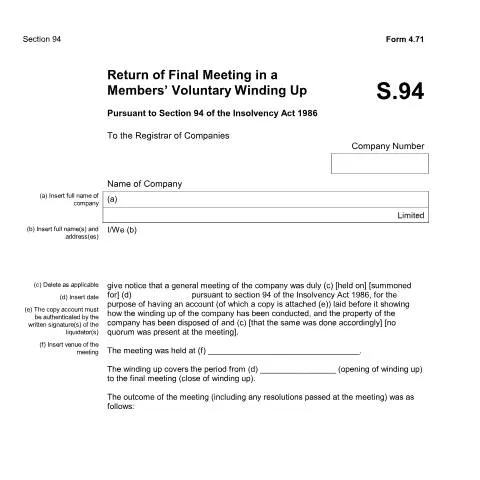
Understanding the Final Meeting Notice: A Key Step in Members' Voluntary Winding Up
The process of winding up a company can be intricate, and the notice of the final meeting, particularly the Form 4.71 issued by Companies House, plays a crucial role in this procedure. This document serves as a formal notification of the last meeting of a company that is undertaking a members' voluntary winding up, a scenario typically involving solvent companies that wish to cease operations in an orderly fashion. Understanding the implications and usage of this notice is essential for company directors and liquidators alike.
The Role of the Final Meeting in Company Winding Up
A final meeting is a pivotal part of the winding-up process. It serves as a platform for the liquidator to present an account of the winding-up activities to the company’s members. This account must detail how the company's affairs were managed throughout the winding-up period and how the company's assets were disposed of. Form 4.71 not only notifies the registrar of this meeting but also encapsulates the outcomes and any relevant resolutions passed.
Who Should File the Notice?
- Liquidators: They are predominantly responsible for filing the notice as part of the winding-up process.
- Company Directors: Understanding the requirements of Form 4.71 is critical as they oversee the winding up and must ensure that it adheres to legal standards.
- Company Members: Members should stay informed about the meeting’s outcomes as they directly affect their interests in the company.
Key Components of Form 4.71
Form 4.71 contains essential information that must be accurately presented. The components include:
- Company Information: The official name and registration number of the company must be stated clearly.
- Meeting Details: This section includes the date of the meeting and the venue where it was held.
- Winding Up Account: A detailed account of how the winding up has been conducted and the disposal of assets must be attached. This account should be duly signed by the liquidator to authenticate it.
- Outcome of the Meeting: It includes a summary of resolutions passed during the meeting, which can be critical for future reference.
Navigating the Winding Up Process: Step by Step
For those involved in the winding-up process, following a structured approach is vital to ensure compliance with legal obligations. Here’s how to effectively navigate through this:
- Initiate the Winding Up: Decide on the voluntary winding up and appoint a liquidator.
- Prepare Required Documentation: This includes financial statements, liquidation details, and finally, the notice of the final meeting.
- Conduct the Final Meeting: Hold the meeting, ensuring all members are invited and the agenda is well communicated.
- Complete Form 4.71: Fill out the notice with all requisite information, ensuring accuracy to prevent legal complications.
- Submit to Companies House: File the notice promptly with Companies House to inform them of the meeting’s occurrences and outcomes.
- Maintain Records: Keep copies of all documentation for your records, as they may be needed for future reference.
Interconnections with Other Documents
Form 4.71 does not operate in a vacuum. It interacts with several other documents that are central to the winding-up process:
- Winding Up Resolutions: Resolutions passed during the general meeting must be documented properly, as they may influence the decisions made during the final meeting.
- Liquidator’s Final Account: This account, which details the financials of the winding up, is a critical attachment to the Form 4.71.
- Other Notices: Prior notices of meetings during the winding up period must be consistent with the final meeting notice.
The Legal Framework Surrounding Form 4.71
The issuance and processing of Form 4.71 fall under the purview of the Insolvency Act 1986. Section 94 specifically outlines the necessity for such a meeting in the case of members' voluntary winding up. It is essential for all parties involved to understand the legalities surrounding this process to ensure compliance and avoid potential liabilities. Key aspects of the legislation include:
- Rights of Members: The Act protects members' interests, allowing them a chance to review the winding up and voice concerns.
- Liquidators' Responsibilities: Liquidators are bound by law to act in the best interests of the company and its members, ensuring transparency throughout the process.
- Consequences of Non-Compliance: Failing to adhere to the requirements set forth in the Act can lead to legal repercussions for the directors and liquidators involved.
Common Misinterpretations in the Winding Up Process
While navigating the winding-up process, individuals often encounter misunderstandings that can lead to complications. Here are some common misinterpretations related to Form 4.71:
- The Purpose of the Final Meeting: Some may mistakenly view the final meeting as merely a formality. In reality, it is a critical checkpoint for transparency and accountability.
- Liquidator's Role: It is a common misconception that the liquidator has absolute control. They must operate within the framework of the law and respect the rights of the company’s members.
- Immediate Closure of Company: Filing Form 4.71 does not signify the immediate closure of the company; it is only a part of the winding-up journey and includes several necessary steps post-filing.
Potential Challenges and Mitigation Strategies
Those involved in administering or managing the final meeting can face various challenges. Addressing these proactively can mitigate risks:
- Record Keeping: Ensure all documentation is meticulously maintained and organized to avoid confusion during the final meeting.
- Clear Communication: Maintain open lines of communication with all stakeholders to ensure that everyone is on the same page regarding the meeting logistics and expected outcomes.
- Professional Advice: Consider consulting with legal or financial advisors when navigating complex issues surrounding the winding-up process, particularly if there are any ambiguities or disputes among members.
The Importance of Timeliness in Filing
Timeliness cannot be overstated within the winding-up context. There are critical deadlines that must be recognized:
- Final Meeting Notification: The notice of the final meeting must be submitted to Companies House promptly after the meeting takes place.
- Compliance with Legal Timeframes: Adhering to deadlines outlined in the Insolvency Act will ensure smooth processing and minimize potential legal ramifications.
Understanding the Limitations of Form 4.71
While Form 4.71 is integral to the winding-up process, it has its limitations. Recognizing these can help manage expectations:
- Scope of Information: Form 4.71 does not encompass the entirety of the winding-up details; it merely summarizes the final meeting and outcomes.
- Not a Replacement for Full Accounts: The notice should not be seen as a substitute for comprehensive financial accounts, which are still necessary for a complete understanding of the company’s situation.
- Reaction to Outcomes: The document does not dictate the actions required post-meeting decisions; further steps may be necessary based on the resolutions passed.
Understanding the Final Meeting Process in Members' Voluntary Liquidation
The final meeting in a members' voluntary winding up is an essential stage in the dissolution of a company. It typically follows the completion of the liquidation process, where all assets have been sold, and debts settled. This meeting is crucial as it serves to formally conclude the winding-up process and allows the members to review the liquidator's final accounts. Before this meeting can be convened, however, specific legal requirements must be met to ensure compliance with the relevant regulations under the Insolvency Act 1986.
To initiate this process, the liquidator must prepare a final account, which includes a summary of the assets realized, the expenses incurred, and the distribution of the remaining assets to the shareholders. This document is vital as it demonstrates the liquidator’s adherence to their fiduciary duties and transparency with the members. A notice must then be sent out to all members, detailing the time and place of the final meeting along with an agenda that outlines what will be discussed.
Members must be given proper notice of the meeting, adhering to the requirements set out in the company's Articles of Association and the Insolvency Act. Typically, a minimum of 14 days' notice is required, and this notice must be issued in writing, highlighting the importance of ensuring that all members have adequate time to prepare and attend the meeting. This notice should also inform members of their right to ask questions regarding the final accounts and the winding-up process.
Legal Implications of Non-Compliance with Notice Requirements
Failure to adhere to notice requirements can result in significant legal implications for the liquidator and the members involved. If members feel inadequately notified, they may challenge the validity of the final meeting and any resolutions passed. This can lead to delays in the winding-up process and potentially undermine the liquidator's authority. Furthermore, any decisions made at the meeting could be contested, causing further complications in the dissolution of the company.
Fill in your form directly online
No printing: type your details into the boxes of the official form, tick, then download the PDF ready to send.
- 1Type into the form boxes
- 2Tick in one click
- 3Save and download the PDF
It is essential for liquidators to maintain meticulous records of all communications with members. This includes copies of the notice sent and any responses received. Such documentation serves as evidence of compliance and is invaluable should any disputes arise during or after the final meeting. Moreover, if a member does not receive notice, the liquidator may be required to reconvene the meeting, thus prolonging the liquidation process and incurring additional costs.
In the event of a challenge, the liquidator may have to justify their actions to the court, which can lead to further scrutiny and potential liabilities. Therefore, taking legal advice prior to launching the final meeting can provide a safeguard against such repercussions, ensuring that the process remains smooth and compliant with all statutory requirements.
Post-Meeting Procedures and Filing Obligations
Once the final meeting has taken place and the resolutions have been passed, the liquidator has specific filing obligations to fulfill. Within a given period after the meeting, the liquidator must submit a final return to Companies House, detailing the outcomes of the meeting, the liquidator’s final accounts, and a statement confirming that the winding-up process has been completed. This is a critical step to ensure that the company is officially dissolved and removed from the register. Failure to make this filing can leave the company on the register indefinitely, leading to unnecessary complications for the former members.
Alongside this return, any remaining documents related to the liquidation process must be stored for a statutory period, typically seven years, to comply with legal requirements and to be made available should further inquiries arise. This record-keeping is essential not only for compliance purposes but also for protecting the liquidator from possible claims from disgruntled members or creditors.
In summary, the final meeting in a members' voluntary winding up is not merely a formality but a legally significant event that requires careful planning, compliance with statutory requirements, and thorough communication with all members. By understanding the processes and implications involved, liquidators can ensure a smooth conclusion to the company's affairs and protect themselves from potential legal challenges.