Understanding the Notice of Automatic End of Administration: Form 2.21B (Scotland)
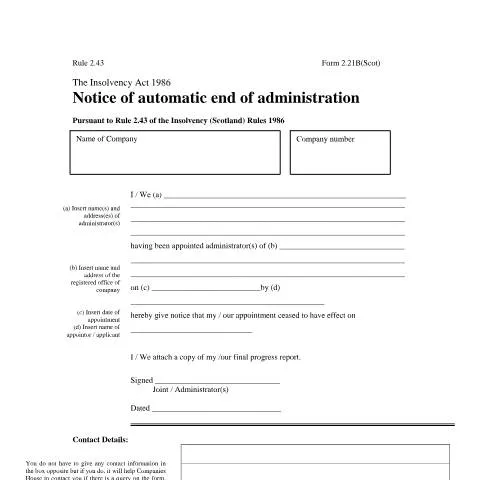
The Notice of Automatic End of Administration, formally recognised as Form 2.21B, plays a crucial role in the insolvency process in Scotland. This document is pivotal for administrators as it signifies the termination of their appointment in relation to a company that has undergone administration. Understanding its significance and functionality is essential for administrators, creditors, and other stakeholders involved in the process.
Key Components of Form 2.21B
Form 2.21B is not merely a pro forma; it encapsulates vital information that outlines the cessation of an administrator's role. The components of this document include:
- Administrator's Details: Names and addresses of the appointed administrators.
- Company Information: Name and address of the registered office of the company in question.
- Appointment Date: The date on which the administrators were appointed.
- Appointor Details: Name of the individual or entity that appointed the administrators.
- Final Progress Report: A mandatory attachment that provides an overview of the administration process.
- Signature and Date: The document requires the signatures of the administrators along with the date of submission.
Each of these elements serves a specific function in documenting the transition from administration back to normal business operations or to another insolvency process.
How to Navigate the Use of Form 2.21B
Effectively using Form 2.21B requires a systematic approach. Here’s a step-by-step guide to ensure that the process is followed correctly:
- Compile Necessary Information: Gather all required details about the company, the administrators, and the appointor.
- Draft the Document: Fill out Form 2.21B with accurate information. Ensure that all fields are completed to prevent delays.
- Attach the Final Progress Report: This report should encapsulate the administration's proceedings, outcome, and any remaining issues.
- Sign the Document: Both administrators must sign the form, affirming the accuracy of the provided information.
- Submit to Companies House: Send the completed notice to Companies House at the designated address provided in the form.
Interconnections with Other Insolvency Documents
Form 2.21B does not exist in isolation; it interacts with several other documents in the insolvency process. Understanding these interconnections is vital:
| Document | Purpose |
|---|---|
| Initial Administration Order | Initiates the administration process, providing a legal framework for the appointment of administrators. |
| Progress Reports | Regular updates provided to creditors, detailing the status of the administration process and steps taken. |
| Form 2.20B (Notice of End of Administration) | Serves a similar function but is used when the administration ends through other means such as a CVA. |
| Certificate of Appointment of Administrator | Officially documents the appointment of an administrator, serving as proof of their authority. |
Identifying the Audience: Who Needs This Form?
Form 2.21B is pertinent for a variety of stakeholders within the insolvency ecosystem:
- Administrators: Those appointed to manage the insolvent company need to issue this notice to formally conclude their role.
- Creditors: Creditors may seek this document to ascertain the status of the insolvency process and any remaining liabilities.
- Company Directors: Directors involved in the administration must be aware of the cessation of administration for proper business planning.
- Legal Advisors: Solicitors and legal advisors may assist in preparing and submitting the form as part of the administration conclusion process.
Essential Terms and Concepts Related to Form 2.21B
To effectively use Form 2.21B, it’s critical to understand certain key concepts:
- Administration: A process where a company’s affairs are managed by an administrator to rescue the business or achieve a better return to creditors.
- Notice of Cessation: A formal notification that marks the end of the administrators' control over the company.
- Final Progress Report: A detailed account of the administration process that must accompany Form 2.21B, summarising outcomes and significant events.
- Companies House: The governmental body where Form 2.21B must be submitted, holding records of company information in the UK.
Common Procedural Queries Surrounding Form 2.21B
While using Form 2.21B, administrators might encounter various procedural queries. Here are some of the most frequent:
- What happens if the final progress report is not attached? The form may be deemed incomplete, resulting in delays in processing.
- Can an administrator submit Form 2.21B electronically? Currently, the submission must be made in hard copy; check with Companies House for any updates.
- Is there a deadline for submitting the notice? Although the notice should be submitted promptly following the end of administration, specific timeframes may depend on the company's situation and statutory requirements.
- What if I need to amend the information after submission? Amendments may require further submissions or rectifications; consult with a legal advisor for guidance.
Concluding the Administration Process: Next Steps Post-Submission
Upon submitting Form 2.21B, several important steps and considerations come into play:
- Await Confirmation from Companies House: After submission, administrators should wait for acknowledgment or any queries from Companies House regarding the notice.
- Notify Creditors: Administrators should inform creditors of the completion of the administration and any further implications on outstanding debts.
- Company's Future Operations: Directors and shareholders must plan for the company's future, as they now assume control from the administrators.
- Record Keeping: Maintain all associated documents, including Form 2.21B and the final progress report, for future reference, particularly in case of disputes.
Understanding the nuances of Form 2.21B is essential to ensure that all stakeholders are informed and that the transition from administration is as seamless as possible. By adhering to the requirements and processes outlined, administrators can facilitate effective management of the insolvency process, thus paving the way for the responsible recovery or dissolution of the company.
Understanding the Automatic End of Administration
The Notice of Automatic End of Administration, commonly associated with Form 2.21B in Scotland, marks a pivotal stage in the administration process under the Insolvency Act 1986. This form is not merely a bureaucratic requirement; it signifies the automatic conclusion of an administration period for companies that have been placed under administration. It's crucial to grasp the implications of this notice, especially for creditors, company directors, and stakeholders involved.
When a company is placed in administration, the administrators aim to rescue the company or achieve a better outcome for creditors than immediate liquidation. However, if the administration does not lead to a successful restructuring, the administrators may declare an automatic end to the administration. The implications of this automatic end can be significant, as it can lead to the immediate return of the company’s assets to its creditors or a transition into liquidation.
The statutory timeframe that triggers the Automatic End of Administration can vary depending on specific circumstances. Generally, a company under administration must complete the process within a year unless an extension is granted by the court. It's important to understand that the form must be completed accurately and submitted promptly to avoid unnecessary complications, such as potential legal repercussions or financial penalties. Stakeholders should be aware that any failure to adhere to the stipulated timeframe can impact the company's standing severely and potentially lead to personal liability for directors.
Filing Form 2.21B: Key Steps and Considerations
Completing and filing Form 2.21B is a critical step that requires meticulous attention to detail. The form is designed to notify relevant parties of the automatic end of administration. It is imperative to understand that the information provided must be current and accurate to comply with the requirements set forth by The Insolvency Service.
Step-by-Step Guide to Completing Form 2.21B
Gather Necessary Information: Before filling out the form, gather all relevant information, including the company’s name, registration number, and the date the administration began. Ensure that all financial records are up to date as they may be necessary for subsequent sections of the form.
Complete the Form Accurately: Fill out each section of Form 2.21B with care. You will need to confirm the date of the automatic end and provide details about the administrators. It’s vital to double-check the spelling of names and accurate data entry, as errors could lead to delays or legal challenges.
Submission Process: Once the form is completed, it must be submitted to the appropriate office of The Insolvency Service. This can often be done electronically, but ensure you are following the latest submission guidelines that apply to the type of administration your company is undergoing.
Notify Interested Parties: After submitting Form 2.21B, notify all interested parties, including creditors and stakeholders, about the end of administration. This step is essential to maintain transparency and reduce the risk of disputes arising from the administration process.
Documentation and Record Keeping: Keep a copy of the submitted Form 2.21B along with all associated documentation. Maintaining accurate records is not only good practice but may also serve as crucial evidence should any disputes occur in the future regarding the administration process.
Key Considerations
Deadline Awareness: The importance of adhering to deadlines cannot be overstated. The automatic end of administration can take effect after one year unless an extension is granted. Missing deadlines could result in the company's financial standing being jeopardized.
Legal Advice: Depending on the situation, seeking legal counsel throughout this process can provide invaluable insights and protect the interests of the company and its directors. Legal advisors can help navigate complex scenarios, especially if disputes arise concerning the administration process.
Implications of Automatic Conclusion: Be aware of what the automatic conclusion entails for creditors and stakeholders, including potential liquidation processes. Understanding your rights and responsibilities in this situation is key to navigating the transition effectively.
Fill in your form directly online
No printing: type your details into the boxes of the official form, tick, then download the PDF ready to send.
- 1Type into the form boxes
- 2Tick in one click
- 3Save and download the PDF
Post Administration: Next Steps and Future Considerations
The conclusion of administration, as indicated by the filing of Form 2.21B, does not signify the end of corporate responsibilities. Instead, it opens a new chapter for the company, often fraught with challenges and opportunities for restructuring or re-evaluation of the business model.
Navigating Post-Administration Challenges
Once the administration period has ended, the company will either revert back to its directors or move towards liquidation if the administration was unsuccessful. Thus, it is essential to have a clear action plan in place.
Assess Company Status: After the conclusion of administration, conduct a thorough evaluation of the company's financial standing. It's crucial to understand existing debts, creditor claims, and any potential liabilities to formulate an effective strategy moving forward.
Business Restructuring: If the company is to continue operating, consider whether a restructuring is necessary. This may involve renegotiating debt terms with creditors, reducing overhead costs, or even pivoting to a new business model. Engaging with financial advisors can provide necessary guidance during this phase.
Regular Communication with Creditors: Maintain open lines of communication with creditors post-administration. Transparency about the company's situation can foster goodwill and possibly lead to more favorable terms for debt repayment.
Monitor Compliance: Ensure compliance with all regulatory obligations moving forward. The transition period can be tumultuous, but sticking to legal and financial obligations is key to regaining stakeholder confidence and stabilising the business.
Revisit Business Goals: Use this opportunity to redefine or reinforce the company’s mission and goals. This reflection can help to create a renewed focus, aligning the team towards a common objective and potentially reigniting growth.
Future Considerations
Corporate Governance: Evaluate whether changes to the company's governance structure are required. Post-administration, the company might benefit from stronger oversight to prevent future financial distress.
Impact on Director Responsibilities: Directors should remain cognizant of their heightened responsibilities following the end of administration, especially regarding insolvency risks. Staying informed about the legal landscape can protect both personal and company interests.
Long-Term Planning: Finally, consider developing a long-term business recovery plan that addresses potential risks and includes strategies for growth. Regularly revisiting and revising this plan can ensure the company remains adaptable in a changing economic environment.