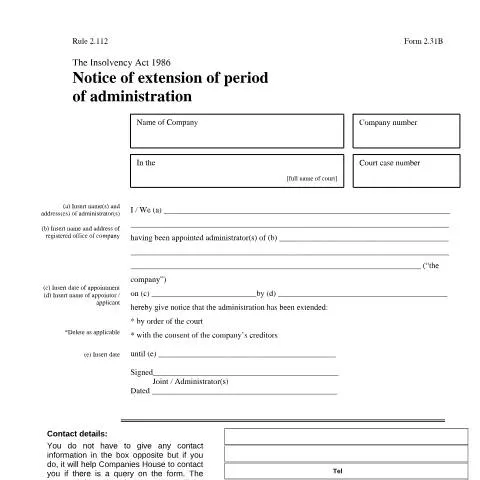
Understanding the Notice of Extension of Period of Administration
The Notice of Extension of Period of Administration (2.31B) is a crucial document for companies undergoing administration in the UK. This document serves as a formal notification regarding the extension of the administration period, which is essential for businesses facing insolvency challenges. The administration process provides a framework for rescuing a company while protecting it from creditors. Understanding how to effectively utilise this document can significantly impact the future of a company.
Key Situations for Issuing the Notice
There are specific scenarios in which the Notice of Extension becomes indispensable:
- Court Order Requirements: If an administrator requires an extension to the administration period via a court order, this notice must be filed to formalise the new timeframe.
- Creditor Consent: When extending the administration period with the consent of the company's creditors, this notification must be served to ensure all parties are aware of the new terms.
- Complex Restructuring: In cases where restructuring plans are being developed that require additional time beyond the initial administration period, this notice becomes a necessary step in the process.
Navigating the Procedure: Steps to Issue the Notice
Issuing the Notice of Extension involves several steps, which can vary depending on whether a court order is involved or if it's based on creditor consent. The process can generally be summarised as follows:
- Identify the Need for Extension: Assess whether additional time is required for administration, either due to ongoing negotiations with creditors or pending court decisions.
- Gather Necessary Information: Ensure all necessary information is ready, including the company's registered details, the names of appointed administrators, and the dates relevant to the administration.
- Complete the Notice: Accurately fill out the Notice of Extension form, ensuring all mandatory fields are correctly completed.
- File the Notice: Submit the completed notice to the Registrar of Companies at Companies House, ensuring it is done within the legal timeframe set out by the Insolvency Act 1986.
Common Misinterpretations: What You Should Know
Misunderstandings surrounding this document can lead to complications. Here are a few common areas of confusion:
- Scope of the Extension: Many assume that filing the notice automatically extends the administration period. It is crucial to understand that the extension is only valid if the required court order or creditor consent is secured prior to filing.
- Deadline Awareness: Failing to submit the notice in a timely manner can lead to administrative complications or legal challenges. The notice should be served before the original administration period expires.
- Privacy of Information: Some administrators worry that the contact information provided in the notice will be widely disclosed. While the details will be part of the public record, only necessary information should be included.
Document Limits: What This Notice Does Not Cover
It's essential to understand the limitations of the Notice of Extension. Here are key areas it does not address:
- Not a Restructuring Plan: This notice merely communicates the extension of the administration period and does not outline a formal restructuring plan or strategy.
- Does Not Resolve Financial Issues: While it may provide additional time to negotiate with creditors, it does not directly resolve any financial difficulties the company may be facing.
- No Appeal Process: Filing this notice does not initiate an appeal against any decisions made by the court or creditors regarding the administration process.
Step-by-Step Guide for Effective Use
To maximise the utility of the Notice of Extension, follow this systematic approach:
- Initial Assessment: Before proceeding, conduct a thorough assessment of the company's situation to determine the necessity of an extension.
- Engage with Stakeholders: Consult with key stakeholders, including creditors and legal advisors, to discuss the implications of extending the administration period.
- Gather Documentation: Collect all relevant documentation, including the original administration appointment details and any correspondence with creditors.
- Draft the Notice: Carefully draft the notice, ensuring all required fields are completed and all information is accurate.
- File with Companies House: Submit the completed notice to Companies House promptly to avoid lapsing the administration period.
- Follow Up: After filing, monitor the status of the notice and stay in contact with Companies House for any queries or required follow-ups.
Articulating with Other Documents in the Procedure
The Notice of Extension is part of a broader documentation framework required during the administration process. Understanding how it interrelates with other documents can enhance compliance and efficiency:
| Document | Purpose | Relation to Notice of Extension |
|---|---|---|
| Administration Order | Legal order that appoints an administrator to manage the company. | This document must reference the administration order to validate the extension. |
| Creditor Consent Form | Document indicating creditor agreement to specific terms during administration. | Required if the extension is based on creditor consent. |
| Progress Reports | Regular updates on the company’s financial status during administration. | Important for justifying an extension and keeping stakeholders informed. |
Practical Tips for Administrators
To navigate the complexities surrounding the Notice of Extension, consider these practical tips:
- Timeliness: File the notice as early as possible before the original administration period ends to avoid complications.
- Clear Communication: Maintain open lines of communication with creditors and other stakeholders to ensure transparency and cooperation.
- Documentation: Keep meticulous records of all communications and documents related to the administration process for future reference.
- Legal Advice: Do not hesitate to seek legal guidance when navigating complex insolvency laws to ensure compliance and protect the company's interests.
By understanding the nuances of the Notice of Extension of Period of Administration, administrators can effectively manage their responsibilities and safeguard the future of the company in challenging times.
Understanding the Administration Process in the UK
The administration process in the UK is a legal procedure that aims to rescue financially troubled companies by providing them with a structured framework to reorganise or sell their assets. Under the Insolvency Act 1986, an administrator can be appointed to manage the affairs of the company. This process is vital for preserving jobs and maximising returns to creditors. The appointment of an administrator often marks the beginning of a period of administration, which usually lasts up to one year.
During this period, the administrator is tasked with safeguarding the company’s assets, assessing its financial standing, and implementing a strategy for recovery or orderly winding down. However, it’s important to note that the initial term can sometimes be insufficient to achieve the desired outcomes, leading to the need for an extension, as provided under paragraph 2.31B of the Insolvency Rules.
The Legal Framework for Notice of Extension
When a company finds itself in administration, the initial appointment is typically for a period of up to one year. However, circumstances may arise where a longer duration is necessary for the administrator to effectively manage the company’s affairs. Section 2.31B of the Insolvency Act allows for the extension of the administration period, but it must be executed properly to be legally binding.
Fill in your form directly online
No printing: type your details into the boxes of the official form, tick, then download the PDF ready to send.
- 1Type into the form boxes
- 2Tick in one click
- 3Save and download the PDF
To initiate this process, the administrator must submit a notice of extension to the court. It’s crucial that this notice is filed timely, as failure to do so may lead to complications or even the termination of the administration process. The administrator must outline the reasons for the extension, demonstrating that further time is essential for achieving a successful outcome.
In preparing the notice, the administrator should include relevant financial information, updates on the progress made during the current administration period, and a detailed action plan for what they aim to accomplish with the extended time. This information helps the court assess the validity of the request and determines whether granting an extension serves the best interest of the creditors and the company.
Implications for Creditors and Stakeholders
The decision to extend the administration period carries significant implications for creditors and stakeholders involved with the company. When a notice of extension is filed, all creditors must be informed, as they have a vested interest in the administration's outcomes. This notification process is crucial, adhering to the principles of transparency and fairness that underpin UK insolvency law.
Creditors are given the opportunity to voice their opinions regarding the extension. They may attend court hearings related to the extension request, allowing them to raise any concerns or objections. Their feedback can be pivotal, as the court takes into consideration the views of those impacted before making a ruling.
Additionally, stakeholders—including employees, suppliers, and customers—also have interests at stake. While the administration aims to protect jobs and stabilise operations, prolonged periods of uncertainty can lead to apprehension and affect morale. Thus, the administrator must engage with these groups by providing updates and reassurances to maintain stakeholder confidence during the extension period.