Navigating the AM01 (Scot): The Essential Notice of Administrator’s Appointment
In the complex world of corporate insolvency in Scotland, the AM01 (Scot) document plays a crucial role. This notice is required when an administrator is appointed for a Scottish company, signalling a significant change in the company's management and financial direction. Understanding the implications and requirements of the AM01 not only enhances compliance but also informs stakeholders of the company's status.
Understanding the Context of the AM01 (Scot)
The AM01 (Scot) is a formal notification submitted to Companies House, the government agency responsible for registering company information in the UK. The need for this document arises under the Insolvency Act 1986 and the Insolvency (Scotland) (Company Voluntary Arrangements and Administration) Rules 2018.
When a company faces financial difficulties, it may enter administration as a means of restructuring its debts and ensuring continuity of business operations. The appointment of an administrator is a critical step in this process. The AM01 must be filed to officially announce this appointment and ensure that the information is publicly accessible.
Key Components of the AM01 (Scot)
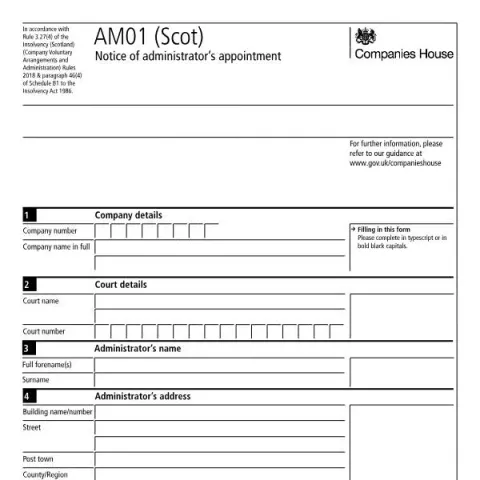
To effectively use the AM01 document, it is vital to grasp its key components:
- Company Details: This section requires the full name of the company along with its registration number.
- Administrator Information: Names and contact details of the appointed administrator(s) must be clearly stated. This includes their full forename(s), surname, email address, telephone number, and address.
- Court Details: Identification of the court that appointed the administrator is necessary, including the court name and number.
- Signature and Date: The document must be signed by the administrator, along with the date of signing.
Who Needs to File the AM01 (Scot)?
The AM01 is particularly relevant for a range of stakeholders:
- Insolvency Practitioners: Those who are appointed as administrators must file this notice, as it is part of their obligations under UK law.
- Company Directors: Directors of a company entering administration need to understand the implications of this document for their responsibilities and the company’s obligations.
- Creditors: Creditors have a vested interest in knowing when a company enters administration, as it affects their ability to recover debts.
- Employees: Employees should be aware of administrative appointments as they can impact job security and company operations.
When Is the AM01 (Scot) Required?
The AM01 must be filed immediately following the formal appointment of an administrator. Any delay in submitting this notice can lead to complications, including potential legal repercussions for the appointed administrator. The typical scenarios that necessitate this filing include:
- The initiation of administration proceedings by the directors or creditors.
- The court's decision to appoint an administrator based on the company’s financial distress.
- Any situation where the company's viability is in question, requiring a restructuring plan to be put in place.
Interpreting the Legal Framework
The legal backbone of the AM01 (Scot) is rooted in specific regulatory provisions. Understanding these can prevent common pitfalls in interpreting the document.
Firstly, the Insolvency Act 1986 provides the framework for all insolvency matters in the UK, with specific rules applicable in Scotland outlined in the Insolvency (Scotland) (Company Voluntary Arrangements and Administration) Rules 2018. Rule 3.27(4) specifically pertains to the requirements for the appointment of administrators.
It is crucial to note that any form of error in the details provided in the AM01 can result in the document being returned unprocessed, causing delays in the administration process. Therefore, accuracy is paramount.
Common Misunderstandings Related to the AM01 (Scot)
Interpreting the AM01 can sometimes lead to confusion, especially among those unfamiliar with insolvency procedures. Here are some frequent misunderstandings:
- Misidentification of the Company: Ensure that the company name and registration number match exactly with what is on the public register.
- Omission of Contact Information: Failing to provide an email or telephone number for the administrator can halt processing. This information is crucial for clarifying any queries that might arise.
- Signature Requirements: Some may underestimate the importance of signing the document. An unsigned AM01 is invalid.
The Relationship Between AM01 and Other Documentation
The AM01 (Scot) does not exist in isolation; it interacts with various other documents during the administration process. Understanding these relationships can streamline the overall process:
| Document | Relationship to AM01 |
|---|---|
| Statement of Administrator’s Proposals | This must be prepared shortly after the AM01 is filed and outlines the strategy for dealing with the company’s debts. |
| Notice to Creditors | Following the AM01, a notice is typically sent to creditors informing them of the administration and their rights. |
| Court Order for Administration | The AM01 must reference the court order that facilitates the administrator's appointment. |
Practical Steps Following the Filing of AM01
Once the AM01 notice is filed with Companies House, there are several practical steps that should be taken to ensure compliance and effective management of the administration process:
- Notify Stakeholders: All relevant parties, including creditors, employees, and shareholders, should be informed of the administration status.
- Prepare for the Creditors’ Meeting: Under insolvency rules, a meeting of creditors must be convened, where the administrator will present their proposals.
- Monitor Public Record Updates: Regular checks should be conducted to ensure that the details in the public register are accurate and up-to-date.
When to Seek Professional Advice
Filing the AM01 (Scot) often necessitates professional guidance. Particularly for those unfamiliar with insolvency laws, engaging with an accredited insolvency practitioner is advisable. They can provide invaluable insights into:
- The implications of administration for the company's future.
- Potential avenues for restructuring and recovery.
- Legal nuances that may affect the filing and subsequent processes.
It is essential to approach these professionals early in the process to ensure that the administration is managed effectively and within the legal framework.
Final Considerations for Administrators
For administrators, the responsibility is not just to file the AM01 but to manage the administration process judiciously. This includes:
- Understanding obligations: Administrators must familiarize themselves with relevant insolvency legislation to ensure compliance throughout the process.
- Communication: Maintaining clear communication with all stakeholders is vital for a smooth administration process.
- Record-Keeping: Accurate record-keeping of all correspondence and decisions is crucial for transparency and accountability.
The AM01 (Scot) acts as a gateway into the administrative landscape for Scottish companies. Its proper completion and timely filing are essential for navigating the complexities of corporate restructuring.
Fill in your form directly online
No printing: type your details into the boxes of the official form, tick, then download the PDF ready to send.
- 1Type into the form boxes
- 2Tick in one click
- 3Save and download the PDF
Understanding the AM01 (Scot) Form: Key Components Explained
The AM01 (Scot) form is integral to the administration process of a Scottish company. Understanding the key components of this form can facilitate smoother submission and compliance with legal requirements. Here’s a breakdown of critical sections within the AM01 (Scot) form:
- Company Information: This section requires accurate details about the company, including its registered name and number, which can be found on Companies House records. It's crucial to ensure that these details are current and match the official records to avoid any discrepancies.
- Administrator Details: The administrator’s name, address, and relevant qualifications must be provided. This is important not only for the identification of the administrator but also for establishing their authority and credibility in the administration process.
- Appointment Date: Specify the date when the administrator was formally appointed. The accuracy of this date is critical as it triggers various legal responsibilities and timelines in relation to creditor notifications and company affairs.
- Declaration of Interest: The administrator must declare any potential conflicts of interest. This ensures transparency and upholds the integrity of the administration process, especially considering that administrators often have a vested interest in providing services to the company.
Cultivating a thorough understanding of these components not only eases the filing process but also strengthens compliance with the broader legal framework surrounding company administration in Scotland.
Steps Following the Submission of AM01 (Scot)
Once you have submitted the AM01 (Scot) form to Companies House, there are several steps and considerations that should follow to ensure that you remain compliant with ongoing administrative responsibilities:
- Notify Creditors: After the appointment of the administrator, it is mandatory to inform all creditors about the new administration. This notification should include details such as the administrator’s contact information and the implications of the administration on outstanding debts.
- Prepare for Meetings: It may be necessary to convene meetings with creditors and stakeholders to discuss the administration process and potential future actions for the company. These meetings should be structured and must comply with regulations regarding notice periods and content.
- Ongoing Reporting Requirements: Administrators have the obligation to provide regular updates to Companies House and creditors regarding the status of the administration. This includes progress reports, detailing the administration's effectiveness, financial position, and strategic recommendations moving forward.
- Finalising the Administration: When it is determined that the administration is coming to an end, a final report must be filed. This report will summarize the outcomes achieved during the administration period, including distribution of assets to creditors, if applicable.
Following these steps diligently ensures that the administration process is conducted lawfully and ethically, protecting both the interests of the company and its creditors.
Common Pitfalls to Avoid When Filing AM01 (Scot)
The process of filing the AM01 (Scot) form can be complex, and there are common pitfalls that individuals may encounter. Awareness of these issues can aid in ensuring a smoother filing:
- Incorrect Company Information: Submitting inaccurate details such as the registered company name or number can lead to delays in processing and potential legal repercussions. Always double-check against the Companies House register before submission.
- Missing Signatures: Ensure that all relevant parties have signed the form before submission. An unsigned form can render the application invalid, resulting in additional time and effort to rectify.
- Failing to Meet Deadlines: The administration process involves strict timelines. Missing deadlines for notifications or reports can lead to penalties or loss of administrative authority. It's crucial to keep a detailed calendar of all relevant dates.
- Neglecting to Inform All Stakeholders: Failing to notify all creditors and stakeholders can lead to disputes and complicate the administration process. Comprehensive and transparent communication is essential.
By being mindful of these common pitfalls, individuals can avoid unnecessary complications and ensure that the process of appointing an administrator proceeds as smoothly as possible.