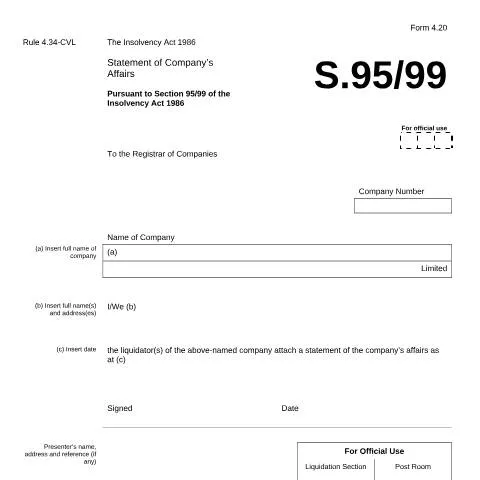
Understanding the Statement of Company's Affairs Form 4.20
The Statement of Company's Affairs, commonly referred to as Form 4.20, holds significant importance for companies undergoing liquidation in the United Kingdom. This document serves as a crucial element in the insolvency process, elucidating the financial standing and affairs of a company at the point of liquidation. It is essential for liquidators to accurately complete this form to provide a clear picture of the company's situation to the Registrar of Companies and ensure compliance with the Insolvency Act 1986.
The Liquidator's Role: Who Files Form 4.20?
Typically, it is the responsibility of the appointed liquidator to file Form 4.20. The liquidator acts as the intermediary between the company and its creditors, managing the liquidation process and ensuring that all financial matters are addressed appropriately. Understanding the liquidator's obligations is crucial for stakeholders in the process.
- The liquidator must be formally appointed, often through a creditors' meeting or a court order.
- Must gather all relevant financial information concerning the company's assets, liabilities, and overall financial health.
- Responsible for ensuring the timely submission of Form 4.20 to the Registrar of Companies.
Key Responsibilities of the Liquidator
- Assessing the financial position of the company
- Documenting the circumstances leading to liquidation
- Preparing and filing Form 4.20 accurately and on time
Completing Form 4.20: A Step-by-Step Guide
Filling out Form 4.20 requires meticulous attention to detail. Each section must be completed with accurate and up-to-date information pertaining to the company's state at the time of liquidation. Here’s a breakdown of what the liquidator needs to include:
- Company Name: Clearly insert the full name of the company as registered with Companies House.
- Company Number: This unique identifier is crucial, as it helps the Registrar to track the company’s records precisely.
- Liquidator's Information: Provide the names and addresses of the liquidator(s) responsible for the filing.
- Date of Statement: The date when the statement of affairs is compiled must be inserted accurately.
- Signature and Date: The liquidator(s) must sign and date the document, confirming that the information provided is truthful and complete.
Consequences of Non-Compliance: What Happens If You Forget?
Failing to submit Form 4.20 can have serious ramifications for both the company and the liquidator. Not only does it hinder the liquidation process, but it also exposes the liquidator to potential legal action for negligence. Here are some consequences that can arise:
- Delays in the liquidation process, leading to potential losses for creditors and stakeholders.
- Legal repercussions for the liquidator, including potential disqualification from acting as a liquidator in the future.
- Creditors may argue that they have not been treated fairly, leading to disputes and challenges in the process.
Channels for Submission: Balancing Digital and Paper Options
Companies House provides various channels for submitting Form 4.20, each with its own advantages. Understanding these options can help liquidators choose the most efficient method for their needs:
| Method | Pros | Cons |
|---|---|---|
| Online Submission | Speed: Immediate processing; Accessibility: 24/7 availability. | Technical Issues: Possible system downtime or technical difficulties. |
| Paper Submission | Traditional Method: Familiarity for those less comfortable with technology. | Delays: Longer processing times due to postal services. |
| In-Person Submission | Direct Confirmation: Immediate receipt confirmation. | Travel Requirement: May not be practical for all liquidators. |
Online Submission Process
For those opting for online submission, it’s essential to have a registered account with Companies House. Here’s a quick overview of the steps involved:
- Log into your Companies House account.
- Navigate to the Form 4.20 section.
- Fill in the required fields electronically.
- Review your submission and verify the accuracy of the information.
- Submit and keep a record of the confirmation for your files.
Document Preparation: What to Consider
Before filing Form 4.20, there’s a range of documentation that liquidators should prepare. This preparation ensures that all required information is readily available and that the form can be completed accurately and efficiently. Key documents include:
- Company Financial Statements: Recent accounts that outline the company's financial standing.
- Asset Register: A comprehensive list of the company’s assets to be included in the statement.
- List of Creditors: An up-to-date list including names, addresses, and amounts owed to each creditor.
- Correspondence Documentation: Any relevant communication with creditors and other stakeholders regarding the company’s financial situation.
Gathering Evidence for a Smooth Process
Preparing these documents in advance aids in a prompt and effective filing process. It’s advisable to maintain an organized file containing all relevant documentation to facilitate easier retrieval when required.
Distinguishing Form 4.20 from Other Filing Documents
Form 4.20 is often confused with other forms related to company liquidation or insolvency. To clarify, here are some contrasts with similar documents:
| Form | Purpose | Who Completes? |
|---|---|---|
| Form 4.20 | Statement of Company’s Affairs at liquidation | Liquidator |
| Form 6.10 | Notice of Appointment of Liquidator | Liquidator |
| Form 6.13 | Report of Liquidator | Liquidator |
| Form 4.19 | Statement of Affairs (individuals) | Individual undergoing bankruptcy |
Why Accurate Differentiation Matters
Understanding the distinct purpose of Form 4.20 in relation to other forms is critical for liquidators. Incorrect submissions can lead to delays and additional scrutiny from the Registrar of Companies.
Following Up with the Registrar of Companies
Once Form 4.20 is submitted, liquidators must remain proactive in following up to confirm receipt and compliance. The Registrar of Companies may reach out for additional information or clarification. Here’s how to manage this process effectively:
- Keep a copy of the submitted form and confirmation of submission.
- Monitor communication channels for any requests from the Registrar.
- Be prepared to provide any further documentation or explanations as required.
- Maintain open lines of communication with all stakeholders to keep them informed of any developments.
Effective Communication During the Process
Maintaining transparency and effective communication with both the Registrar and stakeholders can reduce the risk of misunderstandings and facilitate a smoother liquidation process.
Final Thoughts: Navigating the Liquidation Landscape
The process of completing Form 4.20 is intricate and vital for ensuring that a company’s liquidation is handled correctly. Liquidators must be diligent in their approach, paying careful attention to detail and maintaining clear communication with the Registrar of Companies. By understanding the intricacies of this form and related processes, liquidators can navigate the complexities of company liquidation more effectively, ultimately safeguarding the interests of creditors and stakeholders alike.
Understanding the Statement of Company's Affairs
The Statement of Company’s Affairs is a critical document for businesses in the UK, particularly those operating as limited companies. This statement is a formal declaration that provides a detailed financial snapshot of a company’s position at a specified point in time. It is primarily used during insolvency proceedings but can also serve other purposes, such as fulfilling statutory obligations set forth by Companies House or providing transparency to shareholders and potential investors.
Essentially, this document outlines the company's assets, liabilities, and any other relevant financial information that stakeholders need to assess the company's health. It is important to note that this statement must be prepared accurately and submitted within specified timelines, depending on the context of its usage.
When compiling the Statement of Company’s Affairs, companies should incorporate several key components:
- Assets: This includes tangible and intangible assets, such as cash, property, inventory, and accounts receivable.
- Liabilities: Companies must list all obligations, including loans, trade payables, and any outstanding taxes owed to HMRC.
- Equity: This reflects the value of shareholders' equity, which is the difference between total assets and total liabilities.
Moreover, the statement should be supported by relevant documentation, such as financial statements, bank statements, and any other pertinent financial records. Companies may opt to work with an accountant or a financial advisor to ensure the accuracy of the information presented, as misrepresenting financial data can lead to serious legal repercussions.
Key Considerations When Filing the Statement
Filing the Statement of Company’s Affairs involves specific nuances and considerations that businesses must heed to avoid pitfalls. One of the primary aspects is the timing of filing. The Statement must be submitted promptly if the company is faced with insolvency proceedings. Failing to file on time can exacerbate the company's legal challenges and potentially lead to personal liability for directors if they are deemed to have acted recklessly.
Fill in your form directly online
No printing: type your details into the boxes of the official form, tick, then download the PDF ready to send.
- 1Type into the form boxes
- 2Tick in one click
- 3Save and download the PDF
In addition, directors have a fiduciary duty to act in the best interests of the company and its creditors. Therefore, when preparing the Statement, it is critical to ensure that all information disclosed is truthful and represents the company's financial situation accurately. Engaging in practices such as omitting certain liabilities or inflating asset values can lead to accusations of fraudulent trading, which carries severe penalties under the Insolvency Act 1986.
Another important consideration is the role of the insolvency practitioner (IP). In cases of insolvency, the IP will often oversee the preparation and submission of the Statement of Company’s Affairs, ensuring compliance with legal requirements and protecting the interests of creditors. Companies should familiarize themselves with the responsibilities of the IP to facilitate a smoother process during insolvency procedures.
Lastly, it’s crucial to stay updated with legislative changes or amendments related to the filing process. Regularly consulting resources from Companies House or legal advisors can help businesses stay compliant and mitigate any risks associated with filing the Statement of Company’s Affairs.
Common Pitfalls and How to Avoid Them
While preparing and filing the Statement of Company’s Affairs, companies often encounter various challenges that can adversely affect their financial standing and legal position. Recognizing and addressing these common pitfalls is essential for ensuring a seamless process and maintaining compliance with UK regulations.
One prevalent issue is inadequate record-keeping. Companies must maintain comprehensive and up-to-date financial records to accurately reflect their assets and liabilities. Insufficient documentation can lead to discrepancies in the Statement, which may raise red flags during audits or insolvency assessments. Implementing robust accounting practices and utilizing appropriate software can significantly enhance record-keeping efforts.
Another common pitfall is misunderstanding the extent of disclosure required. Companies should be aware that the Statement of Company’s Affairs requires full disclosure of all relevant financial information. This includes not only explicit debts but also contingent liabilities and any potential claims against the company. Failure to disclose such information can result in legal liabilities for directors and a loss of credibility with creditors and investors.
Moreover, ignoring the implications of insolvency can be detrimental. Companies facing financial difficulties should seek professional advice as soon as possible. Waiting too long to address financial challenges can limit options for restructuring and may result in further liabilities, including personal liability for directors if they are found to have continued trading while insolvent.
Lastly, companies sometimes underestimate the value of external expertise. Engaging a qualified accountant or an insolvency practitioner can provide invaluable insights into preparing the Statement of Company’s Affairs. Their expertise can help ensure compliance with legal standards while providing a comprehensive overview of the financial situation, allowing for informed decision-making.