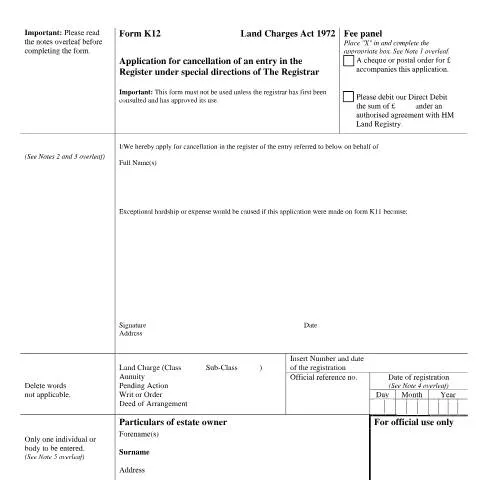
Understanding the K12 Form: A Critical Resource for Land Registration
In the complex world of property transactions within the UK, the K12 form stands out as a vital instrument for those needing to cancel an entry in the register under special directions from the Registrar. This form is not merely a bureaucratic requirement; it serves a crucial purpose in ensuring that all entries in the Land Register are accurate and reflective of the current legal status of property ownership. Understanding how, when, and why to use the K12 form can save individuals and entities from potential hardships.
Who Needs to Use the K12 Form?
The K12 form is specifically designed for individuals or organisations with existing entries in the Land Charges Register who have received approval from the Registrar to proceed with a cancellation request. Here are some typical profiles:
- Individuals: Homeowners seeking to rectify mistakes in property registration.
- Solicitors or Conveyancers: Legal representatives acting on behalf of clients who need to cancel entries due to various circumstances, such as settling debts or resolving legal disputes.
- Other Organizations: Entities involved in property transactions that require accurate documentation to reflect changes in ownership or obligations.
For example, a homeowner may find that an incorrect charge has been placed on their property due to a past judgment. A successful application using the K12 form can help rectify such situations efficiently.
The Regulatory Framework Surrounding Form K12
The K12 form is governed by the Land Charges Act 1972, which outlines the procedures for managing land charges and ensuring that the public register remains accurate and up-to-date. This legislation allows for the cancellation of certain entries under specified conditions, reflecting the ongoing need for accuracy in land records.
In addition to the Act itself, the usage of the K12 form is influenced by practices set forth in the HM Land Registry’s Practice Guide 63. This guide provides comprehensive directions for making applications related to land charges, including the submission of the K12 form.
Step-by-Step Process: From Application to Decision
The journey of submitting a K12 form starts long before the paperwork is filled out. Here’s a detailed account of the process:
- Consultation with the Registrar: Before proceeding with the K12 form, applicants must consult the Registrar. This preliminary step is crucial and ensures that the application is valid under the specific circumstances.
- Completion of the Form: Fill in the K12 form using clear block letters or typewriting, ensuring accuracy in all details. This includes the full name of the estate owner and the specifics of the charge to be cancelled.
- Payment of Fees: Include payment via cheque or postal order made out to “HM Land Registry” or provide a Direct Debit authorisation. Accurate payment is essential to avoid delays.
- Dispatch: Send the completed form to the appropriate address provided in the form’s instructions. Ensure that it is sent in a manner that complies with postal regulations to avoid loss.
- Await Confirmation: After submission, the applicant must wait for a confirmation from the Land Registry regarding the status of their application. This can take some time based on the volume of applications handled.
Key Dates and Timelines: What to Expect
While the K12 form's processing time may vary, understanding the general timeline can help applicants manage their expectations:
- Initial Consultation: Should be done as soon as you identify the need for cancellation.
- Submission Timeframe: Ideally, complete and submit the form promptly after consultation to minimise delays.
- HM Land Registry Response: Processing times can range from a few weeks to several months, depending on the complexity of the case and the workload of the Registry.
- Post-Decision Actions: If approved, the entry will be cancelled in the Register. If additional information is needed, swift action is required to provide it.
Handling Refusals: Next Steps and Options
Receiving a refusal on a K12 application can be disheartening. Here’s how to navigate this situation:
- Understand the Reason for Refusal: The Registrar will typically provide a clear explanation for the decision. Understanding this reason is crucial for any subsequent action.
- Review and Revise: If applicable, revise the form or gather additional documentation that may support your case. Often, more information or clarification can facilitate a successful resubmission.
- Seek Legal Advice: If the refusal is complex or you believe the decision was incorrect, consult with a solicitor specialising in property law. They can provide guidance on the next steps.
- Resubmission: If appropriate, submit a new application with the corrected information or additional documentation as specified by the Registrar.
Preparing Supporting Documentation: What You Need
The K12 form does not require extensive additional documentation beyond what’s specifically mentioned in the application. However, having the right information on hand is essential for a smooth process.
- Identification: Ensure you have the necessary identification and any personal information required by the Land Registry.
- Evidence of Charges: If applicable, collect documentation that supports your claim for cancellation, such as court orders or agreements related to the charge.
- Legal Advisement: If you’re working with a solicitor, ensure they have all relevant property details and previous correspondence that may assist in your application.
By preparing adequately, applicants can avoid unnecessary delays that may arise from missing information or documentation.
Final Thoughts on the Importance of the K12 Form
The K12 form represents a critical tool in the world of property management and land registration within the UK. Its effective use can prevent complications arising from incorrect entries in the Land Charges Register. The importance of understanding the procedural nuances cannot be overstated; it not only expedites resolution but also protects property rights and interests.
As you embark on this application journey, remember that thorough preparation and understanding of the K12 form's requirements are key to a successful outcome. Engage with the HM Land Registry and seek professional advice if necessary, ensuring that your property’s legal standing is secure and accurately represented.
Understanding the Process of Canceling an Entry Under Special Directions of The Registrar (K12)
Canceling an entry under special directions of The Registrar is a specific administrative process that applies to a variety of circumstances within the UK. This action is typically invoked when the Registrar has made a directive that an entry in the official records should be canceled. This can include situations related to company registrations, land registrations, or other statutory registrations. The K12 form plays a crucial role in this process, and understanding the intricacies involved is essential for ensuring compliance and successful cancellation.
The Registry Office operates under strict guidelines to ensure that cancellations are handled appropriately. Key factors that must be considered include the reason for cancellation, compliance with the direction issued by the Registrar, and any potential implications for the parties involved. For instance, if an entry pertains to a limited company and is canceled, this may affect the company's legal standing, obligations, and liabilities. It’s critical to assess these ramifications before proceeding.
Fill in your form directly online
No printing: type your details into the boxes of the official form, tick, then download the PDF ready to send.
- 1Type into the form boxes
- 2Tick in one click
- 3Save and download the PDF
Documenting the Cancellation Process
When proceeding with a cancellation under the K12 directive, thorough documentation is paramount. The first step is to gather all relevant paperwork associated with the entry in question. This includes the original application, any correspondence with the Registrar, and any supporting documents that validate the grounds for cancellation.
Once all documents are assembled, the K12 form must be completed meticulously. It requires specific details such as the entry’s registration number, the reason for cancellation, and any directives received from the Registrar. In completing the K12 form, accuracy is essential; errors or omissions may lead to delays or even rejection of the cancellation request.
In addition to the K12 form, it's advisable to include a cover letter explaining the context of the request. This letter should clearly state the reasons for cancellation and reference any previous communications or orders from the Registrar that necessitate this action. By providing a comprehensive context to your application, you can help expedite the review process.
Potential Challenges and How to Address Them
While the process of canceling an entry under the K12 directive is straightforward in theory, several challenges may arise. One common issue is the lack of clarity regarding the reasons for the Registrar’s directive. In some cases, the directive may be vague or require interpretation. Seeking legal advice may be beneficial if there are concerns about the implications of the cancellation or if the grounds for cancellation are disputed.
Another challenge is the timeline for processing the cancellation request. The Registrar is typically obligated to respond within a certain timeframe; however, delays can occur due to various factors such as administrative workload or the complexity of the case. To mitigate this risk, it’s advisable to follow up regularly with the Registrar’s office to check on the status of your application. Documenting these communications can provide a clear record in case of future inquiries.
Additionally, should there be any objections or challenges from affected parties regarding the cancellation, it’s crucial to prepare for potential disputes. Being proactive in addressing concerns raised by other stakeholders can help in negotiating a resolution. Having a legal advisor or representative can be advantageous in these situations to ensure that your interests are adequately represented.