Understanding the Registration of Premises under the Balai Directive: A Guide for Owners and Managers
The Balai Directive, formally known as Directive 92/65/EEC, establishes essential conditions for the import and movement of various animal species within the European Union and the United Kingdom. Managed through the Animal and Plant Health Agency (APHA), this regulation aims to ensure the health and welfare of animals while facilitating legitimate trade. This guide provides a comprehensive overview of the registration process for premises involved in the trade of non-domestic animals, highlighting who is affected, the key requirements, and the legal framework underpinning these procedures.
Scope and Purpose of the Balai Directive
The Balai Directive primarily covers the movement and import of non-domestic animal species that are not included under specific trade regulations for domestic animals such as cattle, pigs, sheep, or poultry. Its scope encompasses a range of species, including:
- Non-domestic ungulates such as deer, llamas, and antelopes
- Captive birds other than poultry, including psittacines
- Lagomorphs like rabbits and hares (when traded commercially)
- Cats, dogs, and ferrets (if involved in commercial trade)
- Non-domestic carnivores
It is important to note that the Directive does not regulate the movement of pets, which are covered under separate regulations. Instead, it focuses on premises involved in the trade, import, or export of specific non-domestic species, ensuring these activities are conducted in accordance with health and welfare standards.
Who Needs to Register?
Owners or managers of premises involved in the trade of the species covered by the Balai Directive must apply for registration. This applies to facilities such as zoos, research institutions, and commercial trading establishments that handle these animals. The registration process is designed to ensure that such premises comply with health, welfare, and biosecurity standards, and are subject to inspection by relevant authorities.
The Registration Process: Key Steps and Requirements
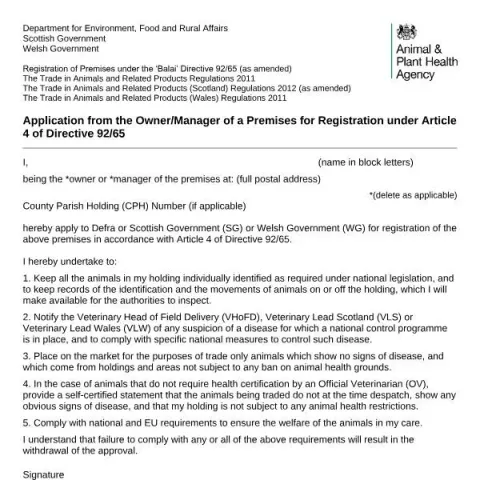
The application for registration is made using the official form EC3163, available on GOV.UK. The form must be completed and submitted to the appropriate authority, which could be the Department for Environment, Food and Rural Affairs (Defra), the Scottish Government, or the Welsh Government, depending on the location of the premises.
Essential Undertakings by the Applicant
- Maintain accurate records of all animals, including identification and movement details, and make these records available for inspection.
- Notify the Veterinary Head of Field Delivery (VHoFD), Veterinary Lead Scotland (VLS), or Veterinary Lead Wales (VLW) of any suspicion of disease, and adhere to national disease control measures.
- Ensure that animals placed on the market are free from signs of disease and originate from holdings not subject to health restrictions.
- For animals not requiring health certification, provide a self-certified statement confirming they are healthy and that the holding is not under restrictions.
- Comply with welfare standards set by national and EU legislation.
Failure to adhere to these commitments can result in the withdrawal of registration, impacting the premises’ ability to trade or move animals legally.
Legal and Regulatory Framework
The registration process and associated obligations are governed by several legal instruments, including:
- The Trade in Animals and Related Products Regulations 2011
- The Trade in Animals and Related Products (Scotland) Regulations 2012
- The Trade in Animals and Related Products (Wales) Regulations 2011
These regulations implement the requirements of the EU Directive within the UK legal context, ensuring that trade in non-domestic animals aligns with health, safety, and animal welfare standards.
Fill in your form directly online
No printing: type your details into the boxes of the official form, tick, then download the PDF ready to send.
- 1Type into the form boxes
- 2Tick in one click
- 3Save and download the PDF
Data Use and Privacy
The APHA processes personal data submitted during the registration application in accordance with the UK Data Protection Act 2018 and UK GDPR. Applicants can find details about how their information is used and shared in the agency’s privacy notices and personal information charter available on GOV.UK.
Key Takeaways
Registration under the Balai Directive is a crucial step for premises involved in the trade of non-domestic animal species. It ensures compliance with health and welfare standards, facilitates legitimate trade, and supports biosecurity measures. Owners and managers should ensure their premises meet the registration requirements, maintain proper records, and cooperate with authorities to uphold animal health standards across the UK.